Transcription
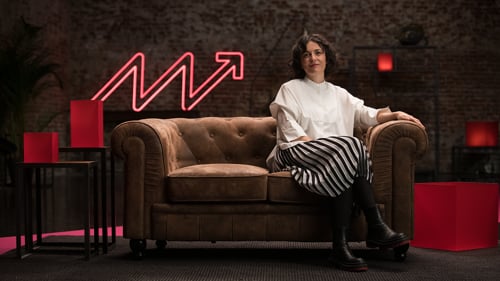
Hi, my name is Victoria Romeiro. I am the sales director for the French market at Factorial. If I need to define a little bit myself as a professional, I would say that I'm a little bit living the Disney world, because I always see the positive side of things, and I think that's really special, and that it's a must when we are in a company that's growing so much as Factorial, and then we're scaling, and then we need to bring the positive side of things.
Today, we're here to talk a little bit about growing and scale, and I think it's really important to understand where Factorial was, where we are, and where we are growing. I started Factorial in 2021, and some people called me a little bit of a dinosaur because usually you don't stay that long in companies that are scaling up and then are fast startups like we are at Factorial. To give a little bit of context, I have been in two expansions, in the Brazilian one when it opened the market in 2022, and right now we are passing through a massive hiring also in France. And I think one of the most important things when we are talking about hiring, growing, and scaling is not just the bigger numbers, but it's pretty much the challenge of keeping the best people,not just the best.
People are the best assets that we have in a company, and then if we don't care about them, we are going to lose them.
And when you're growing, it's pretty much the people that you got here in the first place that are going to help you to go where you want to go.
So for me, the huge challenge in here is that when you start passing through this phase of growing in a massive growing that we're living right now, is that you have to consider that people that are here,they're a little bit kind of lost because we pretty much are going to change process. We are going to change a little bit the communication.
People, they want to feel like they have a direction to go.
And for me, that's the crucial part of having a strong leadership model at place. A strong leader is going to help you to make the difference and tell you where you have to go and what you're going to do.
Again, if we're talking about growing, I think, for me, there are three key pillars that we should take in consideration in order to try to have the success. Because scaling and growing, it's a risk situation, so you can success, you cannot success, but at least you're trying.
So for me, the three pillars would be people.Again, as we said, is the most important asset that you have in a company is the people that you have around you. I know when we are growing, when we are scaling,we want to try to think lots of different things to innovate and motivate people and think outside of the box. But there's this phrase that I like a lot, that the wheel was already invented. And sometimes we don't do the simple things,consider our employee, or collaborator.
And that will be to make them understand that they are here, they have been recognized, we are listening to them, we are seeing them, and they are not just one more.
Because sometimes what happens, especially when we are growing that much, is that we have the impression that we are just one more, a number more in this massive expansion. And this, for me, connects directly with the second part of the leadership.
And to have strong leaders in place can do the difference because they are pretty much who's going to tell you, "I'm still here.
It's still the same mission. We are still doing the same thing, but I need you with me." And great leaders, they're going to pretty much be expansion of the company's mission.
So, for example, I think you do have to find your best managers to help you to get this message through because if your leader is not convinced, if they don't understand what you have to do, how you're going to get there, they're not going to give the message to the people that you have close by, and then you're not going to be able to do this growth that you want to do and scale as you want to do.
And all this is going to be connected, for me, with the most important thing that you have when we're growing. That's the culture.
So, for example, Factorial, we have our culture that we try to live by it. That would be we teach and learn, or we learn or teach.
I always mix both of them. We partner, we grow fast,and we own it. So for me, culture is pretty much, it's not just the CEO's or the founder's vibe or just the personality of the people that are here, but it's pretty much what we are going to do when nobody's seeing. So, for example, I'm not here.
I don't have my boss here with me, and I have a problem.
How I'm going to manage it? How I'm going to do something to make this happen? So I'm going to talk with a colleague because I partner.
I'm going to ask for help because we partner.I'm going to teach a friend because that's how we imagine things.
And of course, with all of that, we are going to go in the same direction.
That's grow, that we grow fast at Factorial, for example.
So for me, when we talk about culture, we cannot just think about the vibes or the personality because pretty much is a mix of the personality of everybody that we have around, and is the essence that we have that's going to make us going through in the chaos. Because growing can be really chaotic, and the most important thing is that we are aligned, and we have a clear communication.
I had two best periods. That's the first ones that when we went to Brazil, that we were three people, and I left Factorial,actually, one year later, and then when I left, we were 80, and we pretty much hired 80 people in six months.
So it was huge hiring process. For me, an interview should have this first love side because you have to connect with the person that you're going to be working every single day. If you have a mixed feeling when you do an interview,maybe this person is not going to be your top talent in the future because you're not feeling safe with them.
I think that we have to be okay with making mistakesEspecially when you're hiring that much, and especially when you have a deadline. I'm not saying that you just hire the first person that comes into the interview. It is not that. But you have to make the peace of sometimes not hiring the good person.
But for me, if you see that something's not working, you have to act fast.
So if you see that, "Oh my God, I made a mistake.What I'm going to do?" You're going to go back to the hiring, and then you're going to go in the process all over again.
But for me, the ego part is really important because you cannot think that,"Oh my God, I cannot say that I did not hire someone properly, and then I have to go all over again." Just assume what I did, and then go and do a better one.
For me, this is a really critical situation, and I have lived this in the beginning of the year. That I was being promoted from sales manager to director, and for me, the most important thing is that I was trying to find someone that could fit with every single one of the people that I had inside of the team. Someone that would be able to provide them this challenge and grow with them and show them, "Hey, I'm here.
Maybe I'm going to do things differently, but in the same way,I'm here to help you." I think a good manager always needs to have this idea that his team or her team is not their teams.
It's pretty much you are working with them, and then you have to be there to help them, and you are going to grow in the same way that you're trying to help them to grow. A good manager is never going to think about I, but pretty much in the we. Once happened to me that I promote somebody,and then I really thought, "Well, it's going to be a great manager,and was going to be my right-hand side," but actually was a good IC, but couldn't fulfill all the part of being a manager.
Because the soft skills that you have to have when you have a team,again, you cannot just think about yourself, but you have to think about the company and what is the value of the company, what is the mission of the company,and how you're going to help your team.
And I had to have a really hard conversation because also was a good friend of mine. We used to work really well together when I was the manager and was my managee, and at some point, I had to say, "Hey, you are really good at this.
We can try to develop you in this position, but if you're not going to do what I need to do, you are going to go back and step back." But it's not like, "Just don't take this personally," but sometimes you do these mistakes, and again,you have to assume them. You're going to have hard conversations, but the most important thing is that you take actions, and then you live by the consequence. Of course, in this situation was a good outcome because the person understood and went back to being an IC.
But sometimes people, they are going to leave because they're like, "Oh, you made a mistake, so or you keep me in my position, or I'm going to leave."
We are always going to have people that are not going to be top performers in every single area. And I think this is really important to understand that mediocre is a really strong word, I think. There are people that are going to be really good at relationships, for example, with the team, and others that are going to be really good with data, and others that are going to be really good with forecasting and hiring.
So I do think that you have to find every single strong point with this person and try to put a little bit more of the responsibility on that,and not just ignore all the other areas, but show that you want to improve. I have a situation that happened with me.
I could say that I'm really good with people.I love my job of talking and being there and trying to motivate people, but I'm really bad with creating dashboards, for example.
HubSpot, it's crazy for me. And my boss gave me the most important part of all the directors to be the responsible and expert of creating of data, Excels, and everything. And in the beginning, I am going to tell you guys that I was like, "Why you're doing that to me?
I hate this part of the job." And he told me, "Because I need to help you grow in every single area, and then you can be a better person." So again, I think when you're a director and you tell the why behind every single action and every single thing that you're asking your manager or your IC or whatever you're working with, people they are going to understand, and they are going to see that's for the positive.
And again, we are here as professionals, and we want to grow, so you have to accept the feedback. I was always trying to be the manager that I would love to have and how I would like to be treated.
And then I was like, I understand that sometimes you have to put pressure on people, but how would I like to receive the pressure?
How would this work with me? So this is something that I try to create in my environment with my managers, with my colleagues, and everybody because I think we always have to behave in the way that we want people to behave with us.
And if it doesn't work, then you ask, "How can we collaborate?
How can we work together? I like to work in this manner." Again, we see lots of companies that are growing way too fast, that are moving things around, and it's not easy because if you're in a company like this, it's because you like the challenge. You like to move all the time, and this is really important, but also sometimes gets a little bit of chaotic, and then you don't know if you have the energy to keep swimming. So if you have somebody that's there and say,"Hey, we are here. We're growing together.
We are going together," you are keeping the mission going, and then you're not just going to scale in numbers, but you're going to scale in a strength way.
You're going to have this strong way to go behind your mission, and then keeping the talent and the people that you have bought here once and doing whatever you need to do. That it? Well, thank you.
Yeah.