Investing in an HR platform is a big step for a small business. The right software can quickly improve how your organisation works, while the wrong choice can be time-consuming, frustrating and expensive to replace. The best HR software for small businesses in the UK depends on what you need. You might be looking for an all-in-one HR system, payroll support, simple absence management or software that can grow with your business. Our top picks are Factorial, Sage HR, BreatheHR, CharlieHR, PeopleHR, Zoho People, BrightHR and Employment Hero.
Factorial is our top choice for small and growing UK businesses that want flexible HR, time management, payroll integrations and compliance support in one platform. Sage HR is a strong option for businesses already using Sage, while BreatheHR and CharlieHR are well suited to smaller teams that want a simple, UK-focused experience.
In this guide, we’ll explain what to look for in an HR platform for a small business, review five of the best options available in the UK and share some extra tips to help with your research.
How we ranked these small business HR platforms
To create our list of the best HR software for small businesses in the UK, we assessed each platform against the features and services that matter most to smaller employers:
UK payroll and compliance: We looked at payroll integrations, HMRC-ready processes, statutory leave tracking, secure record-keeping and support for UK employment requirements.
- Pricing: We considered how easy it is to understand the likely cost, including minimum fees, extra modules and free trials.
- Ease of setup: We looked at how quickly a small team can get started without extensive training or a dedicated HR team.
- Customer support: We considered the level of onboarding and product support available, as well as employment law guidance where offered.
- Scalability: We looked at whether the software can continue to meet a business’s needs as it grows, adds employees or locations, or introduces new HR processes.
Prices and packages can change, so we recommend checking the latest costs and features directly with each provider before making a final decision.
Best HR software for Small Businesses (UK) Comparison Chart
|
Platform |
Price |
Best for |
Highlights |
Free trial |
|
Factorial |
From £5.40 per employee/month |
Growing small businesses in need of an all-in-one platform |
UK localisation, payroll integrations and statutory leave management |
Yes |
|
Sage HR |
From around £6.00 per employee/month |
Sage users and established SMEs |
Integration with Sage Payroll and UK business systems |
Yes |
|
BreatheHR |
From £24/month |
Small UK teams and charities |
Holiday, absence and employee-record management for UK employers |
Yes |
|
CharlieHR |
From £5/month |
Very small teams needing simple HR |
UK-focused HR advice and policy support |
Yes |
|
PeopleHR |
From £3 per employee/month |
SMEs combining HR, recruitment and performance |
Payroll, time and absence management options |
Yes |
|
Zoho People |
From around £1 per employee/month |
Budget-conscious teams using Zoho tools |
Configurable leave and attendance policies |
Yes |
|
BrightHR |
From £3.30 per person/month, depending on business size |
Businesses prioritising HR advice and health and safety |
UK employment-law support and HR documentation |
No — free demo |
|
Employment Hero |
From £4 per employee/month, subject to minimum fees |
Businesses that want HR and payroll together |
HMRC-compliant payroll options and RTI support |
Yes |
What to Look for in an HR Platform for Small Businesses in the UK
When you are looking for an HR platform for your small business, the following features should be available:
- Employee database to store records, contracts, and documents.
- Tools to schedule and track hours worked, leave, and absences.
- Basic performance management support.
- Payroll function or the ability to integrate with existing payroll systems.
- Onboarding & offboarding workflows
Questions to ask when looking for an HR platform
When researching the best HR platform for your small business, it’s essential to consider a combination of practical functionality, cost-effectiveness, and future scalability. Alongside understanding the financial commitment involved in the investment, here are some questions to ask yourself when you are looking at HR platforms:
- How easy is the platform to use? For a small business where team members often take on different roles, it is essential that the platform be intuitive, require minimal training, and offer a self-service option for employees.
- Does it include the core HR features? Centralising your employee database, leave management, time tracking, and on/offboarding supports immediate time and financial savings.
- What options are available beyond the core HR features? You may want the option to add modules for payroll, recruitment, talent management, and learning and development in the future. Reporting features such as dashboards and insight reports are also valuable for making data-informed decisions.
- Can you customise the platform? Being able to adjust templated processes and workflows to fully reflect how your business operates can make a huge difference in the platform’s return on investment.
- Is the platform secure and compliant? For small UK businesses, compliance with UK employment law and GDPR is essential, so the platform you choose needs to give you complete confidence in these key areas. The platform also needs to offer secure log-ins, encrypted data storage and clear, accountable data policies.
- Can the platform grow if your business does? To avoid wasted costs and disruption from software changes, ensure the platform is flexible and scalable. The ability to add extra users and additional features, such as performance review,s may be essential when your business grows.
- Does the platform fully support remote teams? With so many people working remotely now, the software needs to be cloud-based, offer robust communication tools, and support remote onboarding through electronic document signing and digital workflows.
- Can the platform integrate with other platforms, especially payroll systems? While not all platforms include payroll, it’s essential that the two systems you use can talk to each other and allow you to accurately track hours, leave and pay together.
- What customer support does the platform offer? Check whether there is UK-based support, how easy it is to talk to a person rather than a chatbot, and what procedures are in place for onboarding, training, and support.
Why Small UK Businesses Need Flexible and Affordable HR Software
Small businesses need HR software that is flexible and affordable to maximise and future-proof the return on investment. A flexible HR platform will support a small business as it changes and grows, ensuring compliance with UK laws and regulations, including data privacy, GDPR, and record-keeping, and making it easy for HR teams to perform audits. Likewise, predictable pricing, no hidden fees, and the ability to pay only for the features they need in affordable HR solutions help companies manage their budgets and ensure they invest in the right tools.
How to Ensure HR software Supports UK-Specific Legal Requirements
If you want to be sure that the HR platform you are considering investing in supports UK-specific legal requirements, the following checklist will highlight the areas the platform needs to cover:
- Statutory leave entitlements, including sick, maternity and paternity pay.
- National insurance and PAYE calculations.
- Minimum wage compliance.
- Working time regulations (the maximum time employees can work without a break).
- Compliant employee contracts and policies.
- Secure employee records that are compliant with GDPR requirements.
It is also essential that the platform is regularly updated with legislative and compliance changes.
Top HR Platforms for Small Businesses in 2026
To help you choose the best small business HR software, we’ve pulled together the top six platforms in the UK.
1. Factorial: The Leading HR Platform for Small Businesses in the UK&I
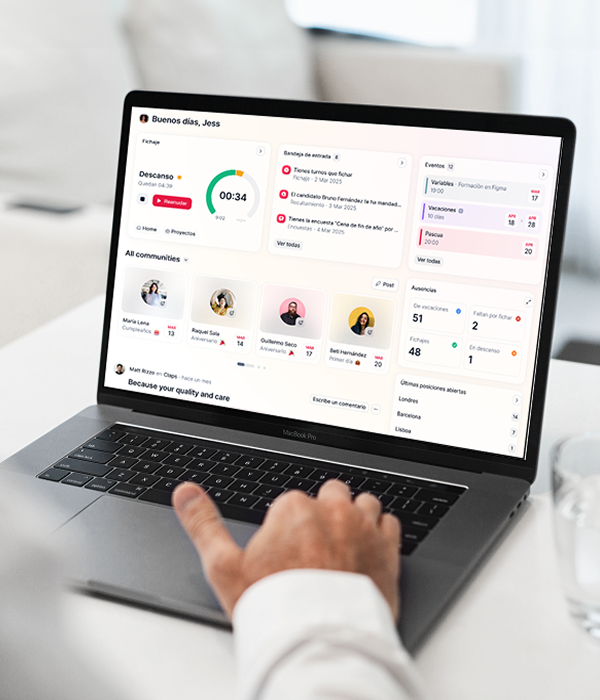
Factorial is an all-in-one HR platform designed for small and growing UK businesses. It brings employee records, time tracking, leave, documents and payroll-related processes together in one place.
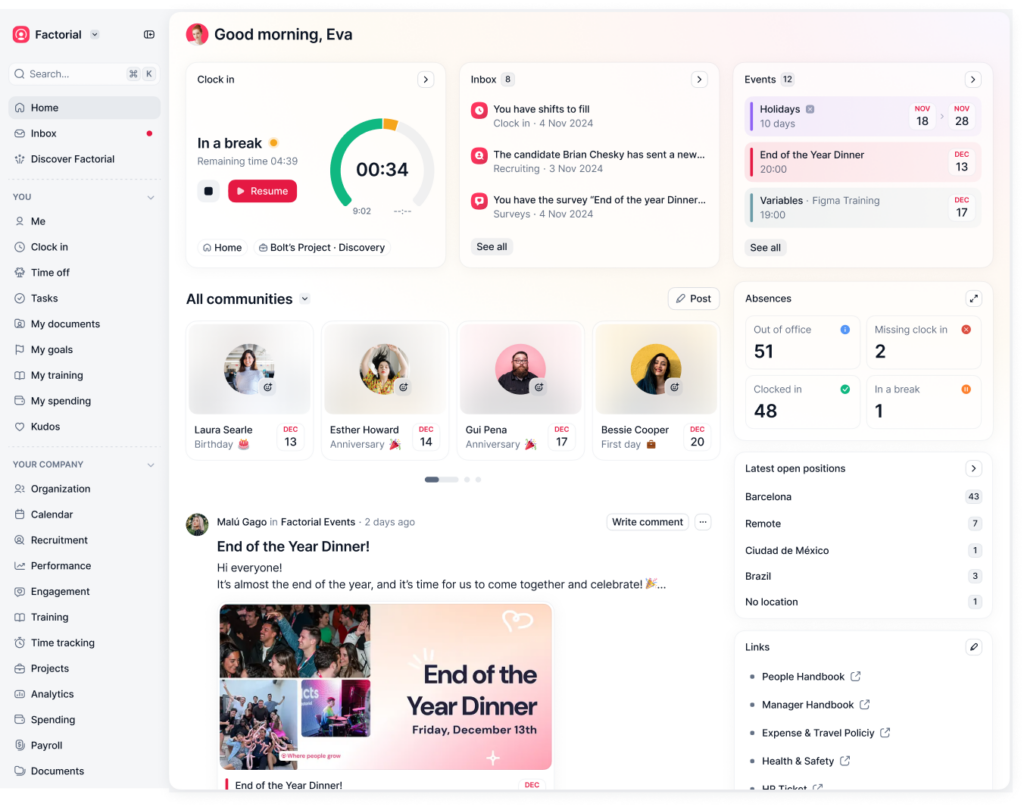
Factorial is particularly well suited to businesses with around 10 to 250 employees that are moving away from spreadsheets or a mix of separate tools. It can work well for professional services, retail, hospitality, technology, and businesses with multiple locations.
The wide range of features is useful for growing businesses, but it may be more than a very small company needs if it only wants basic employee records and holiday tracking. Bottom line: Factorial is our top all-round choice for small UK businesses that want practical HR software now, with the option to add more features as they grow.
What Factorial does well:
- Keeps employee records, contracts, policies and HR documents in one secure place
- Supports holiday and absence management, time tracking, onboarding and approval workflows
- Offers UK-focused features, including payroll integrations and statutory leave management
- Includes reporting, performance management, expenses, recruitment and automation tools for growing businesses
- Provides a straightforward experience for both managers and employees
Price
Factorial’s Core plan starts from £5.40 per employee per month. Plans vary depending on the modules, setup, and level of customisation you need. Request a free demo for a price tailored to the needs of your business and the chance to see everything Factorial can help you with.
2. Sage HR
Sage HR is a flexible, modular HR platform for small businesses that want to manage their core HR processes while having the option to connect HR data with Sage accounting and payroll tools.
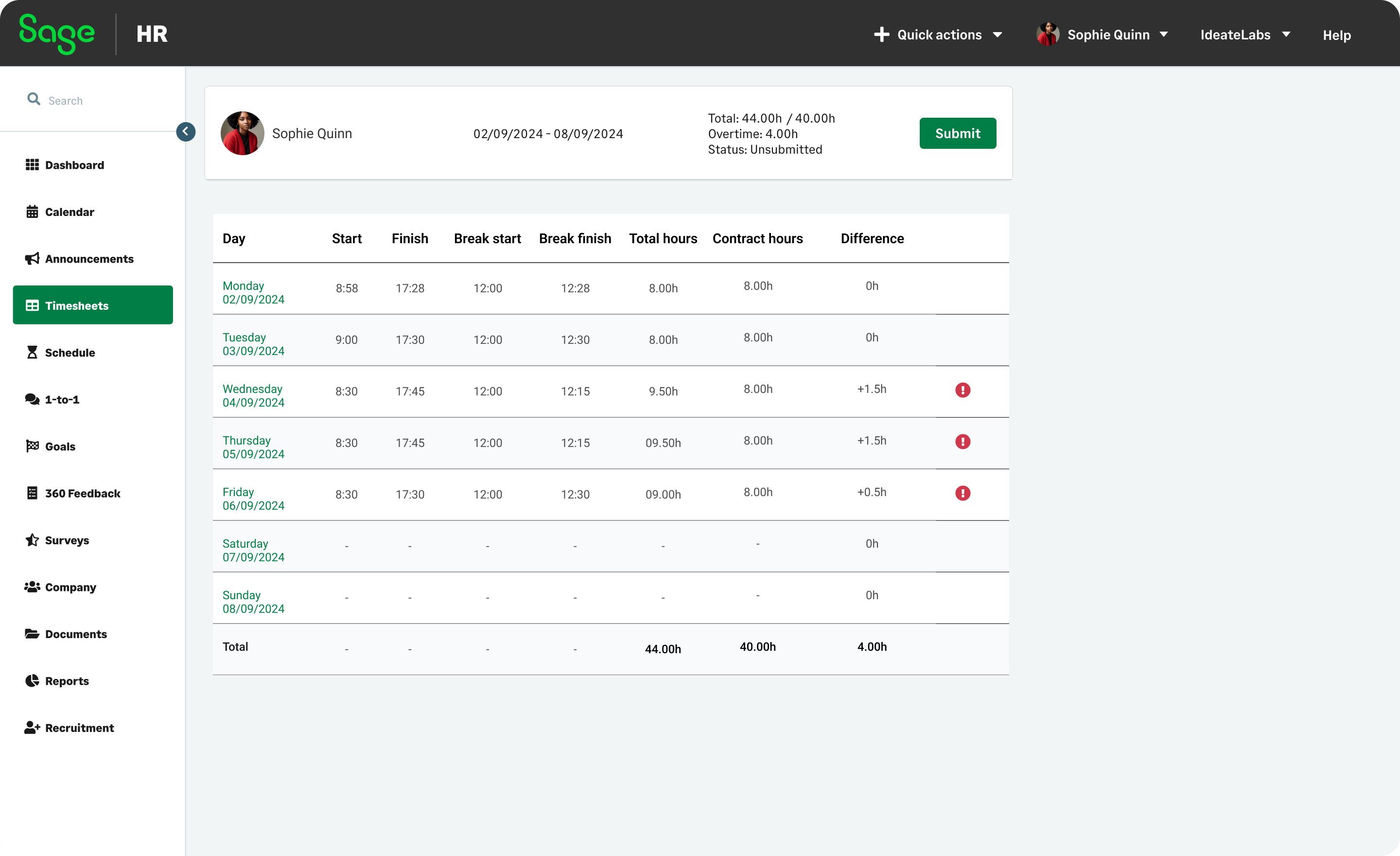
It is particularly well suited to small and established UK businesses, including professional services, retail, construction and other operational businesses that already use Sage.
The modular approach gives businesses flexibility, but costs can increase as they add more features. Sage HR is a strong choice for businesses that want a familiar UK business software provider and the option to connect HR with Sage Payroll or finance tools.
What Sage HR does well:
- Keeps employee records, documents and policies in one central system
- Supports holiday and absence management, expenses and shift scheduling
- Offers optional features for performance management, recruitment and timesheets
- Can integrate with Sage Payroll, helping to reduce duplicate data entry and administration
- Lets businesses start with core HR features and add more as their needs change
Pricing
Core HR and Leave Management starts from around £4.60 per employee per month. Optional modules are charged separately.
3. BreatheHR
BreatheHR is a UK HR platform for businesses that want to manage employee administration in one place. It is designed for businesses, charities and service-based teams with up to 50 employees, including those without a dedicated HR department.
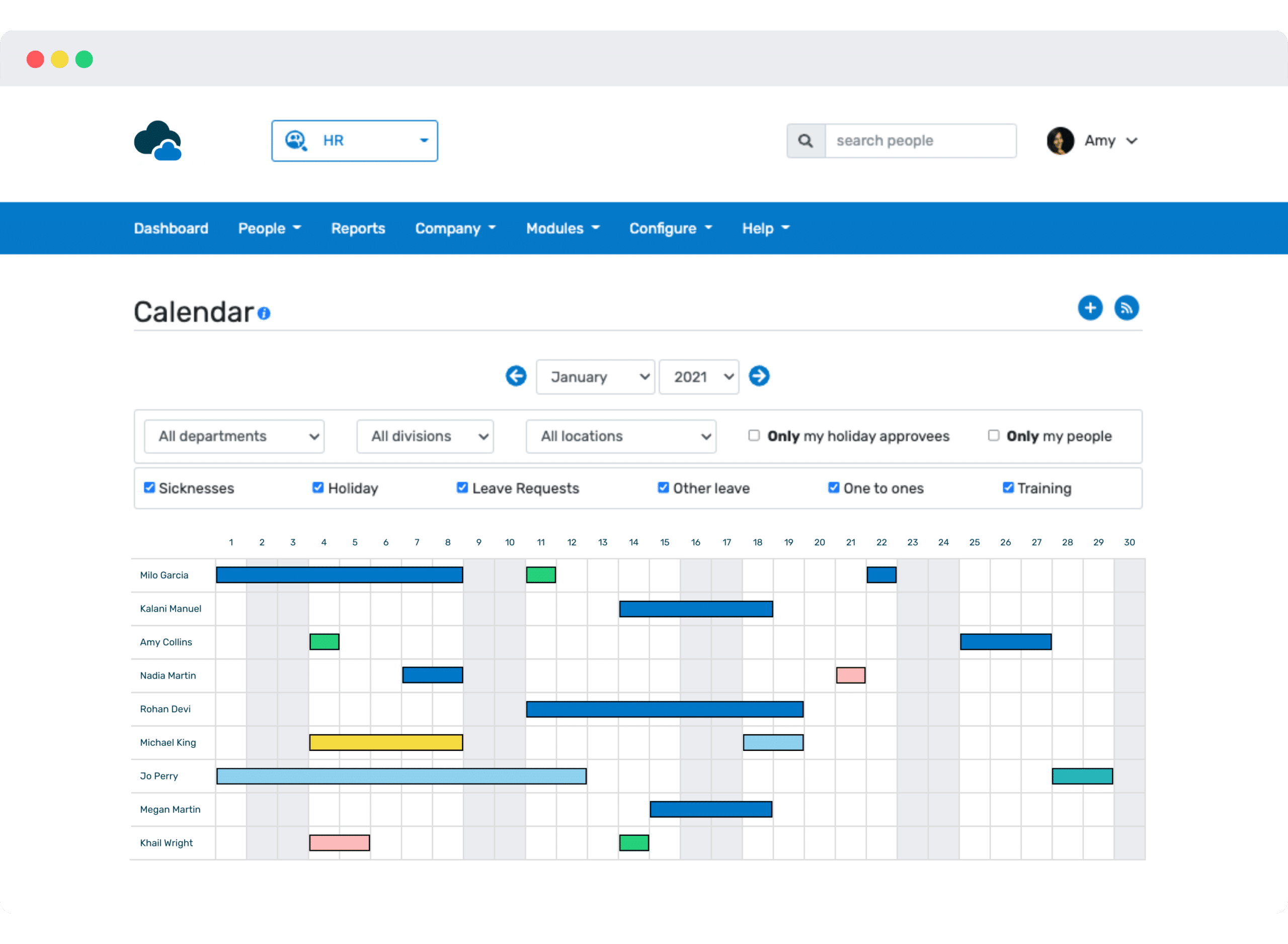
The platform covers day-to-day HR tasks, although businesses with complex payroll needs, international operations or advanced reporting may need additional tools. BreatheHR can help small UK businesses move from paper files and spreadsheets to a system for managing HR.
What BreatheHR does:
- Stores employee records, contracts, policies and documents in one place
- Manages holiday requests, sickness absence and other time-off records
- Supports onboarding, recruitment and performance reviews
- Includes features for rotas, time and attendance, learning and expenses
- Uses company-size pricing bands, so businesses can see costs based on the number of employees
Pricing
Plans start from £24 per month for one to 10 employees, with a 14-day free trial available.
4. CharlieHR
CharlieHR is an HR platform for small teams that want to manage people processes without a complex system. It is designed for teams of one to 50 employees, including agencies, consultancies, creative businesses and office-based service companies that need to manage employee information, leave and onboarding.
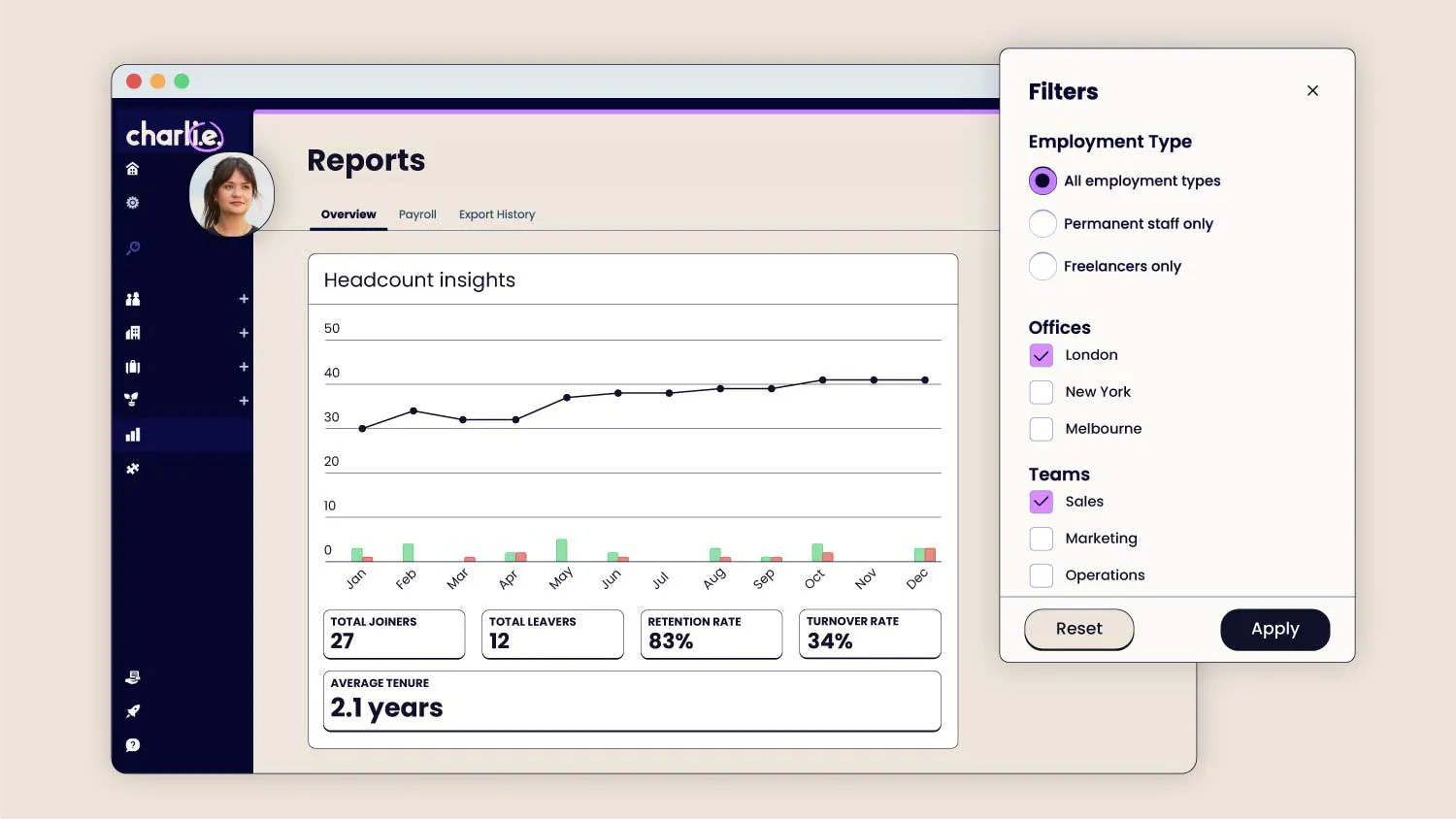
The platform focuses on core HR tasks, so organisations with reporting, payroll or workforce-planning requirements may need additional software. CharlieHR can suit small businesses that want to manage employee administration and access HR guidance.
What CharlieHR does:
- Stores employee records, policies and documents in one place
- Supports onboarding and offboarding with repeatable workflows
- Lets employees request leave and access key information themselves
- Supports performance management and people reporting
- Provides HR advice through Charlie Advice for businesses without in-house HR support
Pricing
The HR module starts from £5 per month.
5. PeopleHR
PeopleHR, part of The Access Group, is an HR platform that combines core HR tools with recruitment, performance, absence and time-management features. It is designed for SMEs with around 20 to 250 employees, including businesses in retail, hospitality, care and other sectors that recruit regularly.
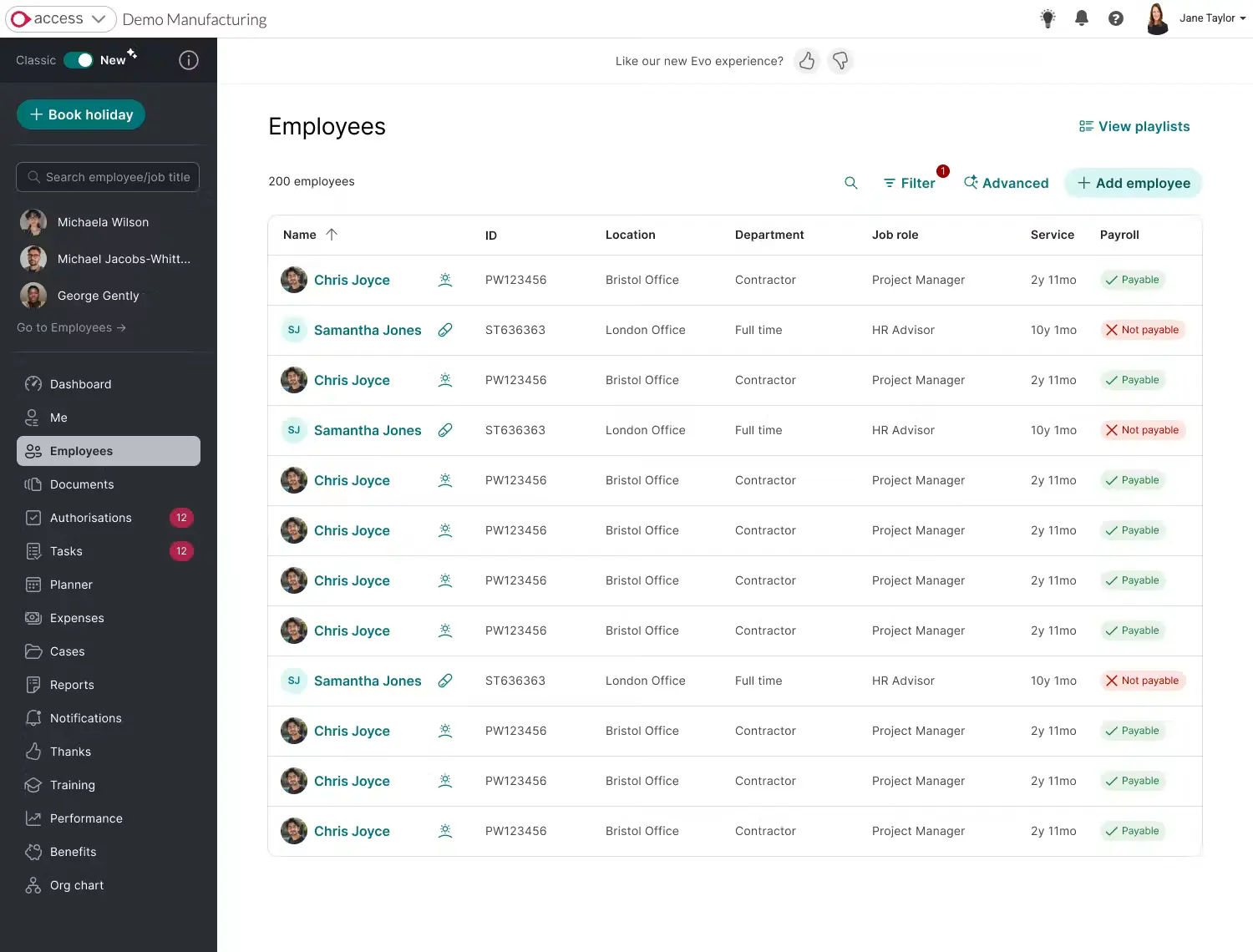
The platform includes a range of HR functions, although some businesses may need additional reporting or integrations to meet their requirements. PeopleHR can suit SMEs that want to manage recruitment, employee information and performance alongside their core HR processes.
What PeopleHR does:
- Manages employee records, absences, annual leave and timesheets
- Includes applicant tracking tools for recruitment
- Supports appraisals and performance management
- Provides shift scheduling and workforce-management features
- Offers several plans for different business requirements
Pricing
Plans start from £3 per employee per month.
6. Zoho People
Zoho People is an HR platform for businesses that want to manage employee data, leave, attendance and workflows while keeping costs low. It can suit small businesses, digital agencies and consultancies, particularly those already using Zoho CRM, Zoho Books or other Zoho products.
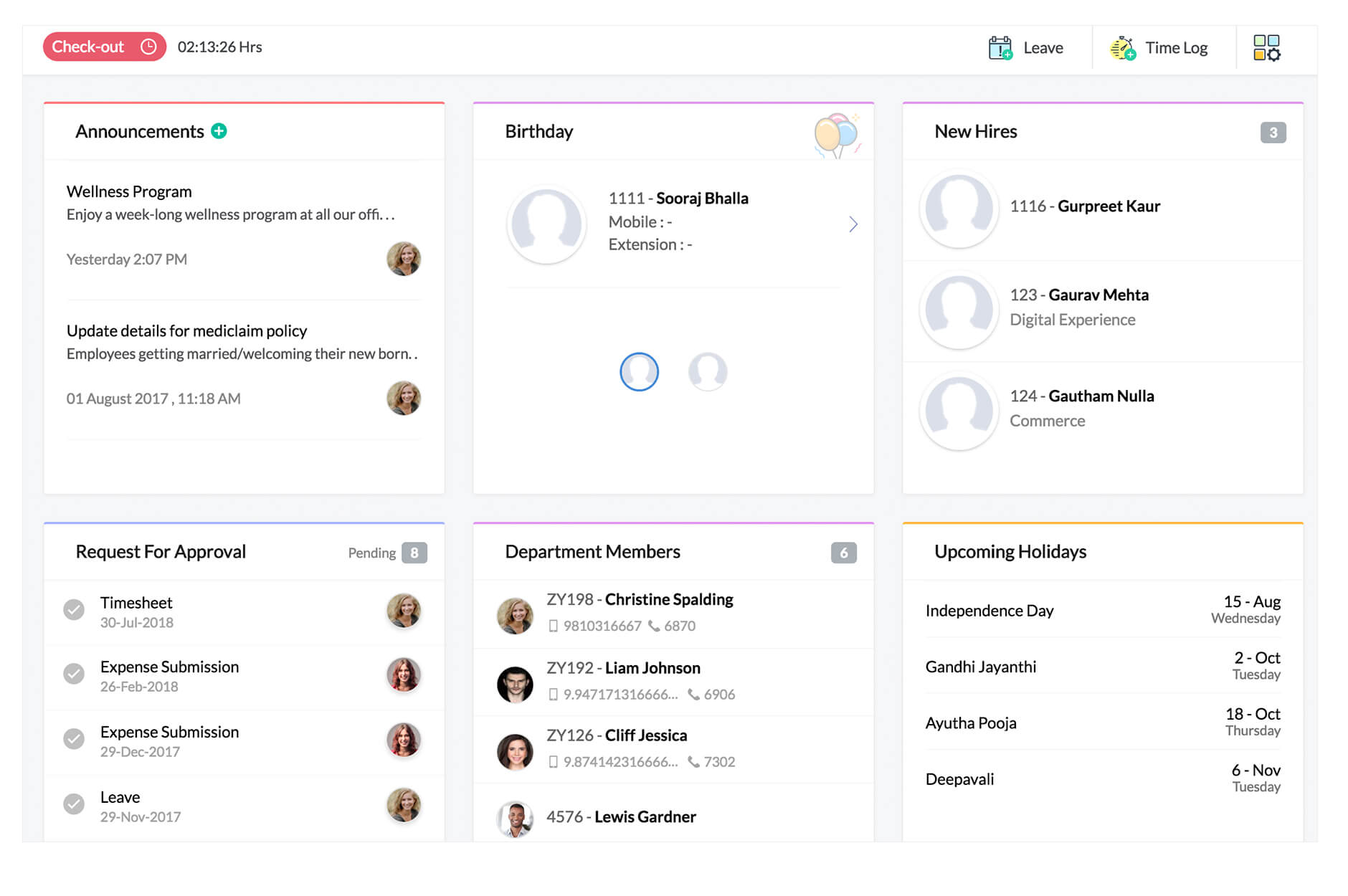
The platform offers a range of configuration options, although setting up leave policies and automated workflows can take time. Zoho People can suit businesses that are comfortable configuring software and want HR tools that connect with other business systems.
What Zoho People does:
- Manages employee records, leave, attendance, and timesheets
- Provides employee self-service for requests and information updates
- Supports workflow automation for HR tasks
- Includes reporting and performance-management features
- Integrates with other Zoho business software
Pricing
Paid plans start from around £1 per employee per month, depending on the package selected.
7. BrightHR
BrightHR is a UK HR software provider that combines employee administration with employment law, health and safety and wellbeing support. It is designed for small UK employers in sectors such as hospitality, retail, care, construction and manufacturing, where HR guidance and health and safety support form part of day-to-day management.
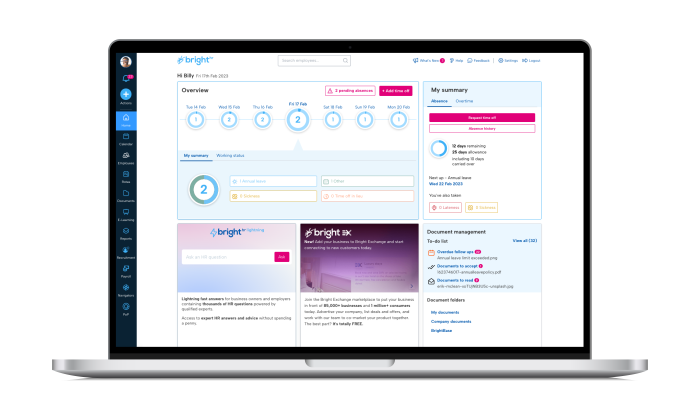
BrightHR can be useful for small businesses without an in-house HR specialist, although pricing may be less transparent than some self-service HR platforms. Businesses should also check contract, renewal, and cancellation terms before signing up.
What BrightHR does:
- Manages employee records, holidays, absences, documents, and rotas
- Provides HR documents and policy resources
- Offers HR and employment law support, depending on the plan
- Includes health and safety tools for businesses in operational sectors
- Supports employers without an in-house HR specialist
Pricing
BrightHR pricing starts from £3.30 per person, although costs vary based on business size, package, and services included. Businesses need to request a quote to confirm the price.
8. Employment Hero
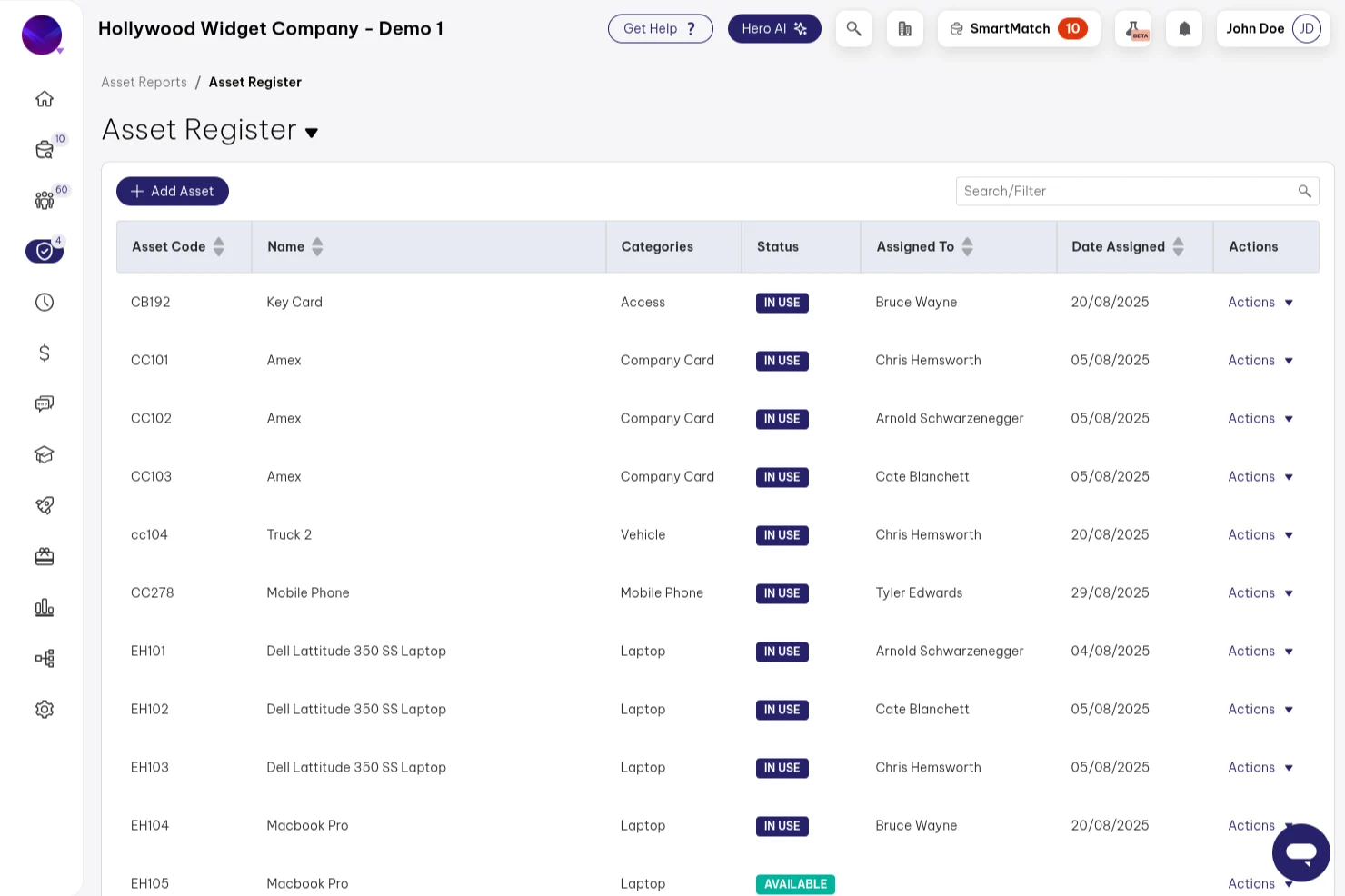
Employment Hero is an HR and payroll platform that brings employee data, onboarding, time, leave, payroll, and benefits into one system. It is designed for growing businesses with around 10 to 250 employees, particularly those that manage payroll in-house or want to use one system for HR and payroll.
IMAGE
The range of features can help businesses manage several HR processes in one place, although minimum monthly fees may make it less suitable for very small teams. Businesses should also allow time for onboarding and data migration, particularly when setting up HR and payroll at the same time.
What Employment Hero does:
- Combines HR, payroll, time tracking, leave and employee self-service
- Supports digital onboarding, document management and automated workflows
- Provides HMRC-compliant payroll features, including RTI submissions
- Includes recruitment, performance and employee engagement features
- Helps reduce duplicate data entry between HR and payroll
Pricing
HR Essentials starts from £4 per employee per month, subject to a monthly minimum fee. Payroll and higher-tier features may be charged separately.
How to Choose the Right HR Platform for Your Small Business
The right HR platform should match the size of your business, your most time-consuming people processes and the level of support your team needs. Rather than choosing based on the longest feature list, start with the problems you need the software to solve first.
1. Start with your company size
- One to 10 employees: Focus on the essentials: employee records, document storage, holiday tracking, absence management and simple onboarding. Look for clear pricing, minimal setup and employee self-service features.
- 11 to 50 employees: Prioritise structured workflows, approval processes, time tracking, performance management and reporting. At this stage, the ability to standardise processes across managers becomes increasingly important.
- More than 50 employees or rapid growth plans: Choose a platform that can scale with you. Check whether you can add recruitment, expenses, workforce planning, learning and development or multi-location management without replacing the system later.
2. Identify your biggest HR priority
Choose software according to the process that is currently creating the most administration or risk:
- Too much manual admin: Look for automated workflows, self-service tools, document templates and approval notifications.
- Holiday and absence issues: Prioritise configurable leave policies, absence reporting and clear manager approvals.
- Payroll complexity: Check for payroll integrations or built-in payroll that supports HMRC processes, statutory payments, pensions and accurate time and leave data.
- Recruitment and onboarding: Look for applicant tracking, digital contracts, task checklists and automated welcome workflows.
- Compliance concerns: Prioritise secure record-keeping, GDPR-conscious data controls, audit trails and tools that support statutory leave and employment documentation.
- Employee engagement or retention: Consider performance reviews, pulse surveys, recognition tools and reporting on absence, turnover and development.
3. Check the day-to-day user experience
The platform should be simple enough for employees and managers to use without repeated training. During a demo or trial, test whether an employee can request annual leave, a manager can approve it and an administrator can find the relevant record quickly. Also check whether the system works well on mobile devices if your employees work remotely, across multiple locations or away from a desk.
4. Calculate the real cost
Do not compare platforms based only on the advertised starting price. Check for minimum monthly fees, implementation charges, paid modules, payroll costs, extra user fees and contract commitments.
A lower-cost platform can become more expensive if you need to add several essential features. Equally, a broader system may offer better long-term value if it prevents you from paying for separate tools later.
5. Make sure it can grow with you
Before committing, ask what happens when your business doubles in size or introduces new processes. A suitable platform should let you add users, permissions, workflows and modules without making your existing data difficult to manage.
Finally, shortlist two or three options, attend demonstrations and use free trials with real business scenarios. This will show whether the platform genuinely reduces admin for your team, rather than simply adding another system to manage.
Find the best HR software for your small business
The right HR software should help your small business manage day-to-day administration while supporting future growth. It can bring employee records, leave, workflows, payroll processes and reporting into one system, making HR easier to manage for both managers and employees.
Factorial brings these processes together with tools for HR, time management, payroll integrations, compliance and automation. Its AI features can help reduce repetitive tasks by finding information, answering employee questions based on company policies and helping teams access HR data and insights.
Whether you are moving away from spreadsheets or putting more structured HR processes in place, Factorial can be configured to suit your business. Book a free personalised demo to see how Factorial works, explore its AI features and get a quote based on your business, team size and requirements.
FAQs
Zoho People is one of the cheapest options, with a free plan for up to five users and paid plans from around £0.83 per employee per month. However, check for extra costs, such as add-ons, payroll and minimum monthly fees, before choosing. Remember that the cheapest isn't always the best. A good cost-effective solution is Factorial, starting at £5.40 per month per user.
You do not legally need HR software, but it can save time and reduce mistakes. At 10 employees, keeping track of holidays, sickness, contracts and employee information in spreadsheets can quickly become difficult.
HR software is often worth it when it saves time on repetitive admin, keeps employee records organised and makes it easier to manage leave, documents and compliance tasks. The key is to choose a system that meets your current needs without paying for features you will not use.
Look for secure employee records, document storage, holiday and absence tracking, onboarding tools and employee self-service. You may also need time tracking, payroll integration, performance management or recruitment tools as your business grows.