For any UK business, the recruitment and selection process is a critical HR function. Hiring managers are tasked not only with filling vacancies but with finding candidates who align perfectly with the team and company objectives. If your hiring process is struggling with high volumes of applications or difficulty in organising the talent pool, an Applicant Tracking System (ATS) is an essential tool for identifying top talent more efficiently.
Key Facts
- An Applicant Tracking System (ATS) is HR software that automates and manages the recruitment process, from posting jobs to screening and tracking candidates in a central database.
- In the UK, the average time to hire a new employee is approximately 4.9 weeks, a process an ATS is designed to accelerate.
- A bad hire costs UK businesses between 1.25 and 1.4 times the employee’s annual salary, highlighting the need for a structured and effective selection process.
- 78% of recruiters say using an ATS has improved the quality of candidates they hire.
Contents
- What is an ATS and How Does It Work?
- Key Benefits of Using an Applicant Tracking System
- How to Choose the Right ATS for Your UK Business
- Try application tracking software for free ✅
Understanding the Modern UK Recruitment Process
Before beginning the selection process, a crucial preliminary phase involves a thorough analysis of the vacancy. Key questions to address include:
- What is the purpose and scope of the role?
- Which skills and qualifications are required?
- What is the timeline for hiring?
- Which stakeholders must be involved in the decision-making process?
Above all, one of the most important things a company must do before recruiting is to set a budget. A clear budget allows you to manage your applicant hiring in a way that ensures the company experiences no losses.
If you’re an HR admin, we know that finding time for recruitment is difficult. For this reason, ATS technology was born. If you’re a company that plans to hire employees and/or post a variety of roles, it’s worth looking into an ATS. Thanks to applicant tracking software, companies are able to manage the hiring process better and automate the process as much as possible.
What is an Applicant Tracking System (ATS) and How Does It Work?
An Applicant Tracking System is software that provides a centralised, digital platform for managing all recruitment and hiring tasks. It acts as a comprehensive database for all candidate information, automating workflows from initial application to final offer. Sometimes referred to as candidate management software, an ATS assists in structuring recruitment automation UK processes, reducing manual effort, and increasing efficiency.
A typical hiring workflow using an ATS involves:
- Job posting across multiple channels or job boards
- Automated collection and parsing of CVs
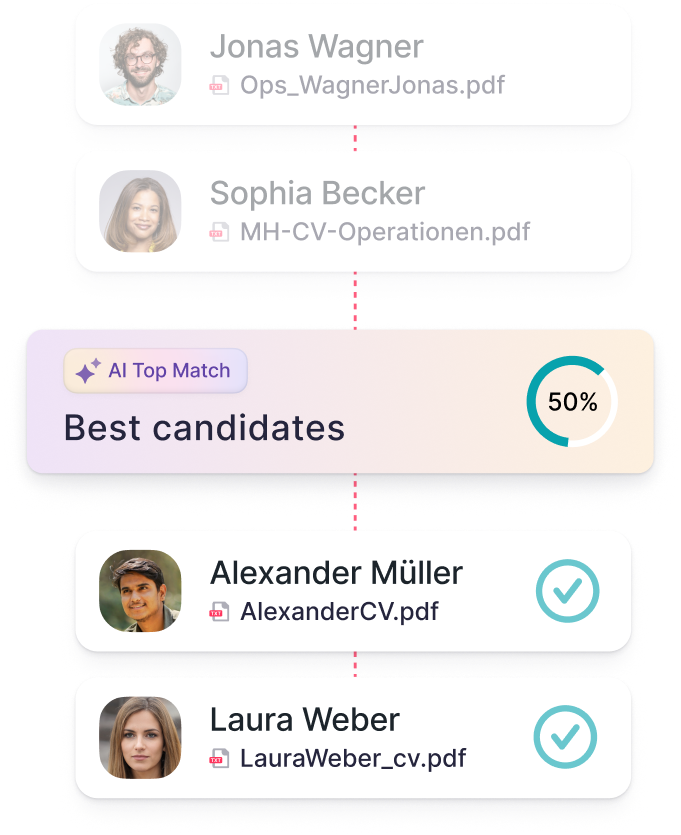
- Keyword matching and scoring of candidates
- Structured progression of candidates through hiring stages
- Centralised communication and progress tracking
- Long-term management of a talent pool database for future vacancies
Well, ATS systems like Factorial HR provide an end-to-end recruitment software that starts from the principal stages of the hiring process, all the way to incorporating the employee into your system.
Companies that use ATS software to optimize their hiring process, are more likely to succeed in capturing top talent. This is a fact!
Key Benefits of Using an Applicant Tracking System
There are immediate benefits to implementing software to support the hiring process. Spoiler: stronger candidates and happier recruiters are part of the package.
- Streamlined Recruitment Automation UK: An ATS automates repetitive tasks such as posting jobs, screening CVs, sending out communications, and scheduling interviews, saving significant time and reducing errors.
- Enhanced Candidate Experience: By ensuring quick follow-ups and clear updates, applicants receive better communication, reducing the so-called “CV black hole” effect.
- Higher Quality of Hire: 78% of recruiters say using an ATS has improved the quality of the candidates they hire.
- Centralised Data Management: All candidate information is stored in a secure, searchable talent pool database, making it easy to revisit strong past applicants for future roles and ensuring efficient long-term candidate management.
- Ensures UK Data Protection Compliance: In the UK, all recruitment activities must comply with the Data Protection Act 2018 and UK GDPR. An ATS helps ensure compliance by managing candidate data securely, handling consent, and automating data retention policies. This provides a clear audit trail and protects your organisation from potential data breaches and non-compliance penalties.
- Supports Diversity and Inclusion: Many modern systems include features such as inclusive job description analysis and anonymised screening to reduce unconscious bias.
- Effective Collaboration: Secure, real-time collaboration between recruiters, hiring managers, and stakeholders at every step of the process.

ATS Pricing Models in the UK
In the UK, ATS pricing typically follows a few common models. Many all-in-one HR platforms charge on a per-employee-per-month (PEPM) basis, with costs often ranging from £3 to £10 PEPM depending on the features included. Other providers may charge based on the number of active job vacancies or the number of users (recruiters) on the platform. It is essential to evaluate which model best aligns with your company’s hiring volume and growth plans.
How to Choose the Right ATS for Your UK Business
Recruitment software can do your hiring process a world of good. But the wrong recruiting software can become more of a hindrance than a help. Here’s how to sift the bad programs from the good.
1. Look for the right applicant tracking system features
The first step is determining exactly what your company needs. Collaborate with your team to decide on essential features. Consider your organization’s priorities and how recruitment software can help you reach your goals. Key features to look for include:
- Customisable hiring workflows
- CV parsing and intelligent screening
- Collaborative evaluation tools
- Branded candidate experience
- Detailed analytics and reporting
- Integration with the rest of your HR software ecosystem
- UK Compliance and Sourcing: Ensure the system is fully compliant with UK data protection laws and integrates with popular UK job boards. This avoids manual work and ensures you reach the most relevant candidate pools.
2. Take a recruitment software free trial
By now, you have found a few programs that your team could benefit from. If some of them are paid, you can take advantage of free trials to try the recruitment software online. For example, factorial’s free 14-day trial is an opportunity not only to try their ATS, but also the rest of their HR services. Here are our tips for how to get the most out of a trial:
- Have as many members of your team as possible test the software.
- Make sure the features meet the essential and non-essential requirements previously decided on.
- Find software that integrates well with your current tools.
- Test all offered features to make sure they are as advertised and not too clunky.
3. Go for the best recruitment software
With an idea in mind of how the different software functions, it is finally time to choose the program that works best for you. Before you take the plunge, do your best to determine if the recruitment software pricing is honest or if there are hidden costs. Fees per job posting or new hire can quickly add up.
Factorial’s recruitment software comes free with a subscription to its HR management services, therefore it has no hidden fees. This may be an opportunity not just to improve your recruitment process but improve the employee experience for the entire employee life cycle.
Calculating the Return on Investment (ROI) of an ATS
Investing in a talent acquisition platform can seem like a big step, but the savings in time and money make it worthwhile. To illustrate, consider a UK business with an open position that costs £300 per day in lost productivity. If the average time-to-hire is 4 weeks (20 working days), the total productivity loss is £6,000. If an ATS costing £100 per month can reduce the time-to-hire by just one week, the business saves £1,500 in lost productivity, delivering a significant and immediate return on investment.
Selecting the Best ATS Platform
When choosing your ATS platform, consider:
- UK recruitment compliance, software usability, and integration with local job boards.
- The balance between standalone candidate management software tools and fully integrated HR suites.
- Feedback from UK employers and real user reviews.
- Adoption by hiring managers due to simple, intuitive interfaces.
- Support for creating and maintaining a robust talent pool database.
Are you crystal clear on finding the right candidate? Don’t wait any longer! Trial out Factorial HR and its candidate tracking system. Still not sure? Find out how to select the best free recruitment software.
What about AI in Applicant Tracking Systems?
Artificial intelligence is becoming a standard feature in modern ATS platforms, offering powerful tools to enhance recruitment. AI can help by intelligently screening CVs to identify the most qualified candidates, automating interview scheduling, and even analysing job descriptions for inclusive language. According to a 2025 report, the share of UK job postings requiring AI‑related skills has increased every year from 2012 to 2024, even as overall job postings declined.
Final thoughts on HR ATS tools
Simply put, a Recruitment platform or Human Resources management software (ATS) can improve productivity in your life and work. Factorial’s intuitive and easy-to-use applicant tracking system, allows you to collect and track applicants through the hiring process. Also, you can easily create your own customized hiring page, showcasing your company, team, available positions, and more. Best of all, the Factorial ATS system lets you effortlessly integrate new employees into Factorial’s HR recruitment software once hired.
Try Factorial’s ATS Software
FAQs
What is the main purpose of an applicant tracking system?
The main purpose of an applicant tracking system (ATS) is to provide a centralized and automated way for recruiters and hiring managers to track and manage job candidates throughout the recruiting and hiring process.
What are the benefits of using an ATS?
An ATS saves significant time and money by automating and centralizing the hiring process. It improves the candidate experience, ensures data compliance, and enables better team collaboration, leading to higher-quality hires and a stronger employer brand.
How much does an ATS cost?
The cost varies. Some platforms charge by the number of open positions, while others charge by the month or by the number of recruiting managers. All-in-one HR platforms are usually priced based on the number of employees.
What is the best ATS for small business?
The best ATS for a small business is one that integrates with other essential HR functions. An all-in-one platform like Factorial provides a cost-effective solution that combines recruitment with document management and onboarding, streamlining operations for smaller teams.
How do I know if a company uses an ATS?
You can often tell if a company uses an ATS by the way their online application is structured. If you are redirected to a third-party site to fill out a detailed form rather than just emailing a resume, it’s likely an ATS.