HR teams are expected to do more with fewer resources. Headcount data sits in one tool, absence in another, performance notes in spreadsheets, and approvals live in email threads. As your organisation grows, this fragmented setup quickly becomes hard to manage and even harder to scale. A cloud-based HRMS solves this by bringing core people processes into one system that is always up to date and accessible online. Instead of relying on local servers or manual workarounds, employers can manage employee data, time off, performance, and reporting in a single platform that works wherever teams are based. The right platform can simplify day-to-day HR work and support better decisions as teams change and grow.
In this article, we review the top 5 cloud-based HRMS platforms for 2026. We compare their features, strengths, limitations, and pricing to help you choose the right HRMS software for your organisation.
What is a cloud-based HRMS?
A cloud-based HRMS is an online system used to manage core HR tasks in one place. HRMS stands for Human Resource Management System. When the system is cloud-based, it is hosted online rather than installed on company servers.
This means HR teams, managers and employees can access the system through a web browser, wherever they are, as long as they have an internet connection. Employee records, time off requests, contracts, performance data and reports are stored securely online and updated in real time.
The main difference between a cloud-based HRMS and older HR systems is how information is stored and accessed. Traditional systems often rely on local servers, manual updates and restricted access. Cloud-based HRMS software removes these limits by handling updates automatically and allowing controlled access across the organisation.
For employers, this creates a single source of truth for people data. Instead of tracking information across spreadsheets, shared drives and emails, everything is kept in one system. This reduces duplication, lowers the risk of errors and makes it easier to produce accurate reports.
A cloud-based HRMS also reduces dependency on HR for simple tasks. Employees can request time off, update personal details and access documents directly, while managers can approve requests and view team data without waiting for manual updates.
Overall, a cloud-based HRMS helps organisations manage HR processes more clearly and consistently, with less admin and better control over people data.
Why you should use a cloud-based HRMS
As organisations grow, HR processes become harder to manage. What starts as a few spreadsheets and shared folders often turns into duplicated data, missed approvals and unclear records. A cloud-based HRMS helps employers regain control by bringing these processes into one system.
One of the main advantages is centralisation. All employee data, from personal details to absence records and performance notes, is stored in one place. This makes it easier to keep information accurate and up to date, and it reduces the risk of using the wrong version of a document or report.
Accessibility is another key benefit. Because a cloud-based HRMS is accessed online, employers are not limited to office-based systems. Managers can review team data, approve requests and access reports without relying on HR to send information manually. This speeds up everyday decisions and reduces back-and-forth emails.
A cloud-based HRMS also supports better compliance. Employee data is stored securely, with access controls that help protect sensitive information. Automatic updates ensure the system stays current without requiring IT involvement, reducing the risk of outdated software or security gaps.
From a cost perspective, cloud-based HRMS software removes the need for on-site servers and complex installations. This lowers upfront costs and makes it easier to scale as the organisation changes. Employers can add or adjust features as their needs evolve, rather than replacing the entire system.
For many employers, the biggest benefit is visibility. With clearer data and consistent reporting, HR teams can spot issues earlier, track trends over time and support decisions with evidence instead of assumptions.
Top 5 cloud-based HRMS in 2026
When choosing a cloud-based HRMS, you should consider how the system can support day-to-day HR work while also scaling as your teams grow and your organisation’s processes become more complex.
The best cloud-based HRMS platforms do more than cover basic admin. They help HR teams manage time off, track performance, support managers, and keep employee data accurate and accessible. Many also connect HR with other business areas such as finance management or IT, reducing the need to juggle (and pay for) multiple tools.
However, not all HRM software is built in the same way. Some platforms are designed for large enterprises with complex requirements, while others focus on flexibility and ease of use for small and mid-sized teams. Pricing models, feature depth and usability can vary widely, making it important to understand what each system is best suited for.
Below, we list 5 cloud-based HRMS platforms that organisations are using in 2026. For each one, we outline what the platform offers, its key features, and where it performs best. This should help you compare options and decide which HRMS software aligns with your team’s size, needs and growth plans.
1. Factorial
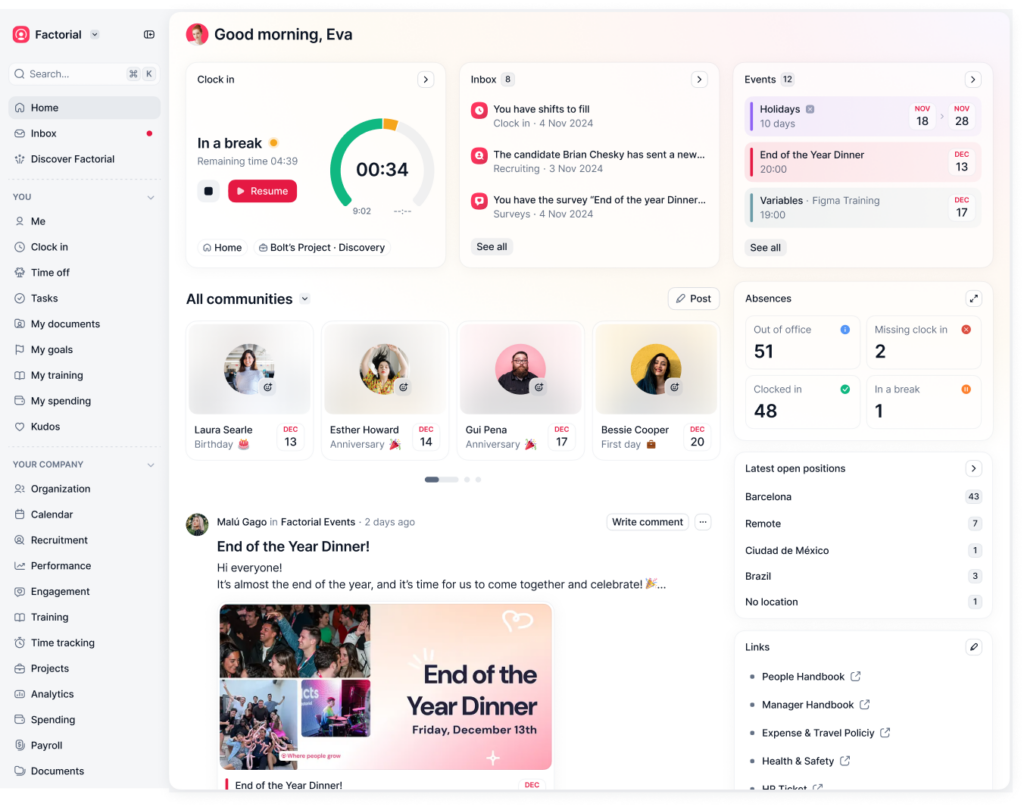
Platform overview: Factorial is a cloud-based HR software built for small and mid-sized organisations that want to manage HR, IT and finance processes in one system. Instead of using separate tools for employee data, time tracking and reporting, Factorial brings everything together in a single platform.
The system is designed to reduce manual admin and make people data easier to access. HR teams can manage employee records, contracts and policies, while managers can approve requests and review team information without relying on spreadsheets or email chains.
Key features
- Centralised employee database
- Time off and attendance management
- Performance reviews and goal tracking
- People analytics and HR reporting
- IT asset management and access control
- One, Factorial’s AI agent for instant insights and summaries
Pros
- True all-in-one HRMS software that replaces multiple tools
- Simple interface that requires little training
- Strong analytics without needing a dedicated data team
- Scales easily as teams grow
Cons
- Payroll functionality depends on location and setup
- Some advanced modules are only available on higher plans
Best for: Organisations that want a cloud-based HRMS that connects HR processes with IT management and reporting in one platform.
2. Oracle HCM Cloud
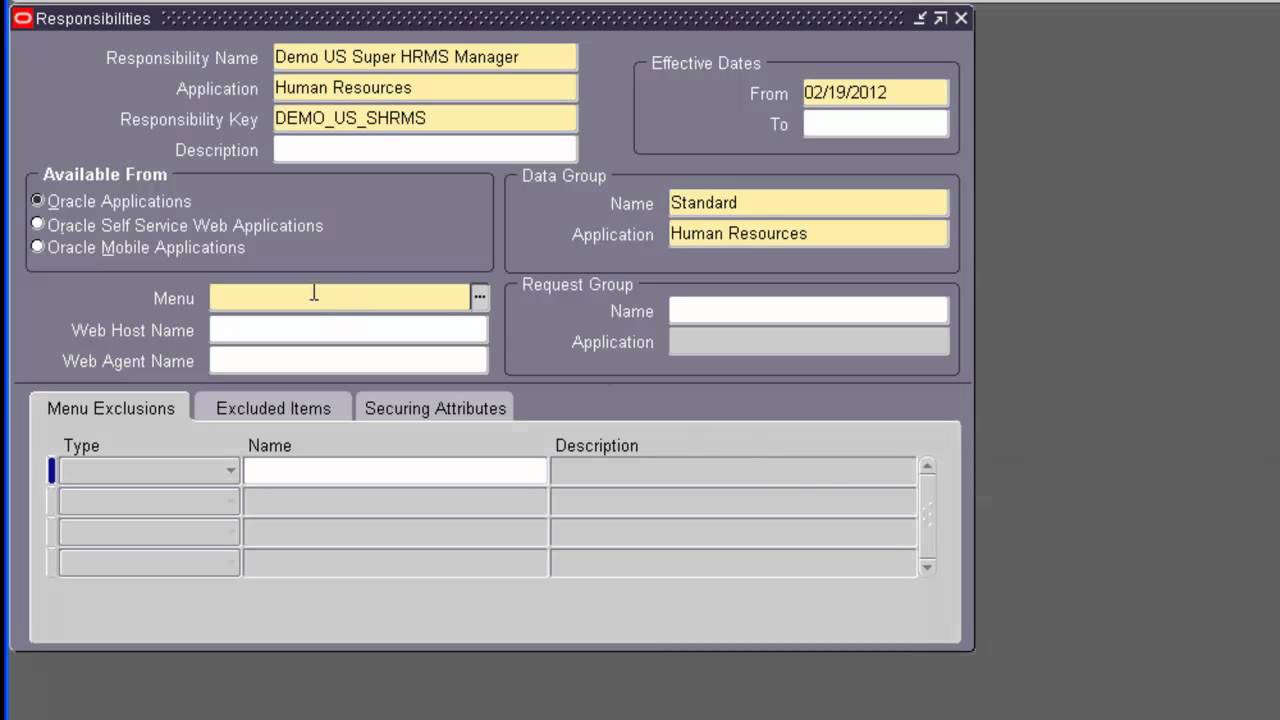
Platform overview: Oracle HCM Cloud is a cloud-based HRMS designed for large organisations with complex HR requirements. It is part of the wider Oracle Cloud ecosystem and offers a broad range of HR, payroll and workforce management tools.
This platform is built to handle large volumes of employee data across multiple regions. It supports advanced workflows, compliance needs and reporting, making it a common choice for global enterprises.
Key features
- Core HR and global employee records
- Payroll and workforce management
- Talent management and learning tools
- Advanced analytics and reporting
- Integration with other Oracle Cloud products
Pros
- Very powerful and feature-rich
- Suitable for large and global organisations
- Strong compliance and reporting capabilities
Cons
- Complex setup and longer implementation time
- Higher cost compared to most cloud-based HRMS options
- Requires training and dedicated support to manage effectively
Best for: Large enterprises that need a highly configurable cloud-based HRMS with global payroll and compliance support.
3. Sage HR
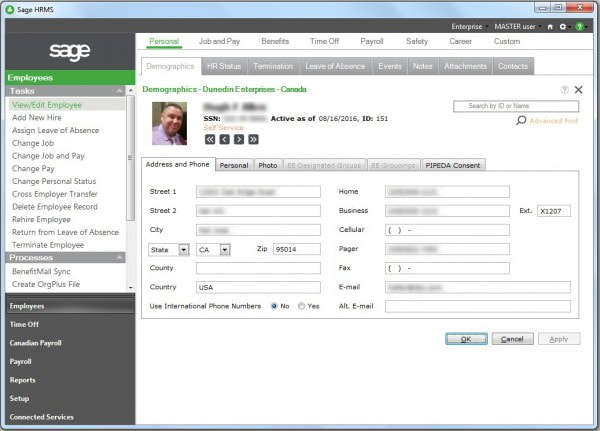
Platform overview: Sage HR is a cloud-based HRMS aimed at small and mid-sized businesses that want a straightforward system for managing core HR tasks. It is part of the wider Sage product range and is often used by organisations that already rely on Sage for accounting or payroll.
Sage HR focuses on simplicity. It covers essential HR needs without adding too much complexity, which can be helpful for teams with limited HR resources or those moving away from manual processes for the first time.
Key features
- Core employee records and document storage
- Leave management and approvals
- Shift scheduling
- Performance reviews
- Basic reporting and dashboards
Pros
- Easy to set up and use
- Works well alongside other Sage products
- Clear pricing for smaller teams
Cons
- Limited analytics compared to more advanced HRMS software
- Fewer integrations outside the Sage ecosystem
- Less suitable for fast-growing organisations with complex needs
Best for: Small businesses looking for a simple cloud-based HRMS to manage essential HR processes.
4. HR Cloud
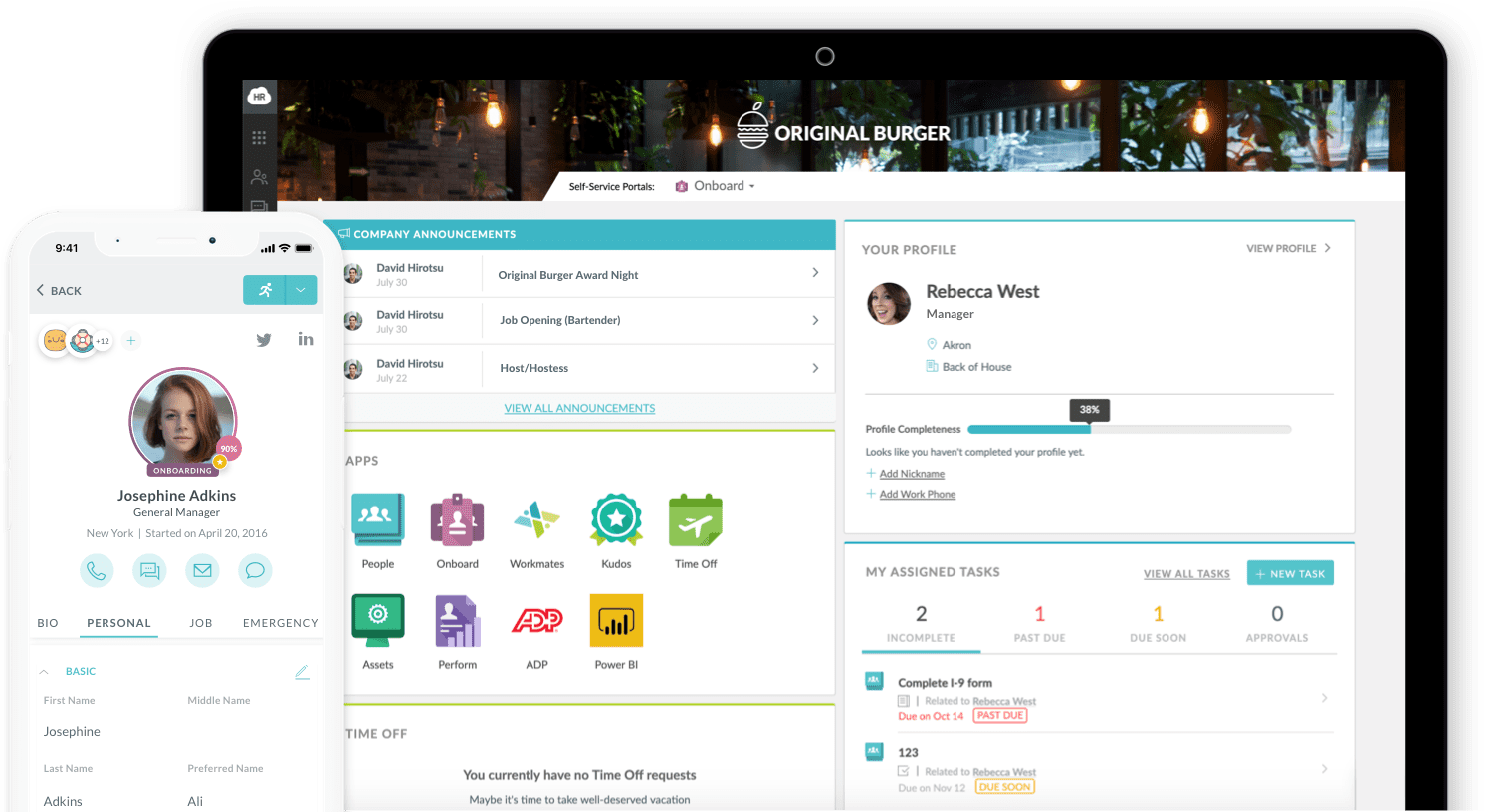
Platform overview: HR Cloud is a cloud-based HRMS that focuses strongly on employee experience and engagement. Alongside core HR features, it offers tools for onboarding, communication and recognition, making it popular with organisations that want to improve how employees interact with HR systems.
The platform is modular, which means companies can choose specific features based on their needs. This flexibility can work well for teams that want to focus on certain HR areas rather than adopting a full all-in-one system from the start.
Key features
- Core HR and employee profiles
- Onboarding and offboarding workflows
- Employee self-service tools
- Engagement and recognition features
- Basic HR reporting
Pros
- Strong onboarding and engagement tools
- Customisable workflows
- Good employee-facing experience
Cons
- Limited depth in analytics and reporting
- Some core HR features require add-ons
- Can become expensive as modules are added
Best for: Organisations that want a cloud-based HRMS with a strong focus on onboarding and employee engagement.
5. Zoho People
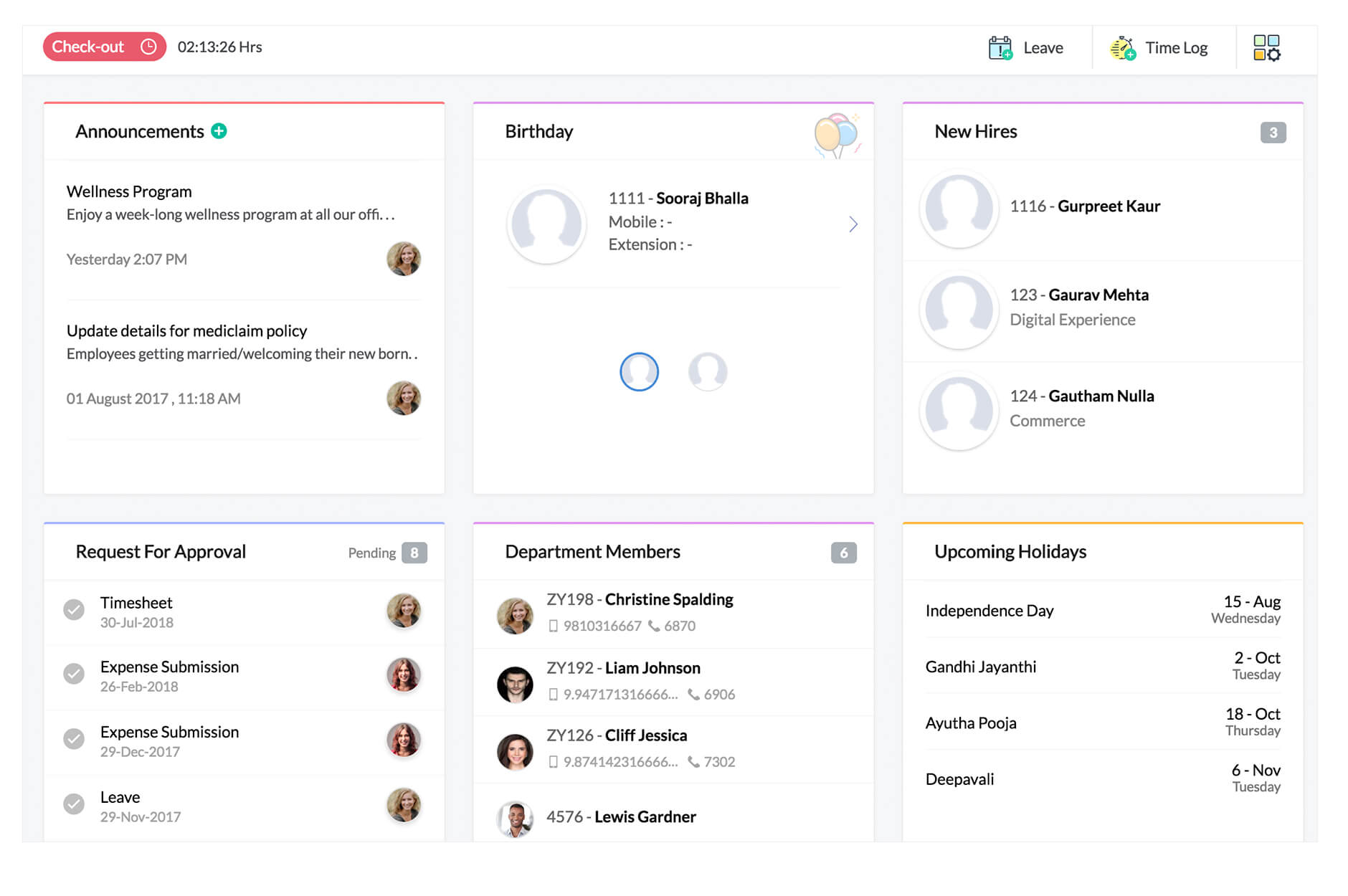
Platform overview: Zoho People is a cloud-based HRMS that forms part of the wider Zoho business software suite. It is designed to support small to mid-sized organisations that want a flexible and affordable HR system with a wide range of features.
Because it connects easily with other Zoho tools, Zoho People works well for companies already using Zoho for CRM, finance or project management. The platform offers a good balance between functionality and cost, though it can require configuration to suit specific workflows.
Key features
- Core HR and employee records
- Time and attendance tracking
- Leave management
- Performance management
- Custom workflows and forms
Pros
- Competitive pricing
- Highly customisable
- Strong integrations within the Zoho ecosystem
Cons
- Interface can feel complex for new users
- Reporting is less intuitive than some competitors
- Setup requires time to configure properly
Best for: Small to mid-sized teams that want a flexible cloud-based HRMS and already use other Zoho products.
Cloud-based HRMS comparison chart
Comparing cloud-based HRMS platforms side-by-side makes it easier to see where each system stands out. While feature lists are helpful, many organisations want a clear snapshot that shows strengths, best use cases and price ranges at a glance.
The table below summarises the five cloud-based HRMS platforms covered in this article. It highlights one key strength for each platform, the type of organisation it suits best, and a general idea of pricing. Prices can vary based on features, users and region, so these figures should be used as a starting point rather than a final quote.
| Platform | One highlight | Best for | Price (starting from) |
|---|---|---|---|
| Factorial | All-in-one HR, IT and analytics | Small to mid-sized organisations | From £5 per user/month |
| Oracle HCM Cloud | Enterprise-level global HR | Large and global enterprises | Custom pricing |
| Sage HR | Simple core HR management | Small businesses | From £4 per user/month |
| HR Cloud | Onboarding and engagement tools | Teams focused on employee experience | Custom pricing |
| Zoho People | Flexible and affordable HRMS | Small to mid-sized teams | From £1 per user/month |
This comparison shows that there is no single cloud-based HRMS that fits every organisation. Some platforms focus on scale and complexity, while others prioritise ease of use or cost. Understanding these differences helps narrow down options more quickly.
In the next sections, we will look at the wider benefits of cloud-based HRMS software, how to choose the right platform for your team, and which features matter most when making a decision.
Benefits of using a cloud-based HRMS
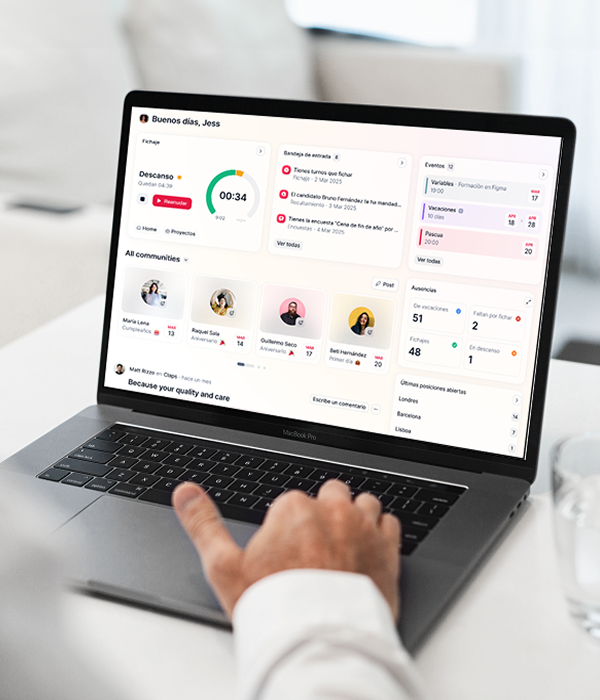
A cloud-based HRMS offers practical benefits for HR teams, managers and employees. Compared to manual processes or older systems, it helps reduce admin, improve data quality and support better day-to-day decisions.
Key benefits include:
- Less manual work: Routine tasks such as leave requests, approvals and document storage are automated. This frees up HR time for higher-value work.
- More accurate data: Employee information is stored in one system and updated in real time. This reduces duplication and lowers the risk of errors in reports.
- Better visibility for managers: Managers can view team availability, absence and performance data without waiting for reports from HR.
- Employee self-service: Employees can update personal details, request time off and access documents themselves, reducing basic HR queries.
- Scales with your organisation: A cloud-based HRMS can adapt as teams grow or change, without new infrastructure or complex upgrades.
- Stronger security and control: Data is stored securely, with role-based access and automatic updates that help support compliance.
These benefits make cloud-based HRMS software a practical choice for organisations that want clearer processes, better data and less admin across HR.
How to choose the right cloud-based HRMS for your team
Choosing a cloud-based HRMS is not about finding the system with the most features. It is about finding the one that fits your team’s size, structure and priorities. A clear understanding of what you need will help you avoid paying for tools you will not use.
When comparing cloud-based HRMS software, consider the following factors:
- Team size and growth plans: Some platforms are built for small teams, while others suit large organisations. Choose a system that can scale as your headcount grows.
- Budget and pricing model: Look at how pricing is structured. Per-user pricing can work well for growing teams, but costs can add up. Make sure pricing is clear and predictable.
- Ease of use: HR teams, managers and employees should be able to use the system without extensive training. A complex system often leads to low adoption.
- Required features: List the features you need now, such as time off or performance management, and those you may need later, such as analytics or IT management.
- Flexibility and integrations: Check whether the HRMS software integrates with your existing tools and whether workflows can be adjusted to match how your team works.
- Data security and compliance: Make sure the platform offers strong security controls and supports data protection requirements.
Taking time to review these points helps narrow down options and ensures the cloud-based HRMS you choose supports both current needs and future growth.
💡 Test Factorial for free to see how these benefits work for yourself.
Choosing the right cloud-based HRMS in 2026
A cloud-based HRMS has become a core system for organisations that want clearer processes, better data and less manual work. With employee information spread across teams and tools, having one central system makes it easier to manage HR tasks and support everyday decisions.
Most cloud-based HRMS platforms offer similar core features. The real difference lies in how well these features work together and how easily teams can use them as the organisation grows.
Factorial as an all-in-one solution
Factorial stands out by bringing HR, IT and business processes into a single platform. With One, its AI agent, teams can access insights quickly without building complex reports. Built-in IT management helps streamline onboarding and offboarding, while the all-in-one approach removes the need for multiple disconnected tools.
For employers considering a cloud-based HRMS, now is the right time to choose. Delaying the decision often means more manual work, less visibility and growing frustration across teams. Choose a system that scales with your organisation and help set a stronger foundation for the years ahead. Request a demo today to see if Factorial is the right fit for you!
Disclaimer:
The information presented on this page is based on publicly available sources. The comparisons between Factorial and other providers are intended solely for the illustration of the respective software features, pricing and functionalities. All information regarding features, prices, and integrations may be subject to change without prior notice. Factorial assumes no liability for the accuracy, completeness, or timeliness of the information presented. We recommend contacting the respective providers directly to obtain the most accurate and up-to-date information. All legal regulations regarding Spanish fair advertising and competition law are fully observed by us; if you have any concerns, please reach out to us. The comparisons presented do not constitute a final evaluation or recommendation for any provider, but serve solely as an informational source.