Investing in an HR platform for your small business is a significant step. Choosing the right software can quickly lead to improvements in how your organisation operates, but getting it wrong can be time-consuming and frustrating, not to mention a waste of money. In this guide, we’ll talk you through what to look for in an HR platform for a small business, review five of the best platforms used in the UK and provide some extra tips to support your research.
What to Look for in an HR Platform for Small Businesses
When you are looking for an HR platform for your small business, the following features should be available:
- Employee database to store records, contracts and documents.
- Tools to schedule and track hours worked, leave and absences.
- Basic performance management support.
- Payroll function or the ability to integrate with existing payroll systems.
- Onboarding & offboarding workflows
Questions to ask when looking for an HR platform
When researching the best HR platform for your small business, it’s essential to consider a combination of practical functionality, cost-effectiveness, and future scalability. Alongside understanding the financial commitment involved in the investment, here are some questions to ask yourself when you are looking at HR platforms:
- How easy is the platform to use? For a small business where team members often take on different roles, it is essential that the platform be intuitive, require minimal training, and offer a self-service option for employees.
- Does it include the core HR features? Centralising your employee database, leave management, time tracking and on/offboarding supports immediate time and financial savings.
- What options are available beyond the core HR features? You may want the option to add modules for payroll, recruitment, talent management, and learning and development in the future. Reporting features such as dashboards and insight reports are also valuable for making data-informed decisions.
- Can you customise the platform? Being able to adjust templated processes and workflows to fully reflect how your business operates can make a huge difference in the platform’s return on investment.
- Is the platform secure and compliant? For small UK businesses, compliance with UK employment law and GDPR is essential, so the platform you choose needs to give you complete confidence in these key areas. The platform also needs to offer secure log-ins, encrypted data storage and clear, accountable data policies.
- Can the platform grow if your business does? To avoid wasted costs and disruption from software changes, ensure the platform is flexible and scalable. The ability to add extra users and additional features, such as performance review,s may be essential when your business grows.
- Does the platform fully support remote teams? With so many people working remotely now, the software needs to be cloud-based, offer robust communication tools, and support remote onboarding through electronic document signing and digital workflows.
- Can the platform integrate with other platforms, especially payroll systems? While not all platforms include payroll, it’s essential that the two systems you use can talk to each other and allow you to accurately track hours, leave and pay together.
- What customer support does the platform offer? Check whether there is UK-based support, how easy it is to talk to a person rather than a chatbot, and what procedures are in place for onboarding, training, and support.
Why Small Businesses Need Flexible and Affordable HR Software
Small businesses need HR software that is flexible and affordable to maximise and future-proof the return on investment. A flexible HR platform will support a small business as it changes and grows, ensuring compliance with UK laws and regulations, including data privacy, GDPR, and record-keeping, and making it easy for HR teams to perform audits. Likewise, predictable pricing, no hidden fees, and the ability to pay only for the features they need in affordable HR solutions help companies manage their budgets and ensure they invest in the right tools.
How to Ensure HR software Supports UK-Specific Legal Requirements
If you want to be sure that the HR platform you are considering investing in supports UK-specific legal requirements, the following checklist will highlight the areas the platform needs to cover:
- Statutory leave entitlements, including sick, maternity and paternity pay.
- National insurance and PAYE calculations.
- Minimum wage compliance.
- Working time regulations (the maximum time employees can work without a break).
- Compliant employee contracts and policies.
- Secure employee records that are compliant with GDPR requirements.
It is also essential that the platform is regularly updated with legislative and compliance changes.
Top HR Platforms for Small Businesses in 2026
To help you choose the best small business HR software, we’ve pulled together the top six platforms in the UK.
Factorial: The Leading HR Platform for Small Businesses in the UK&I
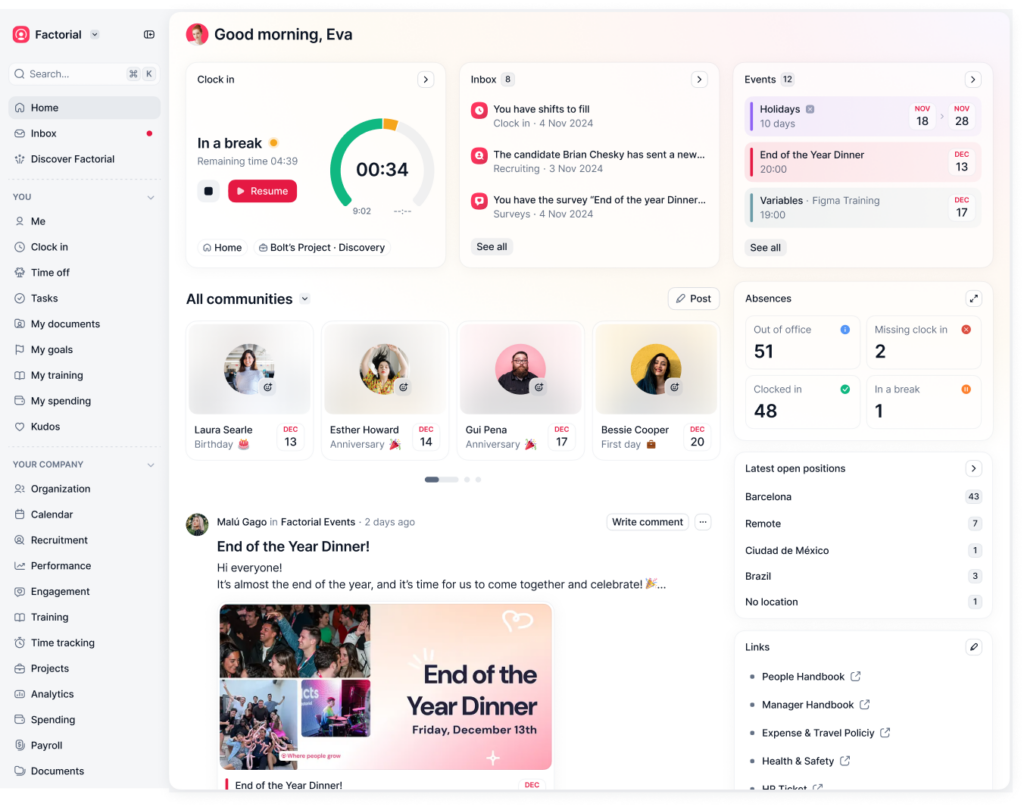
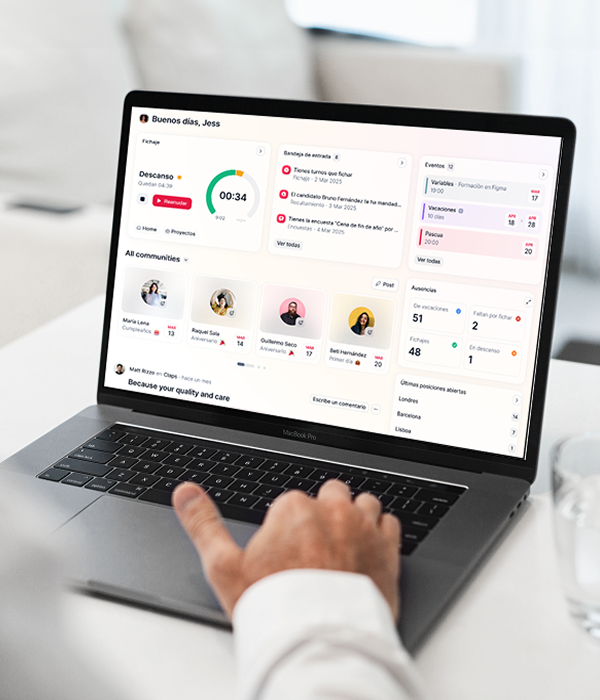
Factorial is an all-in-one HR and business management system designed to help small businesses streamline their people-related processes, securely store employee data and automate time-intensive administrative processes.
Included within Factorial’s Core programme are the essential HR tools required to run a small business, including legal templates, compliance support, payroll integrations, time tracking and leave management. It also supports internal communication through announcement features, shared documents and engagement features.
The high-tier Enterprise plan is designed to support more complex organisational needs, including advanced reporting, multi-currency or multi-entity setups, expense management with payroll integration and greater customisation and automation.
Price
- Free trial for 14 days.
- Start from £5.40 per employee per month for Core, up to around £25 per month for Enterprise.
Sage HR
Sage HR is part of a trusted UK-based accounting and business software provider with robust compliance tools to meet HMRC requirements. While the HR system can integrate with the well-known Sage Payroll, it also functions as a standalone platform, supporting core HR processes such as employee document storage, leave management, expenses, shift scheduling, performance, and recruitment.
Price
- 30-day trial available.
- Modulate pricing, with Core HR & Leave Management starting at £4.60 per employee per month.
- Additional modules include performance, timesheets, shift scheduling, expenses and recruitment.
CharlieHR
CharlieHR provides an intuitive HR system that stores all documentation in one place and streamlines onboarding, leave management, and performance management. The system requires minimal training, so teams find it easy to use, and it has an advice line providing expert HR guidance on policies, personnel challenges and compliance. There are also robust reporting functions that provide insights into trends in time off, absence, and performance in your team.
Price
- Free trial for 7 days.
- The HR module starts at £20 for teams of 1 to 4 people.
- Additional modules available: Charlie Recruit and Charlie Advice.
BreatheHR
BreatheHR is a modular HR system designed to support small UK-based businesses in managing staff records, contracts, working hours, and expenses through an integrated payments tool. The system also includes tools for recruitment, onboarding, and performance reviews, as well as dashboards for quick visual reporting.
Price
- 14-day free trial available.
- Tiered monthly model based on the number of employees, starting at £22 per month for the Micro plan (1-10 people).
- Add-on modules available: £10 for rota, time and attendance, £12 for learn, £21 for recruitment tracking. and £12 for expenses management.
Zoho People
Zoho is a global technology company with a range of business applications, including HR, finance, project management and analytics. Moreover, Zoho People is recognised for providing core HR functionality and comprehensive reporting tools at an affordable price. Its features include an employee database and a self-service portal, leave and attendance tracking, timesheets, performance management, and workflow automation.
Price
- Free 3-day trial
- Plans include a free plan for up to 5 users, then different options from Essential (£0.83 per person per month), Professional (£1.50), Premium (£2.50) and Enterprise (£4)
People HR
Also referred to as AccessPeople HR, PeopleHR is a popular HR software option that “puts your people first”. There are tools for shift scheduling and managing timesheets, leave and absences, payroll software to enable companies to pay employees directly, an applicant tracking system for recruitment and appraisal software to support the performance review process.
Price
- 14-day free trial
- Plans range from Starter (£3 per month per person), Core (£5.50) and Pro (£8), as well as Elite (£9.50)
How to Choose the Right HR Platform for Your Small Business
When you start thinking about choosing the right HR platform for your small business, the questions we listed earlier provide a good framework to guide your decision.
Here we provide a step-by-step guide to support you through the process:
- Understand your business needs: start by identifying the three HR pain points you need help with.
- Create a priority list: keep things simple and focus on what you really need this platform to support you with.
- Research your options: use blogs, online forums, and AI tools to understand what’s available.
- Take a demo: reputable platforms will be prepared to invest time in one of their experts talking you through their programme.
- Sign up for a free trial: any platform worth investing in will offer one, so you can be sure the features will work for you.
- Evaluate the experience of the trial: don’t rush into making a decision, take your time to really analyse what worked and didn’t before you
The Rise of AI and Automation in HR Platforms
Within core HR processes, AI can reduce the time spent on administrative tasks such as time tracking, leave management and document handling. By reducing the manual workload, using AI and automation can give teams the time they need to focus on higher-value strategic work while maintaining consistency and fairness to all employees.
Beyond core HR, AI and automation help with recruitment by automating CV screening, matching candidates to roles and scheduling interviews. While it cannot replace human judgment, AI is also used to support organisations staying compliant by flagging potential risks, ensuring HR processes align with any legislative procesesss and enforcing policy manaagement. It also plays a key role in anaysing data to provide HR teams with information on trends, absences, performance, engagement and staff retention more quickly than previously. With these insights, AI supports organisations to take a more proactive approach to workforce planning and employee wellbeing – using more AI tools to do so, such as AI-driven surveys, personalised communications and chatbots. All these tools help employees access information and provide feedback more easily, helping employees to feel supported in their roles.
Factorial’s AI Agent, One to Simplify HR Processes in Small Businesses in 2026
Factorial’s AI agent is called One and is built directly into Factorial’s platform. Instead of acting like a generic chatbot, One uses your company’s own data, workflows and structure to deliver support that saves you time while being uniquely tailored to your business.
On one hand, One can instantly answer questions from employees based on your policies, retrieve contracts or records without manual searching and generate materials such as employee surveys, job descriptions and customised leave reports. So questions such as ‘How many days holiday do I have left?’ and ‘What is the reimbursement policy for travel expenses?’ can be answered by One without taking the employee’s time.
In addition to answering time-consuming questions, the system can take notes from one-to-one meetings and combine them with other raw data to create clear, actionable reports and insights that improve workforce planning, recruitment, and retention.
Why Factorial is the Best HR Platform for Your Small Business in 2026
If you are a small business looking for an HR platform that is comprehensive, robust, innovative and affordable, Factorial is the best option to invest in during 2026. Factorial’s intuitive interface makes it easy to use and minimises training costs, while also supporting visual reporting tools that provide quick access to trends and insights. The suite of functions includes everything you need through the employee’s lifecycle, from recruitment and onboarding to tools for managing time off, clocking in, and rotas, as well as systems to maximise productivity through performance management and learning and development.
Don’t just take our word for it. Sign up for a demo with one of our experts today.