UK employers are facing a period of significant legal transformation. The Employment Rights Act 2025 became law on 18 December 2025, with reforms arriving in phases across 2026 and 2027. Acas confirms that some employment law updates are already in force, while the most operationally demanding employment law changes take effect in October 2026 and 2027.
Table of Contents
- Key Facts
- What has already changed in 2026?
- What Employment Rights Act changes take effect in October 2026?
- Which Employment Rights Act deadlines apply in 2027?
- Preparing HR Operations for Upcoming Regulations
Key Facts
- The Department for Business and Trade states that the next UK Employment Rights Act deadlines are 1 October 2026 for extended Tribunal time limits, 30 October 2026 for harassment and trade-union duties, and 1 January 2027 for unfair-dismissal reform.
- Estimates are that 6.3 million employees, or 22% of employed people aged 16 and over, have between six months and two years’ service.
- Around 40% of businesses use discretionary probationary periods, most lasting six months or less.
- In 2023/24, Employment Tribunals recorded 646 unfair-dismissal awards, with a median award of £6,746.
For a comprehensive breakdown of statutory changes, you can read our complete guide to UK Employment Laws. Below, we break down the upcoming compliance deadlines, detail what are the new employment laws you need to plan for, and outline how HR leaders can prepare their workforce systems now.
What has already changed in 2026?
Since 6 April 2026, Statutory Sick Pay has been payable from the first day of sickness, and no lower earnings limit has applied. The same implementation wave made paternity leave and ordinary parental leave day-one rights. Employers must keep annual-leave and holiday-pay records for at least six years.
What Employment Rights Act changes take effect in October 2026?
Two October 2026 dates require separate preparation. The Department for Business and Trade confirms that Employment Tribunal time-limit changes take effect on 1 October, while harassment and trade-union measures take effect on 30 October.
- Tribunal Time Limits: From 1 October 2026, the time limit for specified Employment Tribunal claims increases from three to six months. The Department for Business and Trade states that the extended limit applies where the relevant act or failure occurs on or after that date.
- Workplace & Third-Party Harassment: From 30 October 2026, employers must take “all reasonable steps” to prevent sexual harassment. Employers will also be liable for third-party harassment by clients or customers unless they have taken all reasonable steps to prevent it.
- Trade Union Information: From 30 October 2026, employers must inform workers of their right to join a trade union. The Department for Business and Trade advises employers to incorporate the required notice into onboarding once the applicable regulations and guidance are in force.
What companies need to do:
Review grievance and harassment policies immediately. Because the tribunal claim window is doubling, securely storing accurate employee records for extended periods is essential. Implementing concrete manager training to demonstrate “all reasonable steps” will be critical to mitigating compliance risk.
How to evidence “all reasonable steps”
- Document harassment risk assessments for client-facing, off-site and lone-working roles.
- Train managers and workers on reporting routes and intervention expectations.
- Record investigations, actions and follow-up reviews.
The Equality and Human Rights Commission’s eight-step guidance recommends monitoring and evaluating preventative action, rather than relying on a policy alone.

Which Employment Rights Act deadlines apply in 2027?
The employment law changes arriving in 2027 fundamentally alter hiring and workforce management:
- Unfair Dismissal: From 1 January 2027, the qualifying period for ordinary unfair-dismissal claims falls from two years to six months, and the statutory cap on compensatory awards will be removed. Staff who have already completed six months’ service on that date will gain protection immediately.
- Zero-Hours, Low-Hours and Flexible Working: In 2027, zero-hours and low-hours workers are expected to gain rights to guaranteed hours, reasonable notice of shifts, and payments for shifts cancelled, shortened or moved at short notice. HM Revenue & Customs states that the reference period for guaranteed-hours offers is expected to be 12 weeks, subject to regulations. A separate flexible-working change will require employers that refuse a flexible working request to explain why the refusal is reasonable.
What companies need to do:
Overhaul probationary review workflows. With unfair dismissal protection starting at six months, businesses need structured performance tracking to evaluate hires early. Accurate shift and attendance logging will also be mandatory to comply with upcoming zero-hours regulations.
Other 2027 measures to watch
Most remaining measures do not yet have a confirmed start date. Dismissal-and-rehire protections, statutory bereavement leave, pregnancy and maternity dismissal protections, collective-redundancy reforms, gender pay gap and menopause action plans, and NDA restrictions are among the changes expected in 2027.
Preparing HR Operations for Upcoming Regulations
Understanding what the new employment laws are is only half the battle, managing the resulting administrative strain is the other. Every wave of employment law updates increases operational pressure, exposing friction in manual workflows across absence management, documentation tracking, and manager approvals.
- By 1 October 2026, update case-management and record-retention procedures for longer Tribunal claim windows.
- Before 30 October 2026, complete harassment risk assessments and update trade-union communications.
- Before 1 January 2027, set probation review points before the six-month threshold.
- Track consultation updates before changing zero-hours or flexible-working processes. Several 2027 measures do not yet have a confirmed start date.
To reduce administrative burden while staying compliant, forward-thinking HR teams are reassessing their operational foundation:
- Clean Employee Data: Centralised, up-to-date records ensure faster, more confident compliance auditing and tribunal preparation.
- AI-Enabled Automation: Smart automation can handle repetitive HR admin – such as document collection, policy updates, and probation alerts – without replacing human judgment.
- Manager Enablement: Standardised digital workflows enable line managers to make compliant, human-centred people decisions effortlessly.
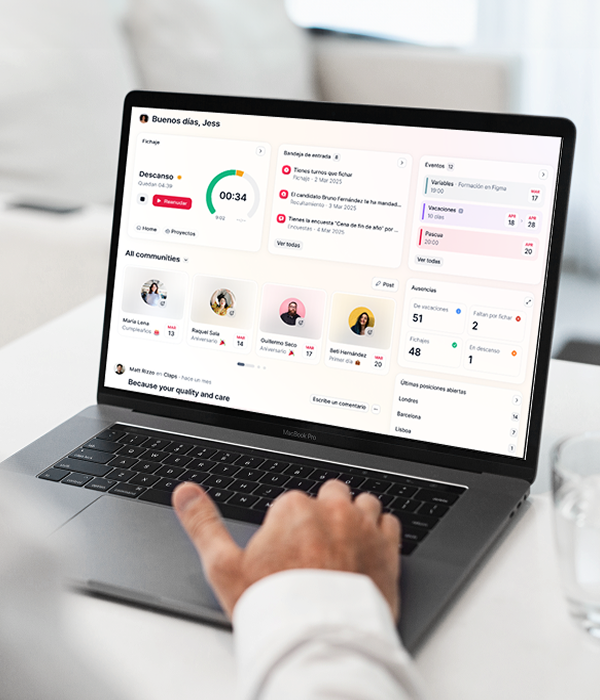
Factorial, all-in-one business management software, can help teams retain employee documentation, record probation milestones, assign policy acknowledgements and keep a clearer audit trail for each employment-law deadline.
By auditing manual processes today, your HR team can eliminate operational bottlenecks, safeguard compliance, and stay prepared for every deadline ahead.
FAQ
What are the key changes to employment law in the UK in 2026?
Key changes in October 2026 include extending the Employment Tribunal claim window to six months, introducing a new employer duty to prevent harassment, and requiring employers to inform new staff about their right to join a trade union.
What are the major changes to the UK Employment Rights Act in January 2027?
From January 2027, the qualifying period for unfair dismissal protection will be reduced from two years to six months. Other 2027 reforms include stricter rules for zero-hours contracts and processing flexible working requests.
What are some recent changes to employment law in the UK?
Recent employment law updates include extending the tribunal claim window to six months and reducing the unfair dismissal qualifying period to six months. Managing these changes requires robust record-keeping, which can be simplified with all-in-one business management software like Factorial.