Employee engagement is one of the most important factors in running a successful organisation. Yet, despite growing awareness in recent years, many businesses still struggle to define it clearly, measure it properly, or act on it consistently.
This guide covers what employee engagement means, why it matters for your business, how to measure it, and the practical steps HR teams can take to improve it.
What Is Employee Engagement?
Employee engagement refers to the physical, mental, and emotional commitment an employee feels towards their work and their organisation. It goes beyond job satisfaction or basic motivation. An engaged employee is one who understands the company’s goals, cares about the outcomes, and actively contributes to making them happen.
The CIPD describes employee engagement as a combination of commitment to the organisation and its values, plus a willingness to support colleagues — what is sometimes called “organisational citizenship.” Engagement is something employees offer freely. It cannot be written into a contract or demanded.
A useful way to think about it: engagement is the step before motivation. A committed employee already wants to do well. A merely motivated employee may need an external reason to try harder.

The State of Employee Engagement in the UK Today
The current picture in the UK is not a positive one. According to Gallup’s State of the Global Workplace report, only around 10% of UK workers are fully engaged at work. The UK ranks 33rd out of 38 European countries for engagement levels, and 40% of employees report feeling stressed at work, while 27% feel sad and 20% feel angry.
The financial consequences are significant. Low engagement costs the UK economy over £257 billion every year, which is roughly 11% of GDP. Some estimates put this figure even higher, at over £340 billion annually, once you factor in the costs of recruitment, training, absenteeism, and presenteeism. On an individual level, each disengaged employee costs their employer roughly 20% of their annual salary in lost output.
These figures make it clear that employee engagement must become a core business priority.
Why Employee Engagement Matters
The business case for investing in employee engagement is backed by a vast amount of research. Gallup’s meta-analysis, which covered more than 2.7 million employees across 276 organisations in 54 industries, found that those businesses that have highly engaged teams achieve a 23% higher degree of profitability compared with those businesses with disengaged workforces. Engaged teams also show 18% higher productivity and a 10% improvement in customer satisfaction scores.
Research by Dale Carnegie found that companies with high levels of employee engagement experience up to 24% lower staff turnover. High-engagement organisations also report 59% less turnover in high-turnover industries, which significantly reduces the ongoing cost of recruitment and training.
Engaged employees also tend to recover faster. Organisations with committed workforces bounce back more quickly from economic downturns and financial setbacks, and those with high engagement scores have historically outperformed their competitors during periods of disruption.
The Two Core Pillars of Employee Engagement
While many factors influence engagement levels, strategic planning in this area generally rests on two key pillars.
Commitment to the Organisation
This measures how involved employees feel with the company as a whole and how they feel about its direction and leadership. It covers trust in senior management, perceptions of fairness and respect, and how the organisation treats its people, both at work and in the wider community. It also includes how employees perceive the company’s relationships with suppliers, customers, and partners. This pillar has a lot in common with employer branding: the stronger the culture and reputation, the more likely people are to feel proud to be part of it.
Commitment to Line Management
This is a more specific measure. It reflects how connected an individual feels to their direct manager. Key factors here include feeling valued, being treated fairly, receiving regular and constructive feedback, and having a working relationship built on mutual respect. Research consistently shows that managers are one of the biggest drivers of engagement. Employees who believe their senior leaders and managers prioritise people issues score an average engagement rate of 77%, compared with 45% for those who disagree.
Strong line management is not just about getting results. It is about creating an environment where people feel supported in their work and their development.
Five Key Benefits of Employee Engagement
Improving engagement should be a consistent focus for any HR team, not just a one-off initiative. Here are five concrete benefits that come from getting it right.
1. Stronger Customer Relationships
Employees are the bridge between the organisation and its customers. In many roles, they are the face of the business, and the experience they deliver directly shapes how customers feel about the brand. When employees are engaged, that positive attitude comes through. When they are not, customers feel it too. Recognition programmes and other engagement initiatives help keep morale high, which in turn supports better customer outcomes.
2. Reduced Absenteeism
Frequent, unexplained absences are often an early signal of disengagement. An employee who feels disconnected from their work or their team is more likely to take unplanned time off. A well-designed engagement programme, focused on strengthening commitment and belonging, is one of the most effective ways to address this issue. Engaged employees take fewer sick days and are more likely to be present and focused when they are at work.
3. Lower Staff Turnover
Replacing staff is expensive in terms of time, money, and lost knowledge. When employees do not feel connected to their organisation, they are far more likely to look elsewhere. Building a workplace where people feel they belong, that their career goals are supported, and that they genuinely enjoy coming to work, reduces the likelihood of them leaving. As noted above, engaged organisations see significantly lower turnover rates across both high and low-turnover industries.
4. Higher Productivity and Performance
Engaged employees take ownership of their work. They finish tasks with less supervision, raise problems before they escalate, and contribute ideas that move the business forward. They also collaborate more effectively, which reduces delays and improves output across teams. This is not just anecdotal. The research links engagement directly and consistently to measurable gains in productivity and quality.
5. Better Innovation and Decision-Making
Organisations with committed, engaged workforces are better at adapting and innovating. Engaged employees understand the company’s mission and can make better decisions because they genuinely understand what the business is trying to achieve. They are also more likely to share ideas and flag risks, which improves the quality of decisions at every level.
How to Measure Employee Engagement
You cannot improve what you do not measure. Collecting regular data on employee engagement is essential for understanding where your organisation stands and where to focus your efforts.
The most common measurement methods include:
Employee engagement surveys: These can be run annually, quarterly, or as shorter “pulse” surveys throughout the year. They should cover topics such as job satisfaction, relationship with management, clarity of goals, and sense of belonging. Anonymous employee surveys tend to produce more honest results.
Performance appraisals: Regular appraisals help you spot patterns in individual and team performance that may point to engagement issues.
One-to-one meetings: Regular check-ins between employees and their managers are one of the most direct ways to understand how someone is feeling about their work.
Exit interviews: When employees leave, their feedback can reveal patterns that are hard to spot while they are still in the organisation.
Once you have your data, look for patterns. Which teams, departments, or management structures show lower engagement? Are there particular activities or roles where disengagement is more common? This analysis gives you the foundation for a targeted plan.
How to Improve Employee Engagement
Improving employee engagement is not about one-off events or perks. It requires a consistent, strategic approach that runs through every part of the employee experience.
Start with Recruitment
Engagement does not begin on someone’s first day. It starts the moment a candidate reads your job advert. The language you use, the values you communicate, and the way you run your interview process all form part of a candidate’s first impression. Bringing in people who are genuinely aligned with your culture and values makes engagement far easier to maintain from the outset. Look carefully at soft skills, attitude, and cultural fit alongside technical ability.
Prioritise Onboarding
The first few weeks in a new role are critical. A structured, warm, and informative onboarding process helps new starters understand the business, feel welcomed by their team, and begin to connect their role with the wider mission. Poor onboarding, by contrast, can set a negative tone that is difficult to recover from.
Invest in Learning and Development
Employees need to feel that the organisation values their growth. Training and development programmes signal that the company takes individual ambitions seriously, not just acknowledging them, but actively supporting them. Organisations that invest in professional development see stronger engagement and lower turnover as a result. This does not have to mean expensive courses. Mentoring, internal knowledge-sharing, stretch assignments, and access to online learning can all make a meaningful difference.
Build a Strong Recognition Culture
People need to feel that their efforts are noticed. Recognition does not always mean financial reward. A genuine, timely acknowledgement of good work from a manager or peer can have a powerful impact on how someone feels about their role. Structured recognition programmes help make this consistent and fair across the organisation.
Support Wellbeing
Employee wellbeing covers physical, mental, and emotional health. Flexible working arrangements, access to mental health support, a comfortable and safe working environment, and a genuine commitment to work-life balance all contribute to how engaged employees feel. A people-centred approach recognises that employees bring their whole selves to work. When their wellbeing is supported, their engagement follows.
Give Employees a Voice
One in four UK employees feels voiceless in their organisation and this is a significant problem. Employees who feel they cannot speak up in their organisation, share ideas, or raise concerns are far more likely to disengage. When possible, it is important to give regular opportunities for feedback, whether through employee engagement surveys, open forums, team meetings, or direct conversations with managers. These opportunities are essential and even more importantly, feedback must be actively considered and acted on. Asking for input and then ignoring it is often worse than not asking at all.
Communicate Clearly and Often
Employees who understand the company’s mission, goals, and strategy are better placed to contribute meaningfully to achieving results. Clear, regular communication from senior leadership, delivered honestly and in plain language, builds trust and helps people see where their work fits in the bigger picture. Keep communication channels open at all levels of the organisation.
Questions Every HR Team Should Ask
Before developing an engagement strategy, it is worth reflecting on the current state of your organisation. Consider the following:
- Is your company’s mission and vision clear? How consistently is it communicated to all teams?
- Does everyone in the business understand the key objectives and how their daily work connects to them?
- Are your line managers engaged themselves? Have they been given the tools and training to support their teams effectively?
- When did you last ask employees how they feel about working here? And what did you do with their answers?
If these questions are difficult to answer, that is a useful signal in itself.
The Role of HR Software in Managing Engagement
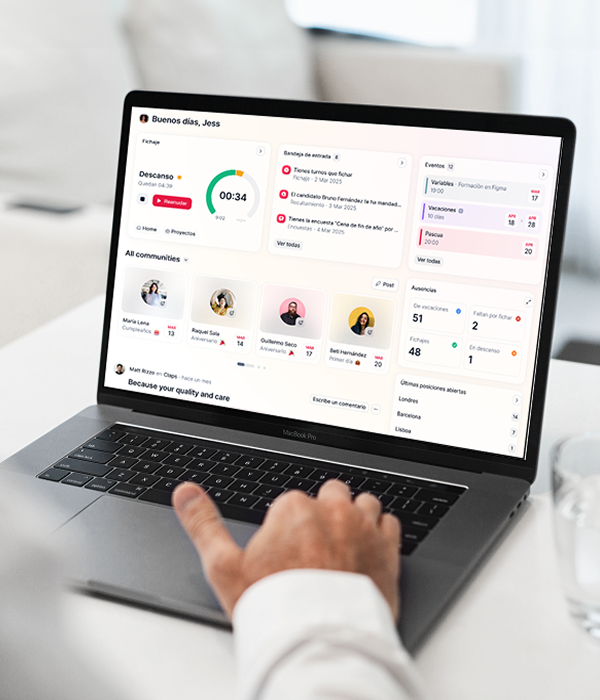
Technology can play a meaningful role in supporting an engagement strategy. A cloud-based HR platform like Factorial, available 24/7 and accessible from anywhere, allows HR teams to manage the full range of engagement-related processes in one place. Request a demo of Factorial to see exactly how our performance management software works.
Key features to look for include:
- Performance appraisal tools: Allow you to track individual and team performance over time and link it to engagement KPIs that you define.
- Employee survey functionality: Makes it straightforward to run regular pulse surveys and collect actionable data.
- Internal communication tools: Employee portals and messaging features keep people connected and informed, particularly in distributed or hybrid teams.
- Recognition and rewards management: Supports a consistent approach to employee recognition across the organisation.
The goal is to free up HR professionals from administrative tasks so they can focus on the work that has the greatest impact: building a workplace where people are committed, motivated, and genuinely invested in the organisation’s success.
Practical Checklist for Improving Employee Engagement
Here is a short summary of the key actions HR teams can take:
- Monitor engagement regularly through surveys, performance appraisals, and one-to-ones
- Align recruitment and onboarding with your company values and culture
- Invest in learning, development, and career progression
- Build a culture of recognition and regular, honest feedback
- Support employee wellbeing in a meaningful and consistent way
- Give employees a genuine voice and act on what they say
- Train and support line managers, as they are central to engagement
- Communicate the company’s mission, values, and goals clearly and often
- Use HR software to track engagement data and spot trends over time
Employee engagement is not a project with an end date. It is an ongoing commitment to treating people well, communicating openly, and creating conditions where everyone can do their best work.
Frequently Asked Questions About Employee Engagement
What is the difference between employee engagement and job satisfaction?
Job satisfaction describes how content an employee feels with their role and working conditions. Employee engagement goes further. An engaged employee is actively committed to the organisation’s goals and puts in discretionary effort, not because they have to, but because they want to.
How often should you measure employee engagement?
Most HR teams recommend a combination of an annual in-depth survey and shorter pulse surveys every quarter. Regular one-to-one meetings between managers and their direct reports can also surface engagement issues between formal survey cycles.
Who is responsible for employee engagement?
While HR teams design and manage engagement strategies, line managers have the biggest day-to-day influence on how engaged their teams feel. Senior leadership sets the tone through culture, communication, and values. In practice, engagement is a shared responsibility across the whole organisation.
What is a good employee engagement score?
Benchmarks vary by industry, but an engagement score above 65% is generally considered healthy. Scores above 75% indicate a highly engaged workforce. The most important thing is not the score itself, but tracking it consistently over time and acting on the findings.