Training and professional development play an important role in how companies grow. Businesses in the UK are dealing with changing skills requirements, stricter compliance rules, and teams working across different locations. Many organisations still manage training with spreadsheets or documents scattered across platforms, making it difficult to track progress or stay organised.
Staff development software helps companies plan employee training, monitor progress, and keep records of certifications and completed courses. It also helps connect learning with performance reviews and career growth.
This guide explains what staff development software is and why UK businesses need it. It compares seven widely used tools. The comparison looks at features, scalability, ease-of-use, and how well each platform works with your other HR processes.
What is staff development software?
Staff development software is a digital platform that you can use to organise and manage employee training and development.
Instead of tracking training manually across multiple tools, companies can manage everything in one system. HR and learning teams can plan courses, assign training, and monitor employee progress.
Most staff development platforms allow you to:
Plan employee training
Create structured training programmes for onboarding and ongoing development. Courses can be assigned to teams, roles, or departments.
Track learning progress
See which training programs employees have started, are currently taking, or have completed. Managers can also review progress at team or company level.
Manage certifications
Store records of completed training and certifications. The system can also track expiration dates and send reminders when renewals are needed.
Connect training with career development
Training courses can be linked to specific roles or competencies so employees understand how learning supports their career paths.
Measure training results
Reports and analytics are important for talent management. They help companies understand which programmes improve performance or support compliance.
Using a single system makes training easier to manage and more visible across the organisation.
Why staff development and training matter for UK businesses
Employee learning and development helps organisations maintain the skills of their workforce and support their long-term growth. Several factors make structured training especially important for UK companies.
- Identifying skills gaps to keep up with changing business needs.
- Mapping existing skills and identifying areas where employees need additional training or development.
- Meeting compliance requirements with certification and mandatory training and assessments
- Training software keeps records of completed courses and certifications to use them in audits
- Supporting employee growth and retention
- Encouraging development with actionable steps
Best staff development software in the UK
Below are seven staff development platforms commonly used by UK businesses. Each tool was reviewed based on features, scalability, ease of use, and integration with HR systems.
1. Factorial
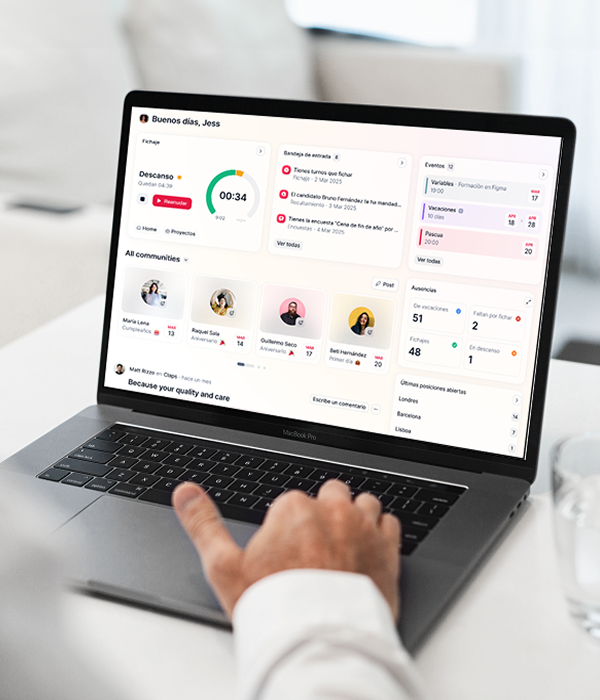
Factorial is an HR platform that includes a training management system with tools for employee development. Companies can manage training together with onboarding, performance reviews, time tracking, and other HR processes.
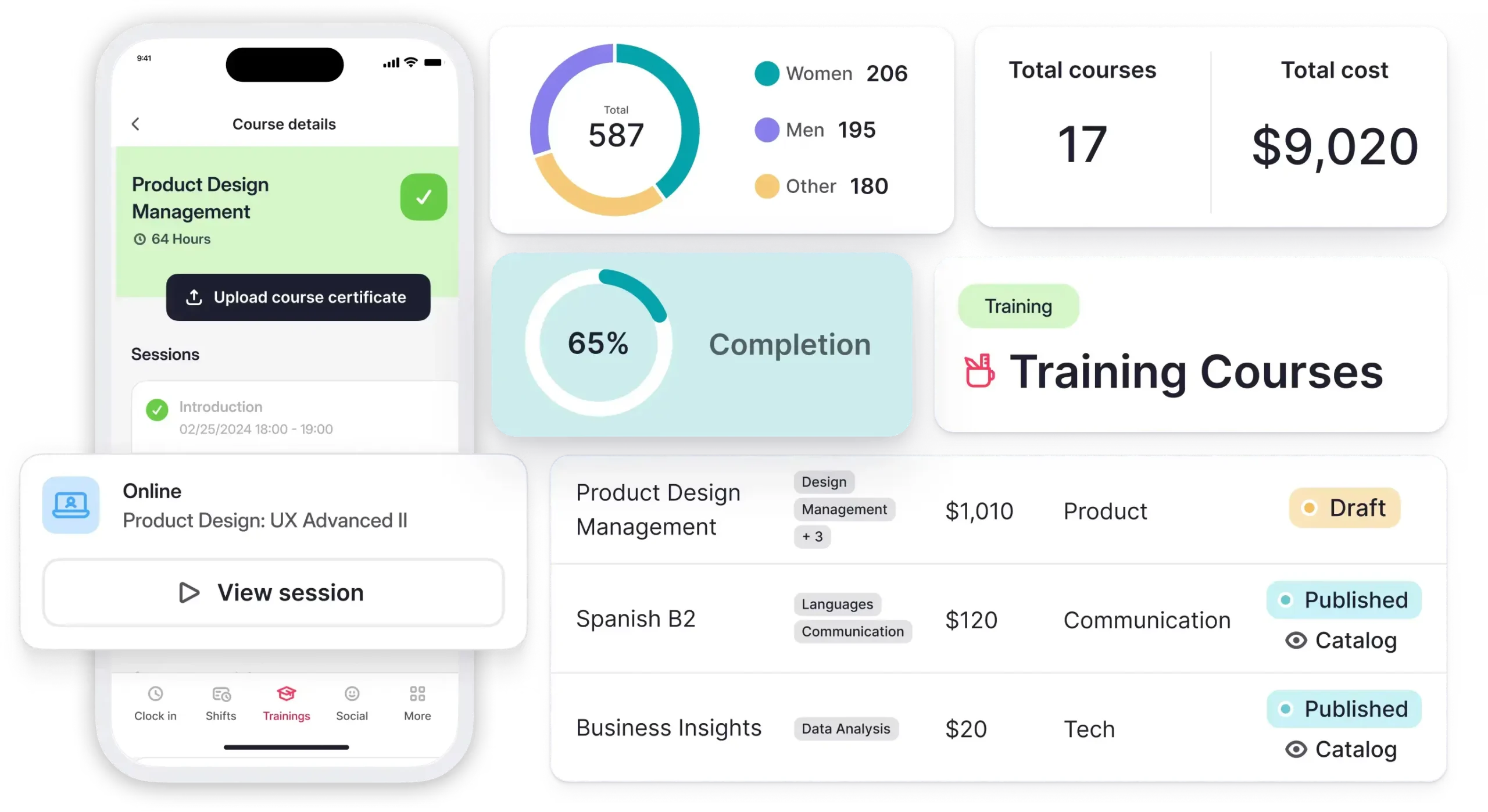
With Factorial, organisations can:
- Assign training based on roles or teams
- Track progress through dashboards
- Issue and store training certificates automatically
- Send reminders before certifications expire
- Include required training in onboarding workflows
- Link training with performance reviews and career development
Because training data sits within the same system as HR data, companies can better understand how development connects to performance and growth.
Factorial also has an AI agent called One that can help you manage your processes. You can ask a question and get an answer without having to browse files and do calculations on your own. One makes it possible to take HR automation one step further. It is the ultimate helper of management teams.

Pros
- HR and training tools in one platform
- Automated certification tracking
- Reporting and compliance records
- Suitable for growing companies
Cons
- May include more features than very small teams need
- Initial setup may require configuration
Key features
- Assign and plan trainings
- Track and report progress
- Manage certification and receive alertsPerformance and onboarding processes
Pricing
Factorial starts at £5.40 per month, per user
2. Moodle
Moodle is an open-source learning management system used by organisations and universities around the world. Many companies use Moodle to deliver online courses and track progress on trainings.
Pros
- Customisable
- Many plugins available
- Supports standard e-learning formats
Cons
- Technical setup and maintenance
- Interface can feel outdated
- Not an HR software
Key features
- Create and manage courses
- Make quizzes and assessments
- Track progress
Price
The software itself is free to host. Hosted solutions such as MoodleCloud, charge subscription fees.
3. TalentLMS
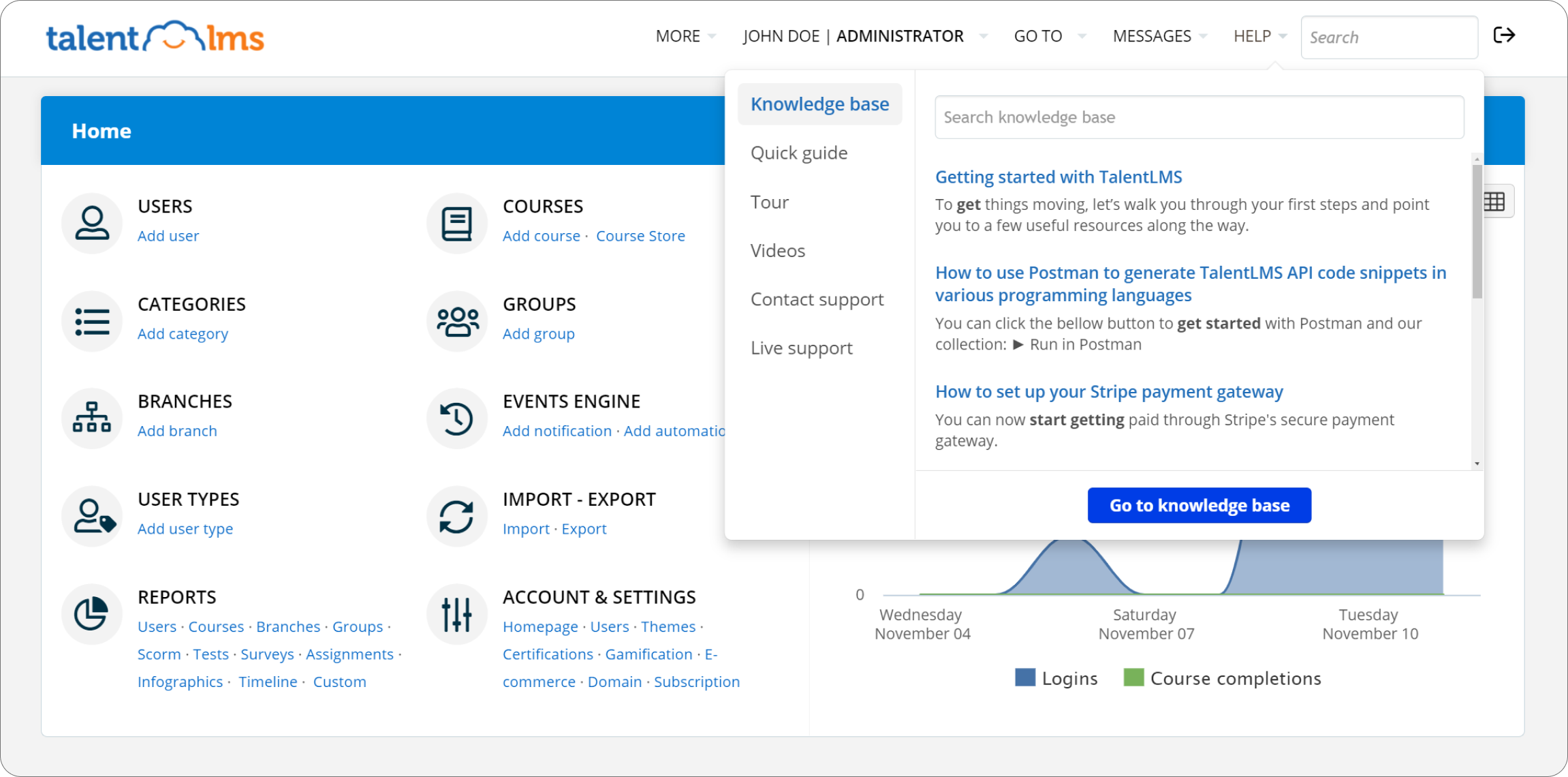
TalentLMS is a cloud-based learning platform designed for companies that want a simple system for delivering training.
Pros
- Easy to use interface
- Automation for course assignments and reminders
- Suitable for small and mid-sized organisations
Cons
- Focuses mainly on training rather than full HR management
- Advanced features may require higher pricing tiers
Key features
- Course catalogues and learning paths
- Reporting tools
- API and integrations
Pricing
Start at about US$119 per month depending on user numbers. (Price only available in USD)
4. Docebo
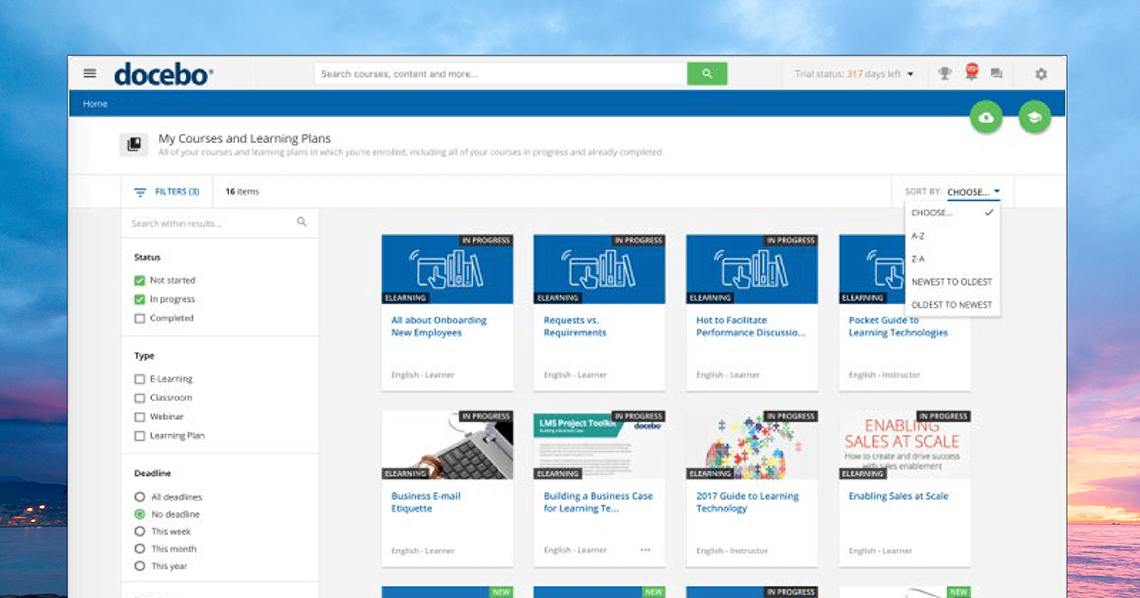
Docebo is a learning management platform used by large organisations with complex training needs.
Pros
- Advanced automation
- AI-based course recommendations
- Supports global and multi-site organisations
Cons
- Higher pricing than most SME tools
- More complex to implement
Key features
- Personalised learning paths
- Advanced analytics
- Blended learning options
Pricing
Only custom quote-based pricing available.
5. CIPHR
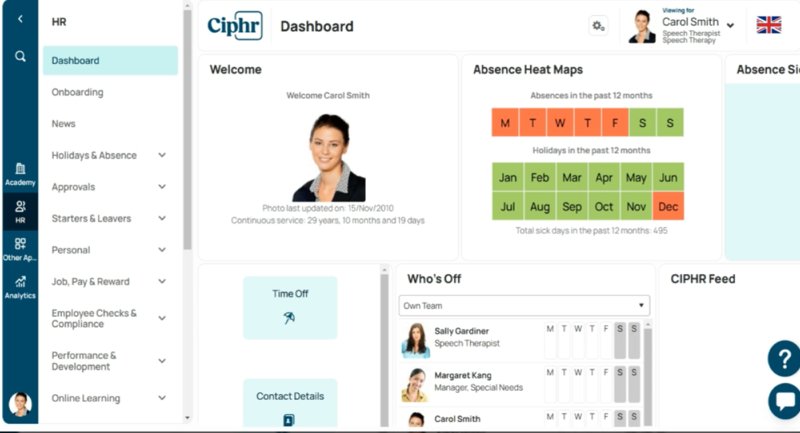
CIPHR is a UK HR software provider that also offers learning management tools integrated with its HR platform.
Pros
- Designed for UK organisations
- Integration with CIPHR HR modules
- Skills and competency tracking
Cons
- Best suited to organisations already using CIPHR
- Setup can feel complex
Key features
- Learning programmes and training paths
- Content libraries and certifications
- Reporting and analytics
Pricing
Start from £7 per user, per month.
6. Lattice
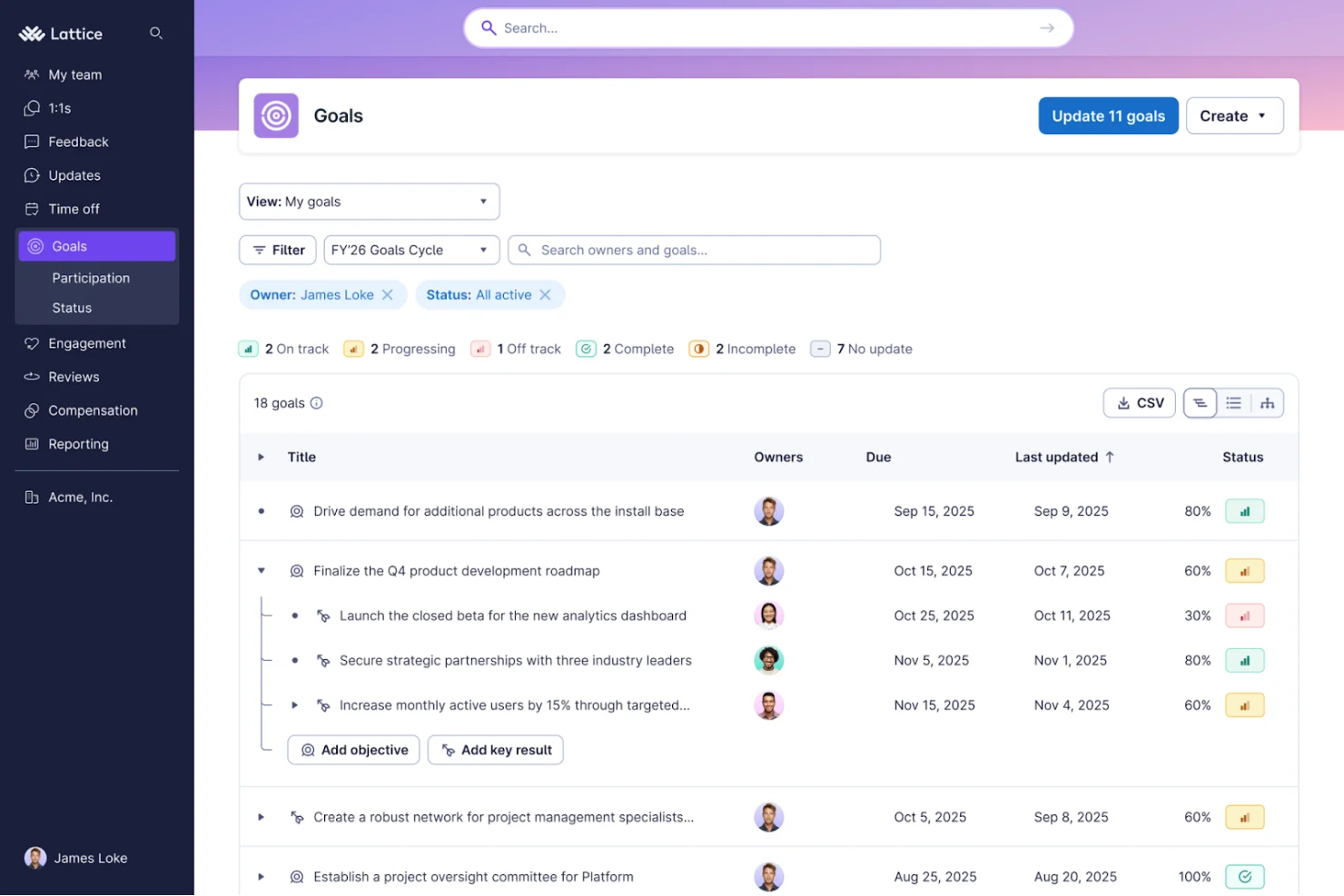
Lattice focuses on performance management and employee development rather than course-based training.
Pros
- Strong performance review tools
- Goal and OKR tracking
- Supports development conversations
Cons
- Not a full learning management system
- Pricing may be high for smaller teams
Key features
- Performance reviews
- Continuous feedback
- Development planning
Pricing
From $11 seat/mo (only available in USD)
7. PeopleGoal
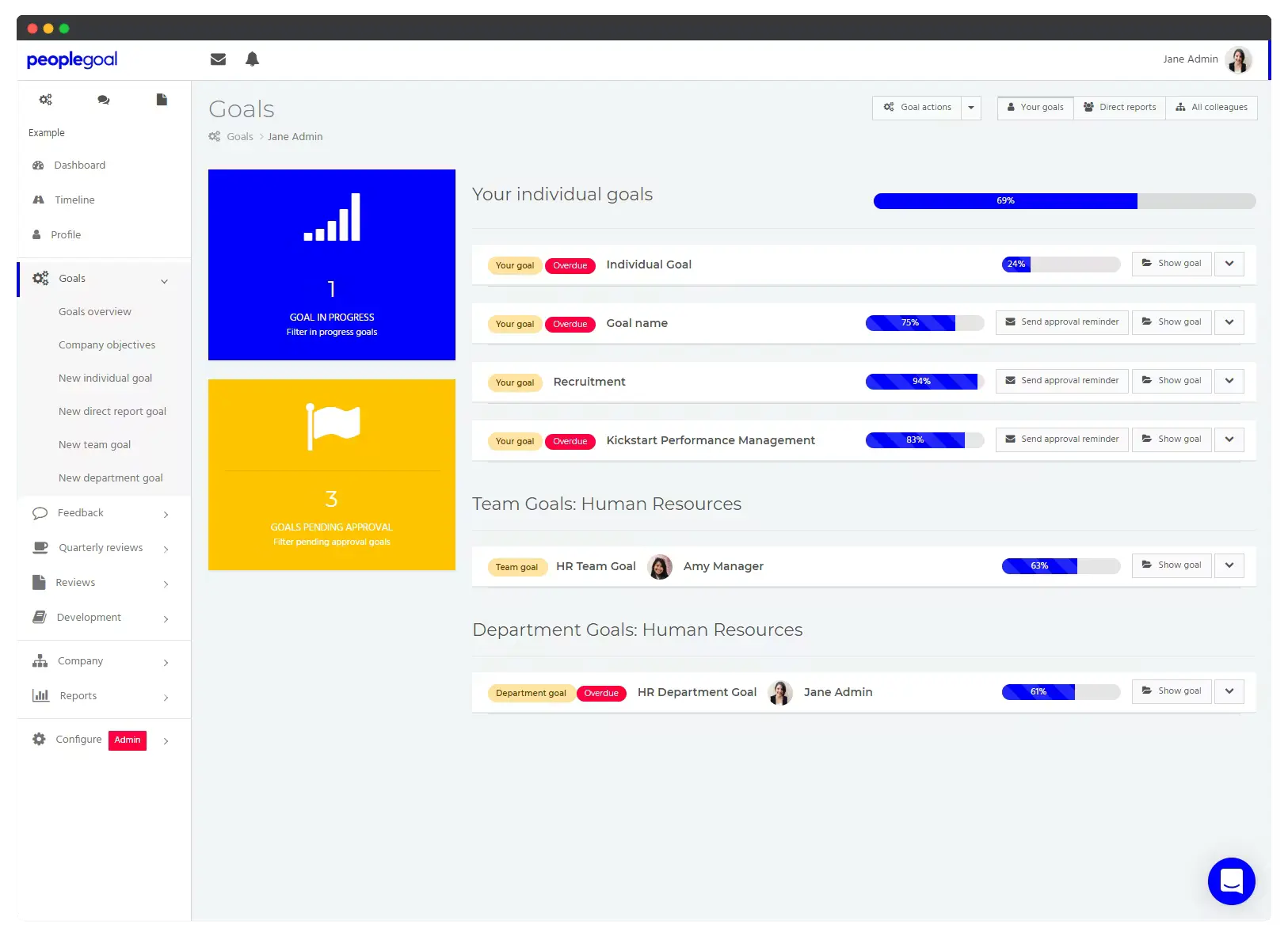
PeopleGoal is a flexible HR platform with tools for performance management and employee development planning.
Pros
- Customisable workflows
- Modules for engagement and onboarding
- Suitable for small and mid-sized organisations
Cons
- Less focused on structured course delivery
- Configuration may take time
Key features
- Development plans
- Performance management tools
- HR and onboarding modules
Price
Starts from $4 per user/month (Only in USD)
What to look for in staff development software
When comparing staff development software, it helps to focus on the features that actually make training easier to manage and scale. Many organisations adopt training tools but still struggle because the system does not fit their processes or lacks the right reporting and automation.
The best platforms support training administration, employee development, and compliance requirements in one place.
Training tracking and reporting
Clear visibility into training progress is one of the most important features that helps your team.
Managers and HR teams should be able to quickly see:
- Which employees have completed required courses
- Which courses are still in progress
- Which employees are overdue on mandatory training
Dashboards and reports should allow filtering by team, location, role, or department. This helps organisations identify where additional support or training may be needed.
Good reporting also helps HR teams prepare for compliance checks or internal audits.
Career path and skill development mapping
Training is more effective when employees understand how it connects to their role and future opportunities.
Some platforms allow organisations to link courses to:
- Role requirements
- Skill frameworks
- Career progression paths
This allows employees to see what skills they need to develop in order to move into new roles or take on more responsibility.
For managers, it makes it easier to plan development conversations and support long term workforce planning.
Compliance reminders and certification management
Many organisations must track mandatory training such as health and safety, data protection, or professional certifications.
A good staff development platform should automate much of this work.
For example, the system should:
- Track certification expiration dates
- Send reminders before renewals are due
- Store certificates in employee profiles
Automation reduces the risk of missed training deadlines and makes compliance documentation easier to manage.
Centralised training documentation
Training materials are often scattered across shared drives, learning platforms, and internal documents.
Staff development software should bring these resources together in one place. This can include:
- Course materials
- Certificates
- Internal policies
- Training records
Centralised documentation helps both HR teams and employees find the information they need quickly.
GDPR compliance and security
Training platforms store employee data and training records, so security and privacy are important.
Companies operating in the UK should ensure the system supports GDPR requirements. This usually includes:
- Secure data storage
- Role based access controls
- Audit logs for training activity
Clear permission settings help organisations control who can view or manage training information.
Scalability for growing companies
Training systems should work not only for current team size but also as the organisation grows.
Some tools are suitable for small teams but become difficult to manage as employee numbers increase. When evaluating platforms, consider whether the system can support:
- More employees
- More training programmes
- Multiple locations or departments
Pricing models should also remain practical as the organisation expands.
Integration with HR systems
Training data is most useful when it connects with other HR processes.
Platforms that integrate with HR systems allow organisations to link training with:
- Employee records
- Performance reviews
- Onboarding workflows
- Talent development plans
This makes it easier to track employee development and measure how training contributes to performance and retention.
Choosing the right staff development software
Selecting the right platform often depends on the challenges an organisation is facing today. Some companies mainly need help with compliance training, while others want stronger career development programmes or better visibility into employee skills.
Before choosing a system, it helps to review your current training process and identify where problems occur.
Common issues include:
- Training records stored across multiple spreadsheets
- Limited visibility into course completion
- Difficulty tracking certifications and renewals
- No structured development plans for employees
- Weak connection between training and performance reviews
- Understanding these problems makes it easier to evaluate which platform will solve them.
Consider how training is currently managed
Start by reviewing how training is organised today.
Questions that can help include:
- How are training courses assigned to employees?
- Where are training records stored?
- How do managers track completion?
- How are certifications renewed or updated?
If these processes rely heavily on manual tracking, a structured training system can reduce administrative work and improve visibility.
Think about your organisation’s size and growth plans
Small teams may only need simple course management and reporting tools. Larger organisations may require additional features such as:
- multi-department reporting
- role based training assignments
- learning paths for different job levels
Choosing a platform that supports growth can prevent the need to switch systems later.
Look at how training connects to performance and development
Training should support broader employee development.
Some platforms focus only on delivering courses. Others also include tools that connect training with:
- performance reviews
- career progression
- skills development
These connections help organisations build more structured development plans for employees.
Evaluate ease of use
Even the most advanced training platform will struggle if employees find it difficult to use.
When evaluating software, consider whether:
- Employees can easily access courses
- Managers can review progress without complex reports
- HR teams can assign training quickly
Simple interfaces and clear dashboards often lead to higher adoption and engagement.
Review reporting and analytics
Training programmes are easier to improve when organisations can measure their impact.
Reporting features should allow HR teams to understand:
- completion rates
- training engagement
- areas where additional development is needed
This information can support better decision making about future training investments.
Compare costs and long term value
Pricing structures vary between platforms. Some charge per employee per month, while others use enterprise contracts.
It helps to consider not only the subscription cost but also the time saved through automation and improved organisation.
A well-chosen training platform can reduce manual work, improve compliance tracking, and support employee development across the organisation.
Choosing the right staff development software
The best platform depends on the challenges your organisation is trying to solve.
Many HR teams struggle with similar issues. These include limited visibility into training progress, manual certification tracking, and difficulty linking training to performance or career development.
Platforms that combine HR and training tools can simplify these processes. When training data is connected with employee records, it becomes easier to monitor progress and support long-term development plans. Request a demo with Factorial to speak with an expert on how staff development software can help solve issues specific to your company.
Staff development and training FAQs
What is the best staff development software in the UK?
The best option depends on your organisation’s size and requirements. Many SMEs choose platforms that combine training management with HR tools in one system.
What is the difference between staff development software and an LMS?
An LMS mainly delivers and tracks training courses. Staff development software often includes additional tools for career development, performance reviews, and skills management.
Do small businesses need staff development software?
Even small organisations benefit from structured training systems, particularly when managing compliance training or certification records.
How does training software improve retention?
Training programmes help employees build skills and progress in their careers. When companies invest in development, employees are more likely to stay.
Is staff development software GDPR compliant?
Most professional platforms follow GDPR standards, including secure data storage and access controls. Organisations still need to configure data policies correctly.
Disclaimer: The information presented on this page is based on publicly available sources. The comparisons between Factorial and other providers are intended solely for the illustration of the respective software features, pricing and functionalities. All information regarding features, prices, and integrations may be subject to change without prior notice. Factorial assumes no liability for the accuracy, completeness, or timeliness of the information presented. We recommend contacting the respective providers directly to obtain the most accurate and up-to-date information. All legal regulations regarding Spanish fair advertising and competition law are fully observed by us; if you have any concerns, please reach out to us. The comparisons presented do not constitute a final evaluation or recommendation for any provider, but serve solely as an informational source.