A performance management strategy helps your organisation deliver results through people all year round. Organisations often treat performance management as an annual performance review, but it is much broader and more strategic. When done correctly, performance management encompasses activities including setting objectives, feedback, learning and development, reward, and career progression. Performance management is not just an isolated meeting to evaluate a team’s performance. Rather, it is a year-round process that connects people’s contributions to changing business priorities.
Table of Contents
- Key Facts
- What Is a Performance Management Strategy?
- Why Does Performance Management Matter for UK & Ireland Businesses?
- What Are the Key Components of an Effective Performance Management Framework?
- How Do You Build a Performance Management Process in 7 Steps?
- Use Factorial for Your Performance Management Strategy
- Performance Management FAQs

Key Facts
- A performance management strategy is an ongoing system for aligning employee performance with business goals.
- The Office for National Statistics states 28% of working adults in Great Britain worked in hybrid models between January and March 2025.
- Procedural unfairness is the most common reason capability dismissals fail at tribunal.
- 61% of employees who receive both weekly feedback and weekly recognition are engaged, compared to 38% who receive feedback alone.
This guide links people’s contributions to business priorities and keeps that link up to date as priorities change. In practice, this means combining clear goal setting, continuous feedback, employee development, and performance analytics, so leaders can identify what is working early enough to act on these insights. This guide is for HR leaders in the UK and Ireland who want a structured performance management strategy— not a once-a-year tick-box exercise.
What Is a Performance Management Strategy?
A strategic approach to performance management is a structured way an organisation keeps employee performance aligned with business objectives over time.
Instead of relying on the memory of people in management, their mood, or one-off conversations with team members, it creates clear expectations, creates a reliable system for feedback, and uses evidence (data and recorded insights gleaned from conversations) collected during check-ins to support employee development and management decisions.
Performance management strategy helps your organisation design a performance management framework: the “blueprint” that connects goal setting, coaching conversations, review moments, development actions and, where relevant, reward decisions. Modern performance management relies on ongoing dialogue and evidence-based approaches to employee improvement. Because performance management integrates different management activities, an overarching framework for this process helps the various parts work together.
Strategy versus performance reviews
Performance reviews (also called performance appraisals) still matter. They give a structured moment to discuss what is going well, where support is needed, and what development goals to focus on next. Structured reviews remain an important element of the wider continuous performance management cycle.
But meetings for performance appraisals is only one part of the puzzle. The key point is that performance management is not just an end-of-year meeting. It is day-to-day feedback. It is a risk to put too much weight on a small number of meetings, whilst the real conversation often gets lost in the process and the burden of paperwork.
What performance management strategy should look like
Performance management should focus on improving the performance of your entire organisation to achieve key results, not add unnecessary bureaucracy. It aims to make conversations timely and useful, so employees know what good looks like and how to get there. Performance management should be a continuous cycle, with objectives evolving as priorities change and feedback being regular, timely and focused on improvement.

Why Does Performance Management Matter for UK & Ireland Businesses?
UK and Ireland employers are managing performance in a work environment that is constantly changing. In Great Britain, hybrid working is now common: the Office for National Statistics reported that 28% of working adults were hybrid working between January and March 2026. When people are not always together in one place, clarity and consistent follow-up matter even more. Remote and hybrid work settings require clearer goal setting and more frequent feedback cycles to avoid misunderstandings and legal risks.
Improving productivity and alignment
Clear goals can lead to less wasted effort. Decades of research on goal setting shows that specific and challenging goals can drive higher performance than vague “do your best” instructions, because people know what they are aiming for and can direct effort more effectively. Objectives and Key Results should be written clearly and evolve alongside changing business priorities. This helps organisations stay focused when plans shift.
Supporting engagement and retention
Performance management shapes day-to-day work. It also shapes your employer brand: people notice when growth conversations are routine, not rare. Employees are more likely to be engaged when they receive feedback from their manager a few times a week or more, and that frequent recognition makes the impact of feedback even stronger.
Fairness, transparency and compliance
A structured approach is also a risk management tool. In the United Kingdom, employers can dismiss an employee for capability (performance), but government guidance is clear that the process still needs to be fair and reasonable. It also says employers must set out dismissal and disciplinary rules and procedures in writing, for example, as a final written warning, and tribunals can order compensation if they do not. Organisations must handle performance concerns fairly, including supporting an employee to improve, keeping records, and treating employee termination as a last resort.
What Are the Key Components of an Effective Performance Management Framework?
A strong employee performance strategy is built from connected parts that reinforce each other. Common tools used in performance management include setting objectives, a system for giving feedback, a learning and development strategy, performance appraisals, and bonus pay schemes tied to performance goals. The easy method to create this framework is using an automation tool. Research from Harvard Business Review shows that organisations using performance management software to coordinate objectives and feedback see a 27% improvement in alignment and process reliability. The best performance management software is designed with these needs in mind. The key to a good strategy is to use these components to design one connected system so standards stay consistent and you can explain each decision made clearly.
Set clear goals
A good performance management strategy starts with setting clear expectations. Decide how you will set organisational and professional goals and how you will track and record them. Factorial’s performance management software helps HR leaders assign, track and report on goals systemwide, with cloud-based documentation that supports audit requirements. Many organisations find setting SMART goals useful, whilst others use Objectives and Key Results (OKRs) to set measurable outcomes and align teams.
Whatever method or format you choose, make sure that you keep it simple. Goals should be specific enough that both the manager and employee can explain in simple terms what success in the role looks like. Setting clear goals works best when the goals are specific and measurable, and well-defined. This helps communicate priorities and maintain alignment across the organisation, so that everyone is working towards achieving the same results.
Use continuous feedback loops
Feedback should be given when it is relevant and timely, not saved up for months. For a performance management strategy, we recommend regular, timely feedback focused on improvement as part of a continuous cycle. Employees who receive feedback a few times per week are 3.2 times more likely to be highly engaged at work. Regular check-ins help employees adjust their approach quickly, and they help managers give credit for a job well done in the moment, not later.
Have regular performance reviews
Reviews should summarise progress and correct course, not come as a surprise. Reviews are a chance to discuss what someone is doing well, where they need support or training, and their personal development objectives in the workplace. While annual reviews can be useful for giving feedback in general, more frequent, structured reviews play an important role.
Create talent development plans
The value of feedback is limited if nothing changes after it. Talent development plans turn feedback into actionable steps: skills to build, experiences to gain, and support to provide. According to the Society for Human Resource Management, structured development plans are most effective when coupled with regular, ongoing coaching. A proper plan supports progression and career development throughout the year as core parts of an effective performance management strategy.
Coach managers and leadership
HR can create a framework for performance management, but at the end of the day, managers run it. Because of this, it is essential to provide guidance for managers on practical skills such as how to communicate effectively with their team. Effective, clear communication helps set goals and give feedback. Difficult conversations are made easier when leaders have the tools to handle them well. Without your managers being capable, the entire performance management process can slip back into “checking boxes” rather than serving as the most effective way to coach your people.
Get insights from performance data
Data is your greatest asset when it comes to making decisions. You get a complete image of your organisation through data. It supports you in making better decisions and creating fairer processes. Performance management is made up of different activities, so an overarching structure helps them work together. Data helps you check whether that structure is working: Are goals set? Are conversations happening? Are development actions closing gaps?
Recognise and reward your team
Recognition reinforces the behaviours you want to see. As mentioned before, research suggests frequent recognition strengthens the effect of frequent feedback on engagement. If you link performance to pay, transparency becomes even more important. Any performance-related pay decisions be based on clear and documented evidence, with criteria communicated to all affected staff to ensure compliance and fairness. Decisions related to pay based on performance should be fair and objective, and employers must avoid discrimination. That is easier to do when goals and feedback are documented, and decisions can be explained clearly in plain language, with data to support them.
How Do You Build a Performance Management Process in 7 Steps?
Now that you know what makes a successful performance management strategy, you can build your own strategy based on the guide below. These steps are designed for HR leaders who want to create a repeatable process that can scale across teams, locations and different styles of management. Organisations should adapt performance management to their context and industry, whilst keeping it continuous and aligned to goals. Flexibility is also important, as goals can change over time.
1. Define your goals
Start by defining your organisational goals. You should outline your business priorities for the next 6 to 12 months. Then translate these priorities into a small set of goals across your organisation that teams can use to set their own goals. This ensures that your entire organisation is working to achieve the same goals and gives you something to align based on. This prevents goal setting from becoming a long list of tasks that are not related to each other.
2. Choose performance metrics
Next, it is important to agree on how success will be measured at your organisation. Establish your metrics at team and individual levels. Use a mix of outcomes and behaviours. Think about what you need to deliver, quality, customer results, and how work will get done. Keep the method you use to measure results clear, and ensure that it is relevant to each role and within an employee’s influence, where possible.
3. Structure your goals
Choose your method for setting goals: either using SMART goals, OKRs, or a blend of the two, then create a standard for how goals are written and reviewed. This keeps goal-setting fair across your organisation and makes it easier to coach. Specific and measurable goals are strongest.
4. Train managers on feedback and coaching
Creating and documenting your workplace policy is important, but training leadership is also necessary if you want true alignment. Cover practical skills such as setting expectations, giving timely feedback, and having difficult conversations respectfully. The way you deliver feedback makes a difference. It influences how feedback lands with your people. If feedback feels humiliating or is unclear, it can backfire.
5. Introduce continuous review cycles
Set a rhythm for giving feedback: regular check-ins, periodic goal reviews, and structured reviews at key points in the year. Regular feedback in a continuous cycle ensures that your organisation stays on course. Focusing too much on a single performance meeting a year can waste time and weaken the real conversation you need to have with your teams.
6. Use performance data to guide development
Use what you learn from goals, feedback and reviews to identify patterns: skill gaps, role clarity issues, or teams that need more support. Then turn that into development action, like training and coaching, and track whether it improves results over time. The data you collect can make a real difference in identifying what you need to invest more time in.
7. Connect performance to compensation and career growth
If you link performance to pay or bonuses, set clear criteria and apply them consistently across your organisation. Employers should use performance-related pay fairly and objectively, and avoid discrimination. Explain performance-related pay clearly to avoid confusion. Link pay progression during salary reviews to an assessment of individual performance, measured against objectives agreed on previously.
Use the process to make career growth clear to everyone, too: what skills are needed at the beginning, what experiences build them, and what support is available. This is where performance management supports retention and employer brand.
Use Factorial For Your Performance Management Strategy
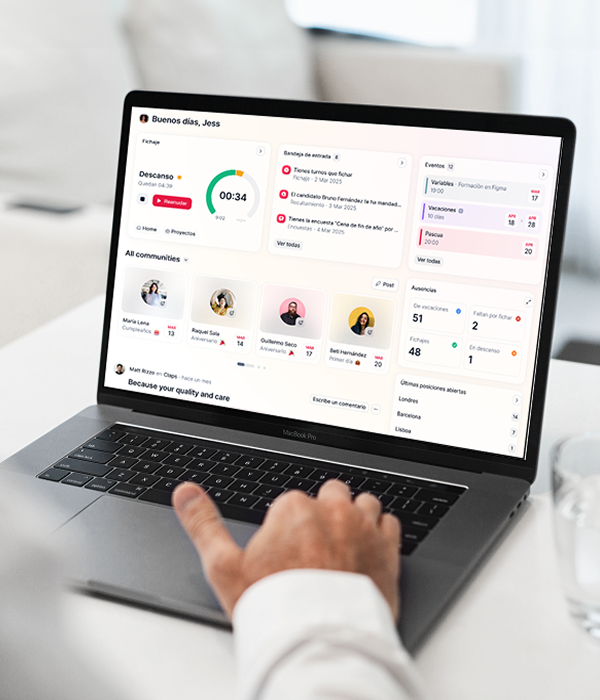
Even a well-designed performance framework can fail if it is hard to run. Spreadsheets and email chains make it difficult to track completion, store evidence, and keep conversations consistent across teams, and most performance management software is not designed for the needs of your organisation. If you are looking for a platform that can reduce administrative tasks and help managers focus on conversations with employees, Factorial is the software for you.
Factorial is an all-in-one business management platform with built-in easy-to-use performance management software.
The platform includes:
- Custom and ready-made review templates, with flexible question formats
- Set review periods with timelines, automated reminders and automated cycles
- 360° feedback, self-reviews and reviewer groups that you can configure
- Goal management using KPIs, plus analytics to support decisions
- Competency tools, including a 9-box grid to map performance
Factorial also has an AI personal assistant built in called One that can connect meeting notes and engagement data, and generate summaries or insights to help managers prepare and follow up.
Performance Management FAQs
A performance management strategy is a systematic approach to aligning employee performance with business objectives. It involves a continuous cycle of goal setting, feedback, and development to ensure everyone understands their role and how their work contributes to organisational success.
Most effective approaches include clear goals, continuous feedback, regular reviews, development plans, manager coaching, and monitoring data.
The 5 C's of performance management provide a framework for an effective strategy: Clarity in expectations, Commitment from employees, continuous Coaching from managers, open Communication, and Consistency in applying the process fairly across the organisation.
A performance appraisal is a single meeting in which performance is reviewed, a bit like a checkpoint in a performance review cycle. Performance management is the wider, continuous system that involves setting goals and giving feedback in order to support development. I supports people, gathers feedback and uses evidence to guide growth.
There is no rule carved in stone for how often reviews should take. Many workplaces do a combination of short, regular check-ins with structured reviews at set points in the year, which is a useful way to approach it.
Useful tools for performance management include goal trackers, one-to-one meeting agendas and templates for taking notes, 360 feedback templates, and analytics dashboards. Software can also be very helpful in automating cycles and keeping records of all reviews and decisions and important documents. Factorial, for example, supports goal setting, continuous feedback, 360 reviews and analytics, with AI support for summaries and insights generated during one-to-one meetings.
Effective performance management is built on four key pillars: setting clear goals, providing continuous feedback and coaching, conducting regular performance evaluations, and creating actionable employee development plans to support growth and address skill gaps.