There comes a moment in the journey of every startup when “we’ll sort it out later” stops working. At the beginning, it feels fine to learn as you go, fix problems on the fly, and patch together quick solutions, because every situation is new, and you are handling these issues with ad-hoc solutions. But over time, you realize that those temporary fixes turn into a tangled mess and the only way forward is using HR software for startups to manage tasks.
If you’re using one tool for tracking hours, another for payroll, a spreadsheet for salaries, and yet another app for performance or productivity, you’re spending more time chasing information than building your business. Repeating information to enter it into each tracker wastes a lot of time. Every duplicated entry and missing update slows your team down and increases the risk of mistakes. Soon, there is a point where you need to build proper processes and you start looking for HR software.
An HR software for startups is built with the understanding of these issues that startups face in the UK. The best software helps you pull everything into one place, so you can focus on growth instead of admin.
In this article, we’ll break down what HR software is, what UK & Ireland startups should look for, and how to choose the best HR software for startups in 2026.
What is HR software?
Let’s start with the basics: what is HR software? HR involves dealing with many tasks every day, and most of them are repetitive. You sign contracts, screen candidates for new roles, check working hours, manage holidays, support onboarding and offboarding, and much more. If this is the case at your startup, you aren’t alone. Many early‑stage startups manage these processes still using spreadsheets or scattered tools, which quickly becomes a pain as the team grows.
HR software automates the most complex parts of these workflows. Instead of being buried under piles of paperwork, you use a single platform to manage the life of your company. In addition to saving time, HR software reduces human error and keeps everything accurate and auditable.
The purpose of HR software for UK startups is simple: free up HR teams and founders to spend more time with people and less time on admin. A good HR system improves communication between management and employees by giving everyone a shared, self‑service space for all key tasks and information.
Key Features of HR Software
When you look for the best HR software for startups, make sure the tool you choose includes these core features.
Payroll processing
You need a solution that syncs employee hours with payroll, helps you generate accurate payslips, and supports UK tax and National Insurance calculations or integrates smoothly with your payroll provider.
Time tracking
HR software should simplify how you track working hours, whether your team is on‑site, hybrid or fully remote. Clear time tracking supports compliance with working time rules and makes payroll more accurate.
Automating the employee lifecycle
From recruitment to offboarding, HR software should streamline how you manage HR tasks, including hiring, onboarding, performance reviews and ongoing development. This is where talent management features become a real advantage, especially when you are growing quickly and competing with both startup and corporate employers for top talent.
When you compare platforms, pay close attention to how easy they are to use. You will use the system every day, so it should feel intuitive rather than another tool you dread opening. Other useful features include reporting and analytics, performance review workflows, expense management, holiday and absence management, and electronic signatures.
The right HR software for startups will give you everything you need to manage your HR operations in one place.
What Startups Look for in HR Software
Startups in the UK and Ireland have specific needs when it comes to HR software. Beyond basic features, you need tools that handle local regulations, data protection, and fast‑changing headcount. Here are the key things HR software for UK startups should offer:
GDPR compliance
Your HR system will store sensitive employee data, so it must be fully GDPR‑compliant. Look for clear data processing terms, EU/UK data hosting options, role‑based permissions and high security standards. A good provider will explain how they handle subject access requests and data retention, too.
Managing UK holidays
Holiday entitlement in the UK is based on 5.6 weeks’ paid holiday per year for most workers, with different rules for part‑time, irregular hours and part‑year workers. Your HR software should handle this automatically, including bank holidays, carry‑over rules and pro‑rata calculations, so managers do not need a calculator every time someone’s contract changes.
Compatibility with payroll
Many UK startups already use payroll tools or accountants. Your HR software does not have to replace payroll, but it should integrate or export data cleanly so you avoid double entry. Look for systems that connect to popular UK payroll solutions or provide simple CSV exports your accountant can use.
Scalability
The best HR software for startups will grow with you. That means flexible pricing that makes sense at 10 people and 100 people, and features that support more complex structures over time (multiple locations, different entities, more advanced performance and compensation processes).
Ease of implementation
Startups cannot afford six‑month implementation projects. Look for tools that you can set up in weeks, not months, with clear onboarding support, templates and simple configuration. The easier the system is to roll out, the faster you see value.
Employee self‑service
Your team should not be the bottleneck for every small question that employees have. Employee self‑service portals let people update their own details, request time off, view payslips and review policies without sending endless emails. This becomes even more important as you roll out equity compensation and want to keep employees informed and loyal over the long term.
When you compare options, keep these criteria in mind alongside your growth plans and culture.
8 Best HR Software for Startups for 2026 (UK & Ireland)
Popular HR software solutions offer features like onboarding, talent management tools, performance management and finance integrations. Below are eight of the best HR software for startups that are either widely used in the UK & Ireland or have strong support for UK‑based teams. This list is designed to help you find startup HR software UK companies can rely on as they scale.
1. Factorial
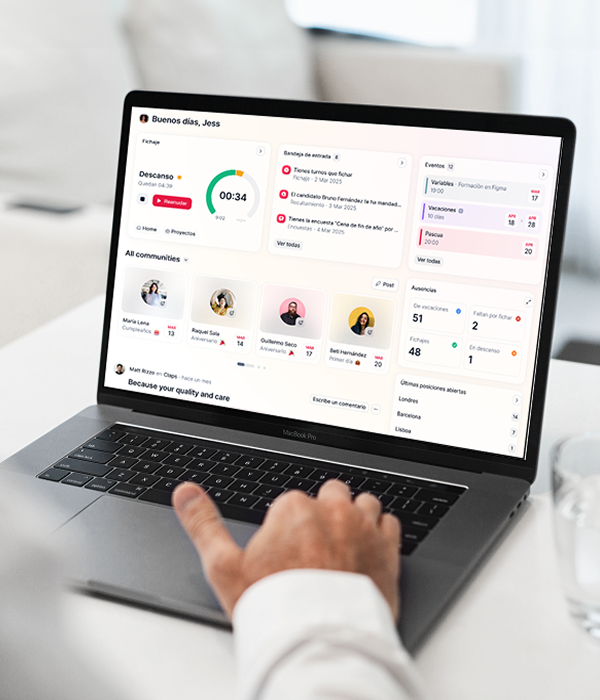
Factorial is an all‑in‑one HR software for startups designed to automate your core HR processes and business operations. From attendance and holiday management to performance reviews and expenses, Factorial centralises your HR workflows in one place.

It supports hybrid and remote teams with built‑in communication features and a user‑friendly employee portal.
Factorial is built for small and medium‑sized businesses and is a particularly good HR software for UK & Ireland startups that want to move away from spreadsheets. It helps you save a lot of time, improve employee experience and make better decisions based on data.
With Factorial, you can:
- Track attendance and employee leave with clear calendars and approvals
- Manage holidays and PTO requests based on UK entitlement rules
- Build custom HR reports and dashboards to support data‑driven decisions
- Streamline expense management with digital workflows
- Monitor performance and run structured reviews
- Improve onboarding processes with templates and task lists
- Attract and hire top talent with built‑in recruitment tools
- Keep track of working hours with easy clock‑in/out features
- Sync hours with payroll exports for accurate payslips
Factorial has an AI Agent called One that helps you complete HR tasks faster by answering questions, drafting documents and highlighting insights across your data. For example, you can ask One to summarise recent performance reviews, draft a new policy, or pull key metrics for an investor update in seconds.
Request a demo and discover all the features and advantages that HR software like Factorial can bring to your startup.
Key features
- HR project management tools: monitor projects, track the hours employees spend on each, and manage associated costs from one centralised platform.
- 360° performance reviews: collect feedback from peers, managers and direct reports to get a fuller view of performance and growth opportunities.
- All‑in‑one, centralised platform: automate HR tasks and payroll workflows, generate in‑depth reports, and manage the full employee lifecycle in one secure, cloud‑based system.
Pricing: Factorial starts at £5.40 per month, per user
2. BrightHR
BrightHR is an HR platform designed for small and medium businesses. It offers tools for absence management, rota scheduling, and document storage. This makes it another one of the best HR software for startups.

Key features
- Absence and holiday management with UK‑specific calculations and Bradford factor reporting.
- Rota and shift planning for teams with variable working patterns.
- Optional 24/7 HR advice line and health & safety support on higher‑tier plans.
Pricing: Starts from around £4.50 per month depending on plan structure and headcount.
3. HiBob
HiBob is an HR software platform built for small to mid‑size companies. It is popular among startups due to its easy-to-use interface and flexible setup. HiBob helps HR teams manage international employees, onboarding, performance and culture in one system.

Key features
- Employee self‑service portal where staff can view benefits, update personal data and request time off.
- Custom automation to configure workflows around your own processes.
- Onboarding tools with checklists and document requests to standardise new‑starter experiences.
Pricing: Custom pricing. You have to ask for a quote from the HiBob team in order to learn more.
4. Oyster
Oyster combines HR software with Employer of Record services, making it easier for startups to hire people in other countries without opening local entities. For UK startups that hire remote employees globally, Oyster can manage compliance, payroll and contracts in each country.

Key features
- Global payroll and benefits management, including local compliance checks.
- EOR services so you can legally hire in countries where you do not have a company set up.
- Onboarding and offboarding workflows for international hires.
While Oyster is more focused on global hiring than day‑to‑day HR in the UK, it can be a powerful addition if your startup is remote‑first and hires across borders.
Pricing: £23 PEPM for payroll and £599 PEPM for EOR.
5. Personio
Personio is an HR platform aimed at small and mid‑sized businesses, particularly in Europe. It brings together core HR, payroll integrations, recruitment and performance tools, which makes it a strong option for startups that want an all‑round system.

Key features
- Centralised document management with GDPR‑compliant storage.
- Talent management tools to support recruitment, development and retention.
- Employee engagement surveys and analytics for understanding how your team feels.
Pricing: Personio only offers pricing information after booking a demo.
6. Rippling
Rippling lets you manage HR, IT and finance in a single platform. It is particularly attractive for tech‑heavy startups that want to centralise people, devices and spend in one system.

Key features
- Global payroll and compliance tools, including support for multiple countries and currencies.
- Finance management to control company spend and set rules for approvals.
- IT security features to manage app access and device provisioning.
Price: Rippling offers custom pricing.
7. BambooHR
BambooHR is a well‑known HR software platform that supports companies in many countries. It provides tools for time tracking, recruitment and performance, which can suit UK startups that want a proven, global solution.

Key features
- Time tracking and holiday requests via desktop and mobile apps.
- HR reports and analytics on key metrics such as turnover and time‑to‑hire.
- Payroll capabilities in supported regions and integrations elsewhere.
Pricing: Plans start at £8.10/mo per employee
8. CharlieHR
CharlieHR is a UK‑based HR software platform built specifically for startups and small businesses. It focuses on making core HR simple: time off, onboarding, reviews and engagement surveys. This makes it a very strong fit as HR software for UK startups.

Key features
- Holiday tracking, onboarding checklists and performance reviews in one tool.
- Simple, flat‑rate pricing built for small teams, with discounts in early months.
- Employee self‑service for updating details and managing time off.
Pricing: Starts from around £5 PEPM for the core platform for small teams.
HR Software for Startups Comparison Chart
Below is a quick comparison of the HR software for startups covered above. Pricing is subject to change so always do your own research before making a decision.
| HR software | Best for | Key highlight | Price* |
| Factorial | UK & Ireland startups and scale‑ups | All‑in‑one HR with AI Agent (One), strong SME focus and intuitive UX | From £5.40/mo per employee |
| BrightHR | Small UK businesses needing HR + advice | UK‑specific HR with rota scheduling and optional 24/7 HR advice line | From £4.50/mo per employee |
| HiBob | Global startups and mid‑size companies | Modern interface and flexible automation for international teams | Custom pricing |
| Oyster | Remote‑first startups hiring globally | Combined HR and Employer of Record for compliant global hiring | From £23/mo per employee |
| Personio | European SMEs needing broad HR capabilities | Comprehensive HR and talent management with GDPR‑compliant storage | Custom pricing |
| Rippling | Tech‑heavy startups centralising HR, IT and finance | Unified platform for HR, devices and spend, with global payroll | Custom pricing |
| BambooHR | Startups needing simple, global HR tools | Widely used HR software with strong time off and reporting | £8.10/mo per employee |
| CharlieHR | UK startups wanting lightweight HR | Simple, UK‑centric HR with flat‑rate pricing and easy onboarding | From £5/mo per employee |
*Always check the provider’s site for the latest pricing.
What You Should Expect From the Best HR Software
Now that you know the main options for HR software for startups, it helps to understand what “good” looks like in practice. The best HR software should tick a few non‑negotiable boxes.
Storing information in the cloud
Cloud‑based access from anywhere (office, remote or hybrid).
- No need to manage on‑premise servers or storage yourself.
- Easier to scale as headcount grows.
- Built‑in backups and monitoring handled by the provider.
- Stronger, centralised security than most startups can run alone.
Security and privacy by design
Employee data is treated as highly sensitive.
- Granular permissions so you control exactly who sees what.
- Audit logs to track who accessed or changed data.
- Role‑based access (managers see their team, employees see only their own data).
Intuitive employee portal
Clear, simple dashboard for everyday tasks.
Employees can:
- Request time off
- View payslips
- Sign documents
- Complete reviews and forms
This reduces repetitive questions to HR and makes tasks like signing contracts or checking holiday balances quick.
Automatic synchronisation
- Holiday and absence balances update automatically.
- Calendars, reports and payroll exports stay in sync.
- Changes (new starter, job title, manager) update across the system.
Integrations
- Calendars
- Payroll systems
- Collaboration tools
- ATS and other HR apps
Benefits of Using HR Software
Before you invest, it’s worth being clear about the benefits you expect, so you can compare tools properly.
The best HR software for startups will help you:
- Save on operating costs by reducing manual admin and errors.
- Bring out the best in your people with better performance, engagement and talent management.
- Make more strategic decisions using real‑time data instead of gut feel.
An HR system becomes truly powerful when it lets you automate:
- Document management and e‑signatures.
- Attendance tracking, including shifts and overtime.
- Holiday and absence management with team calendars.
- Recruitment and selection workflows.
- Performance and productivity evaluations.
- Data collection and analysis across your people metrics.
Advantages of HR software for startups
HR software for startups brings specific advantages when you are moving fast and resources are limited:
- Fewer errors in HR management
- Clear, up‑to‑date information reduces mistakes in holidays, payroll inputs and contracts.
- Greater security
- Encrypted cloud storage and clear permissions protect employee data better than local files.
- More transparency
HR, managers and employees all get better visibility over key information, meaning it is easier to handle inspections and audits with organised records, as they are always up‑to‑date.
In short, the right HR software helps you save time, cut errors and increase efficiency, which boosts productivity across HR and the wider team.
Choosing the Right HR Software
The right HR software for startups will streamline recruitment, cut admin and boost efficiency, but the “best” tool depends on your size, sector and growth plans. Start by listing your main pain points: holiday tracking, compliance, performance reviews, talent management, or something else.
Decide whether you need a simple tool for a small team or an all‑in‑one platform that can grow with you as you add things like equity compensation and more formal performance frameworks.
Factorial’s all‑in‑one platform is built to scale with your startup and help you complete HR work faster. Request a demo to speak with someone who knows what you need in order to solve bottlenecks specific to your organisation.
HR Software for Startups FAQ
1. Which HR software is best for small companies?
An easy, all‑in‑one tool is usually best. Factorial, CharlieHR and BrightHR are popular with UK small businesses.
2. What’s the leading HCM software for startups?
Top options include Factorial, HiBob, Personio and Rippling. Factorial is a strong choice for UK & Ireland startups thanks to its breadth, price and built‑in AI.
3. Does Factorial provide an HR software that grows with your team size?
Yes. Factorial is designed for SMEs and scaling startups, with plans and modules that expand as your headcount grows.
4. When should a startup invest in HR software?
Usually once you pass about 10 or 15 employees, when manual tracking of holidays, contracts and performance starts to break.
5. Is HR software compliant with UK employment law?
Good systems are built with UK law and GDPR in mind, but you still need to set up your policies correctly and keep them updated.
6. Can HR software replace multiple tools?
Yes. All‑in‑one platforms like Factorial can replace separate holiday trackers, spreadsheets, performance docs and onboarding checklists by centralising everything in one place.
“Disclaimer: The information presented on this page is based on publicly available sources. The comparisons between Factorial and other providers are intended solely for the illustration of the respective software features, pricing and functionalities. All information regarding features, prices, and integrations may be subject to change without prior notice. Factorial assumes no liability for the accuracy, completeness, or timeliness of the information presented. We recommend contacting the respective providers directly to obtain the most accurate and up-to-date information. All legal regulations regarding Spanish fair advertising and competition law are fully observed by us; if you have any concerns, please reach out to us. The comparisons presented do not constitute a final evaluation or recommendation for any provider, but serve solely as an informational source.”