Looking after people at work matters, both for them and for your business. In the UK, it is also a clear legal duty. If you try to run health and safety on spreadsheets, loose forms, and email threads, things slip through the cracks. Details get missed, and trends are hard to spot, not to mention that audits become stressful because you don’t have an overview of what happened.
Health and safety management software brings everything into one place. It makes it easier for staff to report incidents, for managers to stay on top of risks, and for leaders to see what is really happening across sites. Used well, it supports your legal responsibilities and helps create a workplace where people feel safer and better informed.
In this article, you will see what this type of software actually does, why it is useful for UK organisations, which features are worth having, and which tools are currently strong choices for UK teams, with a spotlight on Factorial for HR‑led safety work.
What is health and safety management software?
In 2024-25, an estimated 1.9 million workers in Great Britain suffered from work related ill health. That is a huge number and it shows how important it is to have a system in place that you can rely on.
Health and safety management software is a system that helps you improve how you manage safety at work through planning, recording , and keeping track of safety procedures and incidents. Instead of keeping incident reports in one folder, training records in another, and risk assessments in a third place, you bring everything together in one place.
Most platforms will let you store and manage:
- Incident and near‑miss reports
- Risk assessments and controls
- Safety audits and inspections
- Training and certification records
- Policies, procedures, and COSHH information
For UK organisations, a good system also supports specific requirements from HSE, such as RIDDOR reporting, COSHH management, and standards like ISO 45001 and RAMS for site work. In short, it is a tool that is built around how health and safety actually works, not just a general document store.
Benefits of using health and safety management software
Shifting from using paper and spreadsheets to using health and safety software instead does more than make your filing easier to manage. It can change how quickly you respond to emergencies, how you learn from incidents, and how confident you feel when inspectors or senior leaders ask questions.
Fewer workplace incidents
One of the clearest benefits is fewer accidents. When systems are easy to use and issues are logged consistently, problems are spotted sooner. Studies show that businesses using digital safety systems can see incident reductions of up to 50 percent compared with mainly manual setups. Staff are more likely to report hazards if the process is simple, and managers get a clearer picture of what needs fixing.
Faster and more organised incident response
When something happens, the way you respond can make a big difference. If staff have to find a paper form or guess who to email, important details may be lost. With safety software, a worker can use a phone, tablet, or computer to report what happened in a structured way. The right people get notified straight away. The system then guides the investigation, helps you record causes, and keeps track of actions until they are complete. That leads to quicker action and better learning from each event.
Easier HSE and RIDDOR compliance
HSE and RIDDOR duties are necessary for UK organisations. Keeping on top of reporting is easier when your records are complete and in one place. Health and safety software can store all incident details, investigation notes, and follow‑up steps in a way that is simple to search and review. You can see which cases might need reporting, keep an eye on deadlines, and export data when HSE asks for information. This helps you stay compliant while RIDDOR rules are reviewed and updated.
Better data for clearer decisions
It is hard to improve what you cannot see clearly. Software turns long lists of incidents, inspections, and audit findings into charts and reports that make sense at a glance. You can see which sites have more slips, trips, or falls, where near misses are rising, or which controls reduce incidents over time. That means you can target training, maintenance, or investment where it will have the most impact, instead of relying on guesswork or only reacting after serious cases.
Reduced costs and fewer unpleasant surprises
Incidents bring costs in terms of time, money, and people. There are direct costs such as sick pay, possible claims, and lost production. There are also indirect costs such as pressure on other staff, damage to morale, and reputation. By lowering incident rates, safety software can reduce these costs over time. It also lowers the chance of enforcement action and fines by helping you maintain better records and more consistent practice.
Consistent standards across sites
If you have several locations or many teams, keeping everyone aligned is difficult. One site may use an old form, another may have its own tracker, and a third may forget to record something altogether. A central safety system gives you one set of templates and processes that everyone uses. Local teams can still tailor details for their area, but leadership can see performance and risks across the whole organisation in a common format.
Most important health and safety management software features
Feature lists can be long, so it helps to focus on the parts that really support your day to day safety work. Here are the key areas to look at.
Incident reporting and management
Staff should find it quick and simple to report incidents and near misses, whether they work in an office, a warehouse, or on a site.
Look for:
- Easy reporting on mobile and desktop
- The ability to attach photos and videos
- Customisable forms that match your processes
- Once an incident is reported, the system should help you:
- Log key details such as time, place, and people involved
- Investigate and record causes
- Assign corrective actions and track completion
This keeps everything about an incident in one record rather than spread across emails and notes.
Risk assessment tools
Risk assessments are a core part of health and safety practice in the UK. Good software helps you:
- Create and update assessments for tasks, roles, and locations
- Set likelihood and severity ratings
- Record existing controls and plan new ones
- Review and sign off assessments on a regular schedule
A live risk register makes it easier to see where risks are under control and where more work is needed.
RAMS and COSHH management
Many sectors depend heavily on RAMS and COSHH, especially construction, manufacturing, and logistics. The software should support you by providing:
- Templates for method statements and risk assessments
- A clear approval and sign‑off process
- A central library of hazardous substances with linked SDS information
This reduces the chance of workers using out‑of‑date documents and helps you show control of substances and methods during inspections.
Audit and inspection management
Audits and inspections help you check whether policies are being followed in practice. With digital tools, inspectors can:
- Use checklists on a mobile device
- Capture photos and notes on site
- Log issues and assign actions immediately
The system should then generate clear reports and dashboards, making it easier to see patterns across different sites or time periods.
Training and certification tracking
A strong safety system relies on people having the right knowledge. Your software should let you:
- Record which training each employee has completed
- Track qualifications and their expiry dates
- Send reminders when refreshers are due
- Show training status during audits or investigtions
This helps you avoid gaps in competence and gives you clear evidence that staff have been trained.
Document managemetn
Policies, procedures, RAMS, COSHH sheets, and guidance need to be up to date and easy to find. A helpful system will:
- Store documents in one place with clear categories
- Keep version histories so you can see what changed and when
- Control who can view or edit sensitive documents
This reduces confusion and supports you when you need to prove how information is managed.
Reporting and analytics
Managers and leaders need to understand what is working and what is not. Reporting tools should let you:
- View incident rates and types over time
- Track outstanding actions and overdue tasks
- See training coverage across teams
- Compare performance between sites
The aim is to support regular reviews and to make it easier to plan improvements.
Integration with HR systems
When safety and HR data connect, you get a fuller picture. Integrations can allow you to:
- Link incidents with departments and roles
- See training records alongside employment details
- Understand how absence due to injury affects teams
Platforms that combine HR and safety, such as Factorial, reduce duplicate data entry and lower the risk of inconsistent records.
Top 10 health and safety management software for UK businesses
Here are ten well known options for UK organisations, starting with the one that is strongest for HR‑led teams.
1. Factorial: best for HR teams managing safety and compliance
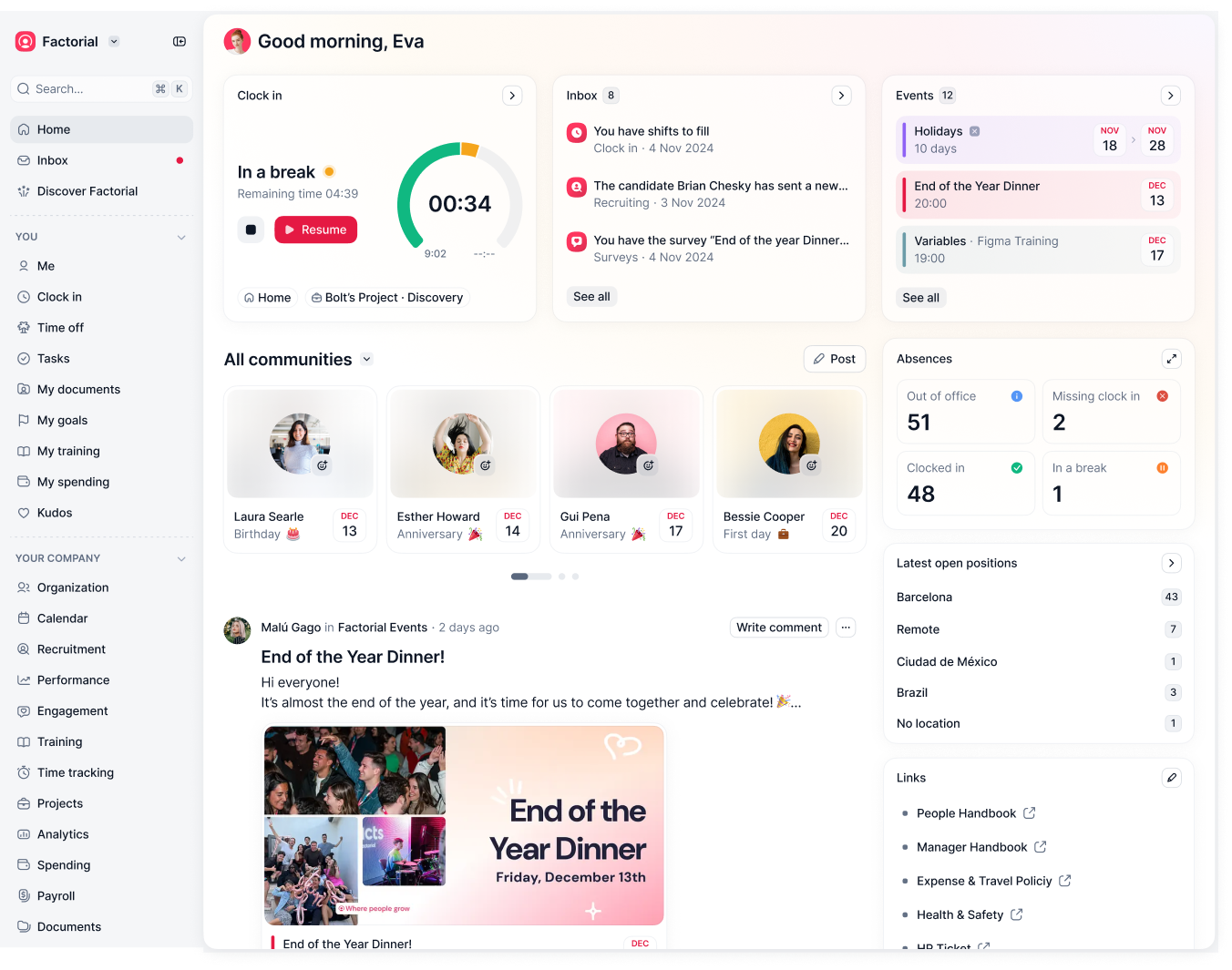
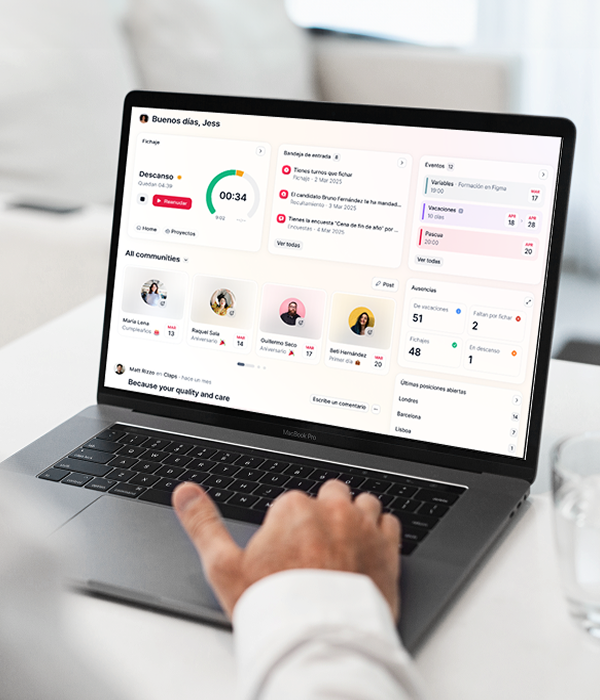
Factorial is an HR and business management platform that is a good fit if you want HR and safety information in one place. Many tools focus only on safety. Factorial connects safety and compliance data with HR records, employee documents, policies, and payroll. This gives you a complete view of your workforce.
What Factorial helps you do:
- Keep all safety policies, procedures, COSHH records, and employee documents in a central, structured document system, with version history and access controls.
- Track HR‑related compliance tasks, using checklists and reminders to stay aligned with UK employment law and safety obligations.
- Use Factorial’s AI assistant, Factorial One, to help distribute policies, produce reports, summarise long documents, and answer routine HR and safety questions, which reduces admin time.
- Monitor training and onboarding so you can see who has completed mandatory courses and where there are gaps.
- Manage absence and return‑to‑work processes in the same system you use for payroll and HR, making it easier to support staff and understand the impact of work related ill health.
- Collect digital signatures on policies and procedures, keeping a full record of who has read and accepted them.
Factorial follows UK GDPR and is backed by ISO 27001 for information security, which is important when you are handling sensitive data. It suits small and growing organisations that want to avoid juggling separate HR, safety, and document tools.
Pricing starts at about £5.40 per user per month, using a modular model that lets you add features as you grow.
Best for: HR managers, compliance leads, and operations teams in UK SMEs that want safety compliance, HR data, and documents in one system.
2. Evalu‑8 EHS
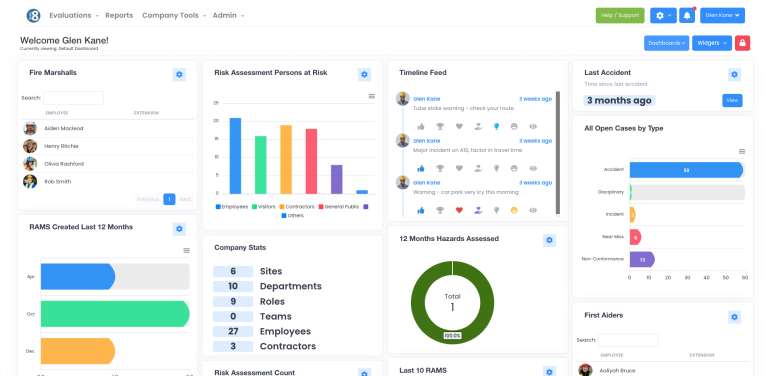
Evalu‑8 EHS is designed around UK regulations and reporting standards. It is aimed at small and mid‑sized organisations that need strong EHS tools without the weight of a large enterprise system.
What it offers:
- Templates and controls for risk assessments, RAMS, and COSHH, tuned to UK practice.
- Incident and accident reporting from desktop and mobile, with configurable investigation steps.
- Audits and inspections that support photos, actions, and full history.
- Training management with a simple matrix and expiry tracking.
- Fatigue risk management tools for shift‑based work.
- Dashboards that show performance across locations in real time.
Pricing starts at about £2.50 per user per month, using a modular model that lets you add features as you grow.
Best for: UK SMEs in higher risk sectors such as construction, manufacturing, logistics, and rail.
3. SafetyCulture (with iAuditor app)
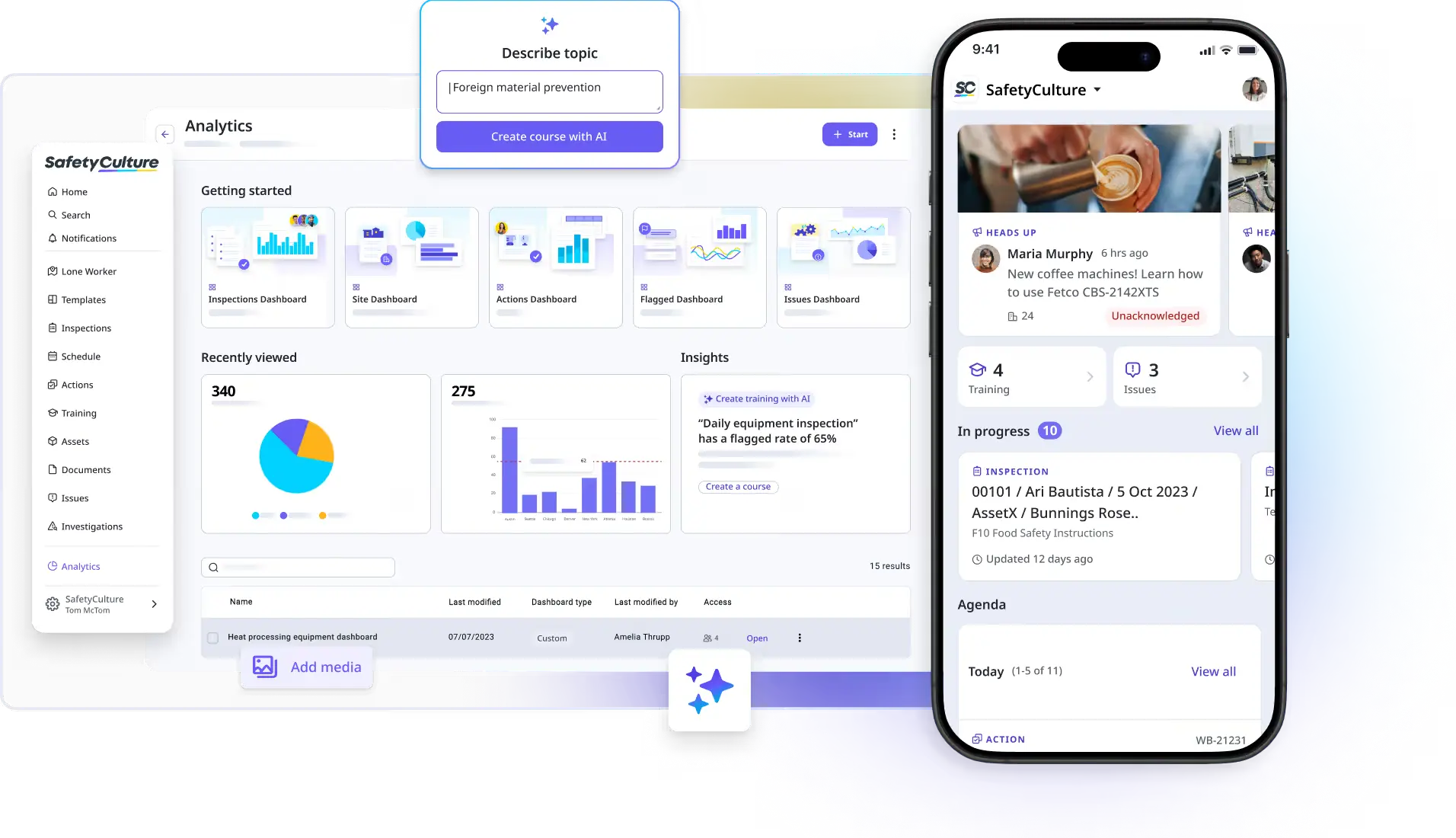
SafetyCulture, known for the iAuditor app, is widely used for inspections and checks in the field. It is designed for frontline workers who need to log information quickly while on site.
What you can do with it:
- Use ready‑made or custom checklists for a wide range of industries.
- Capture incidents with photos, video, and notes from phones and tablets.
- View dashboards that show which inspections are complete, which issues were found, and what actions are still open.
- Manage issues and investigations in a structured way.
- Connect to sensors for live monitoring in certain environments.
- Premium plans are around £19 per user per month and there is a free tier for basic use.
Best for: Site‑based and frontline teams that need simple, mobile‑first inspections and incident logging.
4. EcoOnline
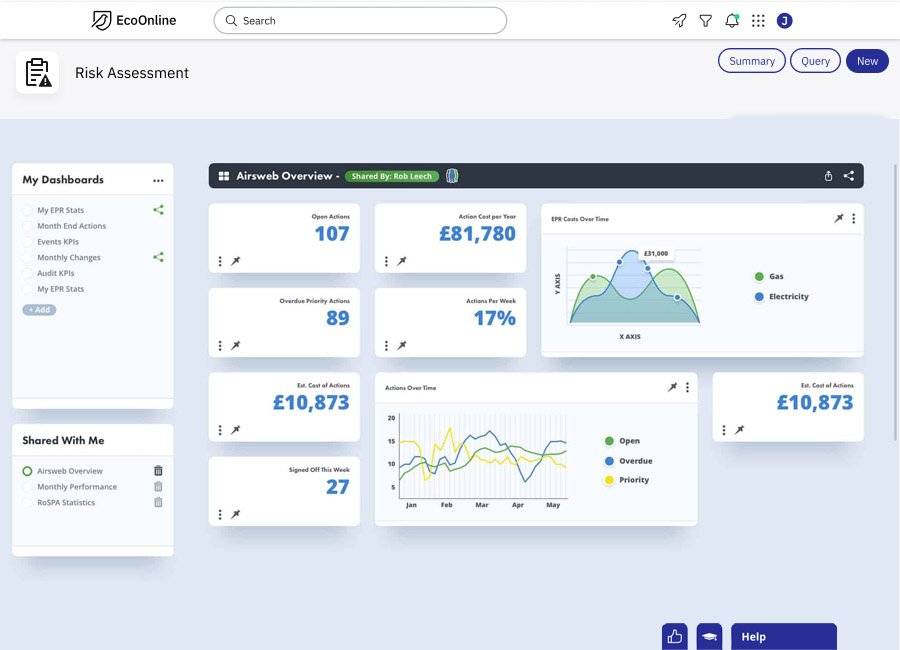
EcoOnline has a strong focus on chemical safety and COSHH, along with wider EHS support. It is well suited to organisations that work with many substances and need tight control.
Key points:
- COSHH and chemical inventory management, supported by a large SDS library.
- Risk assessment, incident logging, and action tracking in one system.
- Scheduling and reporting for inspections and audits.
- Training and competence tracking across teams.
- Compliance features for COSHH, REACH, and related regulations.
- Permit management for high risk work.
Best for: Manufacturers, laboratories, and other organisations that handle hazardous materials and need strong chemical‑safety controls.
5. Cority
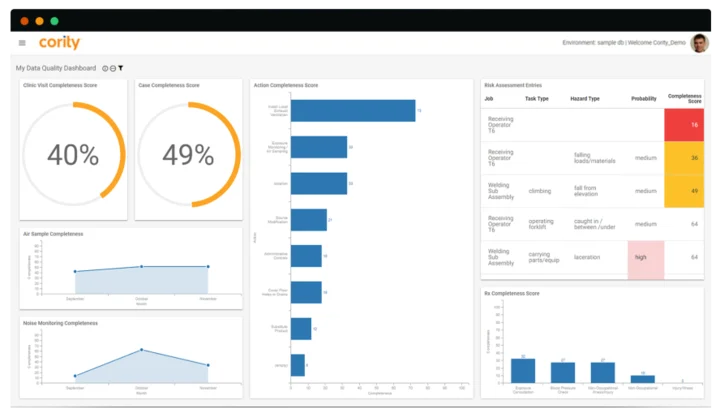
Cority is an EHS platform used by large organisations with complex needs and consideered a leader in global EHS software.
It supports:
- Detailed incident management and root cause analysis across large portfolios.
- Occupational health case management and return‑to‑work planning.
- Compliance with HSE, ISO, and international frameworks.
- Analytics that reveal patterns and risks across many sites and regions.
- Integration with systems such as SAP, Oracle, and Workday.
Best for: Large, multi‑site organisations with mature EHS teams and complex reporting requirements.
6. Symbiant
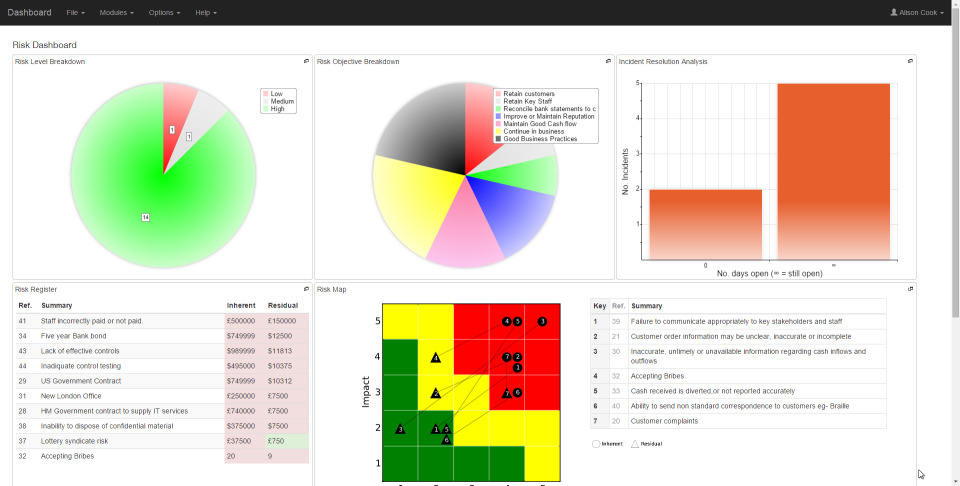
Symbiant is a platform for governance, risk, and compliance, with a module for safety and environment. It is a good option for organisations that want a strong focus on RIDDOR and audits.
It offers:
- Incident workflows that align with UK RIDDOR reporting.
- Risk assessment tools that follow HSE guidance.
- Audit and inspection management with configurable forms.
- AI‑supported compliance monitoring for regulatory changes.
- Document control with version history and access controls.
- A wider GRC framework that links risk, audit, and compliance.
Best for: UK organisations that want a compliance‑first platform with strong RIDDOR support and broader GRC capabilities.
7. Sphera
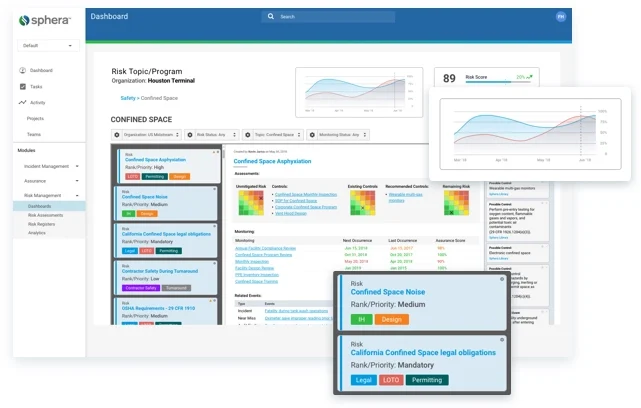
Sphera is aimed at large organisations in high risk sectors such as energy, chemicals, and utilities.
It helps with:
- Process safety management and analysis of hazardous operations.
- Modelling and understanding operational risk.
- Environmental compliance and emissions tracking.
- Analytics to help predict and prevent incidents.
Best for: High risk industries that need deep process safety and risk‑modelling capabilities.
8. Ideagen
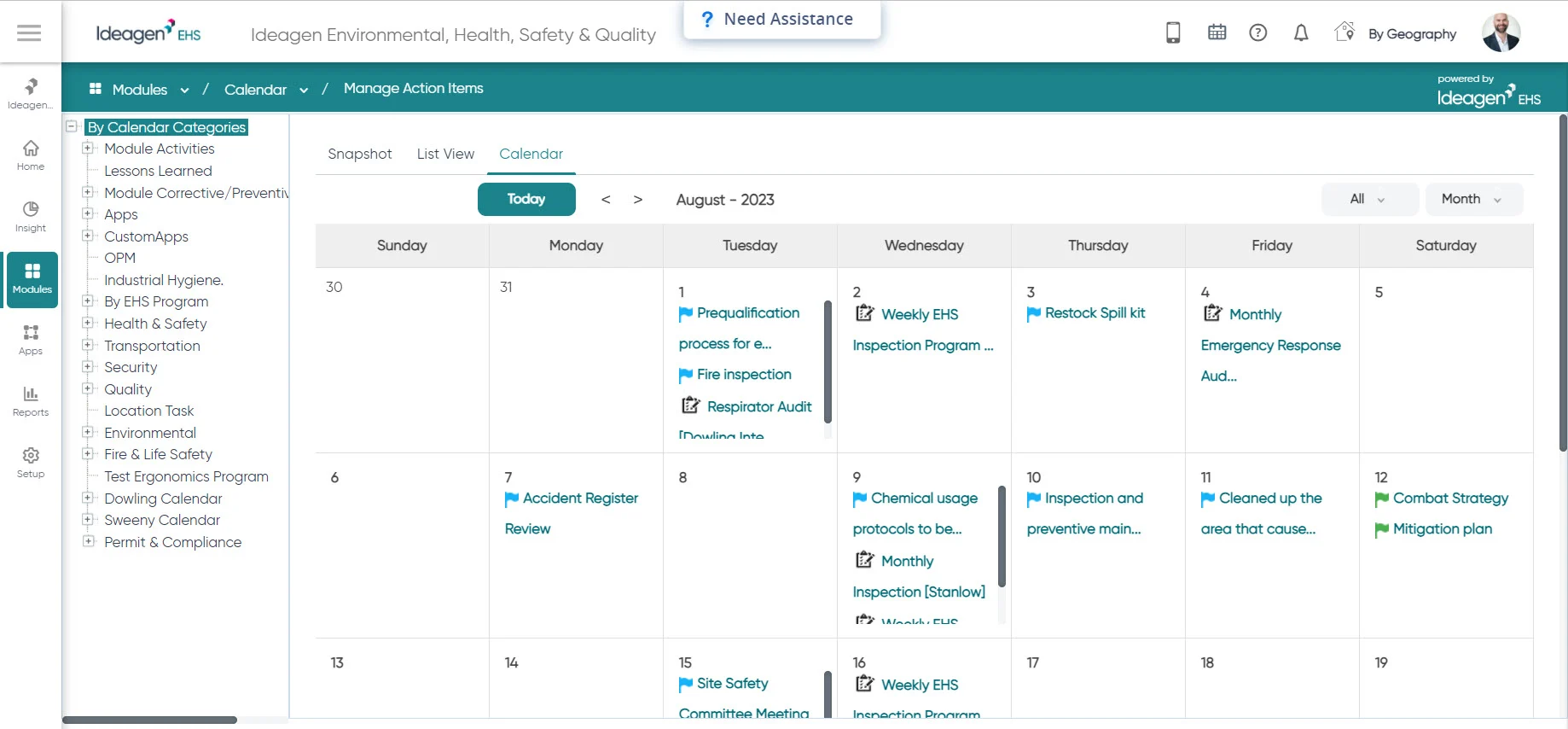
Ideagen is a software with quality and compliance tools that are used in regulated sectors such as aviation, pharmaceuticals, and manufacturing.
It supports:
- Incident management and root cause analysis designed for strict regulatory contexts.
- Audit and inspection programmes that fit formal standards.
- Risk assessment and compliance tracking for regulated frameworks.
- Behaviour‑based safety tools that support cultural change.
- Strong document control across safety and quality.
Best for: Organisations in highly regulated industries that need formal governance and traceability.
9. GoAudits
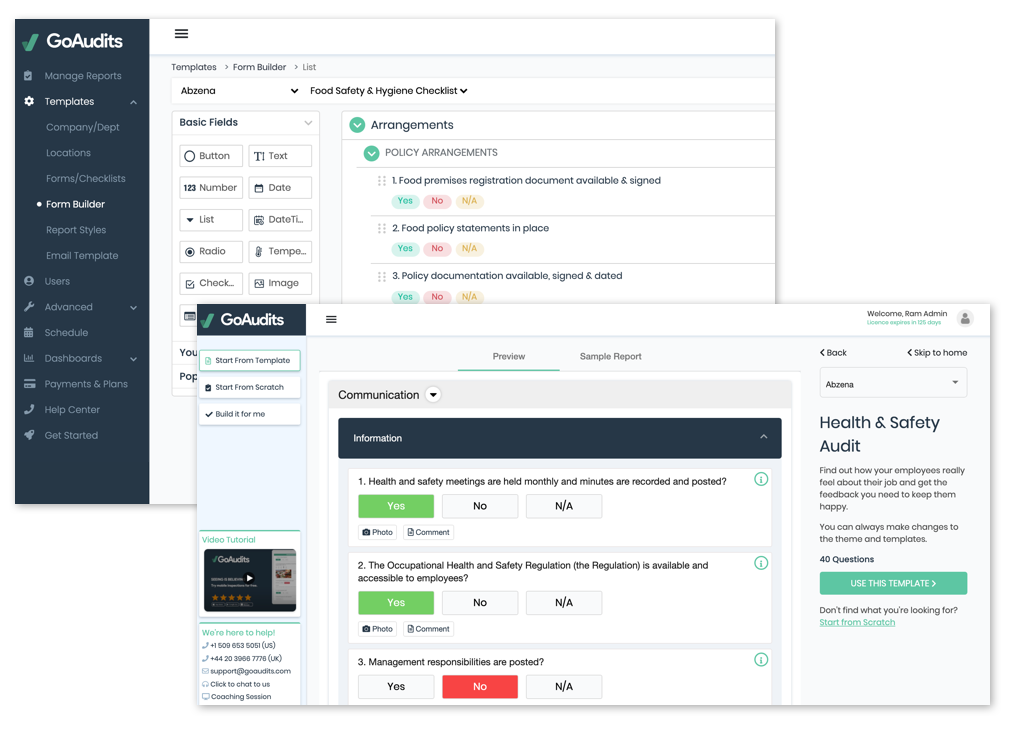
GoAudits focuses on inspections and audits at a price that fits smaller budgets. It is a good choice if you want to improve audits without rolling out a full EHS platform.
You can:
- Use mobile audit checklists, including offline.
- Generate scores and professional PDF or Word reports automatically.
- Record issues with photos and set deadlines for corrective actions.
- View dashboards that compare audit performance across sites.
- Use pre‑built templates for common UK industries.
Pricing starts at about £10 per user per month.
Best for: Small and mid‑sized UK organisations that want simple, effective audit tools.
10. Spectra Assure
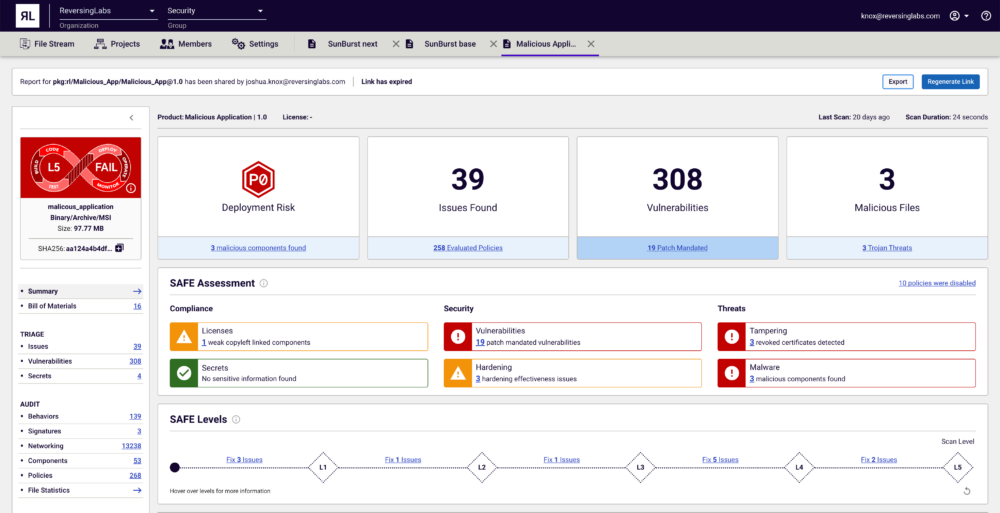
Assure is a platform from Spectra that focuses on making safety easy to report and talk about across the workforce.
It supports:
- Simple mobile reporting for incidents and near misses that all staff can use.
- Corrective action tracking with reminders so issues are not forgotten.
- Risk assessment and audit management in a single system.
- Dashboards that highlight trends and areas of concern.
- Options to include safety data in wider ESG reporting.
Best for: Mid‑sized organisations that want to encourage more reporting and engagement from staff at every level.
How to choose health and safety management software
Choosing the right system is easier if you focus on a few key questions instead of every possible feature.
How to choose health and safety management software
- Know your legal duties: choose tools that clearly support the specific regulations you must follow.
- Be clear on your main goal: choose what matters, whether better incident reporting, easier audits, or organized training records and pick a tool that is strongest in that area.
- Keep it simple for staff: choose software with a clean interface, mobile reporting, and minimal training.
- Check what it connects to: look for integrations with HR, payroll, document storage, and communication tools. Connected data means less duplication and more time saved.
- Think value, not just price: weigh costs against time saved and peace of mind.
Try Health and Safety Management Software
Health and safety management software takes a lot of pressure off manual systems. It helps people report issues quickly, gives you clearer information, and makes it easier to show you are meeting your legal duties.
If you want safety and HR to work together instead of in separate silos, Factorial is a strong option. It connects employee records, absences, documents, and compliance workflows in one place, and its AI assistant helps with reports and routine admin so your team can focus on real improvements.
To see how this could work for your organisation, you can request a demo of Factorial and explore how it supports both HR and health and safety management in a single, easy to use platform.

Disclaimer: The information presented on this page is based on publicly available sources. The comparisons between Factorial and other providers are intended solely for the illustration of the respective software features, pricing and functionalities. All information regarding features, prices, and integrations may be subject to change without prior notice. Factorial assumes no liability for the accuracy, completeness, or timeliness of the information presented. We recommend contacting the respective providers directly to obtain the most accurate and up-to-date information. All legal regulations regarding Spanish fair advertising and competition law are fully observed by us; if you have any concerns, please reach out to us. The comparisons presented do not constitute a final evaluation or recommendation for any provider, but serve solely as an informational source.