Reward programmes can play an essential role in celebrating your team’s achievements, making them feel valued and supported, and driving engagement, morale, and productivity. There are many different technological solutions available so deciding which one will work best for your workforce can be a big decision. In this article, we talk you through what makes up a good rewards programme, why it’s beneficial to have one and provide five top employee rewards programme solutions available in the UK.
📌 In a rush? See the top 5 best solutions for employee rewards programmes in the UK at a glance.
What Is an Employee Rewards Programme?
An employee rewards programme is an organised system used by a business to recognise employee contributions. By integrating a rewards programme into the organisational culture, employers can improve morale, engagement, productivity and retention.
Rewards programmes are used to recognise when targets are met, specific actions employees have taken that have had a positive impact, and recurring accomplishments.
Employee Recognition vs. Employee Rewards
While an employee reward programme may focus on tangible, often financial incentives to motivate and reward achievements, employee recognition is an intangible, relational experience in which gratitude or validation is expressed.
In a nutshell, here are the key differences:
- Rewards usually come from the top-down whereas recognition can be given by anyone.
- Rewards are usually tangible (such as a salary increase, bonus scheme, or gift card), whereas recognition is intangible (such as a public shout-out or a thank-you email).
- Rewards are often conditional, time-boxed and based on achieving a specific, pre-determined milestone, whereas recognition can be given at any time to validate someone’s contribution.
- Rewards appeal to extrinsic (or external) motivation, whereas recognition appeals to intrinsic motivation, or the internal need for validation and appreciation.
Types of Employee Rewards
There are many types of reward and recognition programmes for employees, and what works best for your business will depend on your business model, the company’s ethos and culture, and how much you can afford to invest.
Different types of rewards include:
- Financial – including salary increases, paid time off, profit sharing, bonuses or gift cards.
- Experiences – lunches with senior leaders, extra holiday days, tickets to events and outings.
- Recognition – public shout-outs, personalised thank-you notes, a wall of fame.
- Career development – opportunities for mentoring, reimbursement of tuition fees, and professional training opportunities.
- Wellbeing – gym memberships, yoga classes, fruit boxes.
There are also different methods for structuring a rewards programme, including:
- Pure financial incentives, such as bonuses and salary rises.
- Points-based systems in which employees earn points for contributions, which can be redeemed for experiences or gift cards.
- Manager-led public recognition of achievements and milestones.
- Peer-to-peer support where team members give shout-outs and highlight each other’s work.
Benefits of an Employee Rewards Programme
There are several recognised benefits of employee rewards programmes:
- Increased engagement, motivation and productivity: when people feel their efforts are noticed, they will be energised to do more and higher-quality work.
- Reduced turnover: a good rewards programme helps employees feel valued, appreciated, and visible to the company, strengthening their emotional commitment and sense of belonging and making them more likely to stay in their roles.
- Reinforce desired behaviours: using a programme to spotlight collaboration, innovation, kindness and reliability can make company values real rather than simply words.
- Improves well-being: small, regular rewards make people feel appreciated and build a sense of belonging in a positive work environment, which can lift moods and reduce burnout.
- Supports a feedback culture: rewards programmes normalise saying thank you, noticing good work and providing positive feedback openly.
- Attract new talent: cultures that recognise effort appeal to values-driven candidates; a good rewards programme can differentiate organisations and improve the company’s reputation.
- Provides data: a well-designed rewards programme can provide information about the company culture, which behaviours are embedded, and who the quiet contributors are.
Components of an Employee Rewards Programme
Rewards programmes work best when they feel relational rather than transactional and when they combine technology, processes and cultural practices. A good rewards programme should not replace fair pay or good management, or create unhealthy competition. Consistency, fairness, transparency, and the ability to personalise rewards are all key to creating a beneficial rewards programme.
The core components required for an employee rewards programme include:
- Company-wide visibility and communication, including shared feeds, dashboards or other channels.
- Clear guidelines for peers and managers on what behaviours and achievements should be recognised and how.
- Alignment with performance reviews to track performance and tie in rewards with company goals and values, as well as mechanisms to stop bias or over-recognition.
- Options to personalise the rewards available in order to make them more impactful for the individual employee.
- A reward delivery system, such as a catalogue of options, points or credits, all of which can be utilised in a timely manner.
- Analytics and reporting capabilities, such as dashboards, reports, and review cycles, to measure the programme’s participation, impact, and effectiveness.
- Accessibility via mobile and desktop, including an intuitive interface and minimal steps to redeem the rewards.
- Integration with existing systems so the rewards programme talks with core HR platforms and aligns with payroll, performance, and engagement tools where required.
- Governance framework with clear policies, budgetary controls, and monitoring to prevent misuse.
Top 5 Employee Rewards Programmes in 2026
Here we’ve rounded up the five top employee reward programmes for 2026:
Factorial: Best All-in-One Platform with HR, Finance, and Talent Features
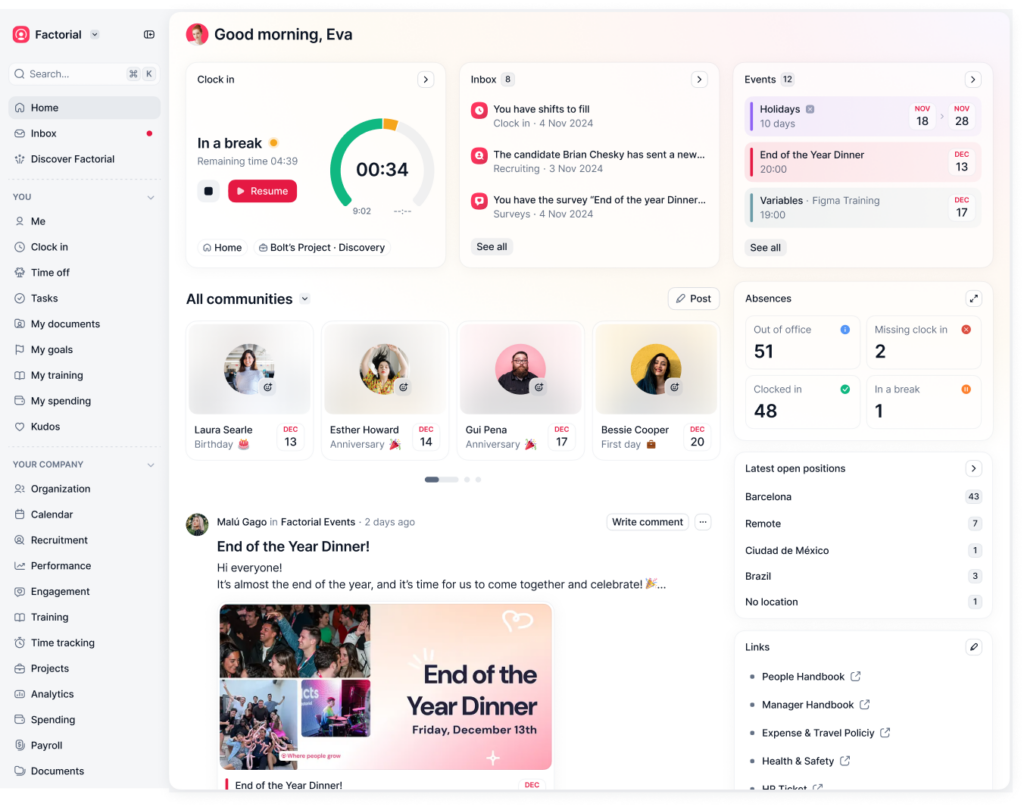
Factorial is a comprehensive business management software with embedded AI tools. This all-in-one HR platform allows team members to send public or private recognition to each other through the Kudos feature in the communication and performance management tool. Managers can easily see how many Kudos their employees have received within specific time periods and reward them accordingly.
Factorial’s platform also provides a centralised hub for employee documentation and onboarding, as well as for managing leave and absences, expenses and payroll, and IT management. By ensuring all employee data and management tools are in one place, Factorial provides a seamless, integrated experience for all colleagues and supports the effortless recognition and reward of workplace achievements.
Best for
- Integrating rewards with performance management and other HR functions
- Companies looking for an AI-forward software to streamline their core business processes
Key Features
- Digital shout-out: the Kudos system is integrated into communication tools and performance management features.
- Includes an AI agent, One, a chatbox that analyses company data and identifies key moments or achievements.
- Provides customisable HR reports, performance data and analytics with a dashboard format.
- Offers a mobile app so you can manage your team while on the go
Price
- Prices start from £5.40 per user per month
- Free demo available
Reward Gateway
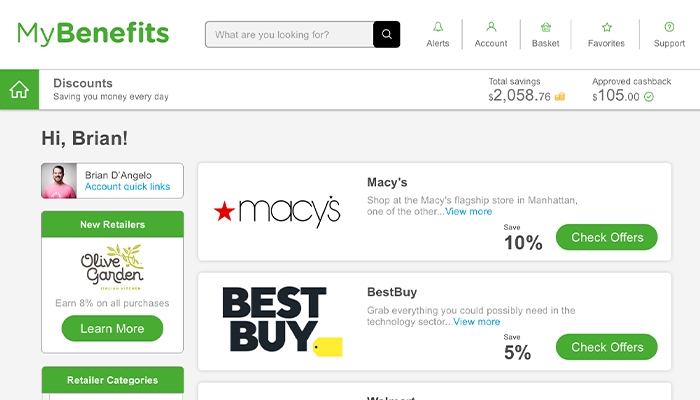
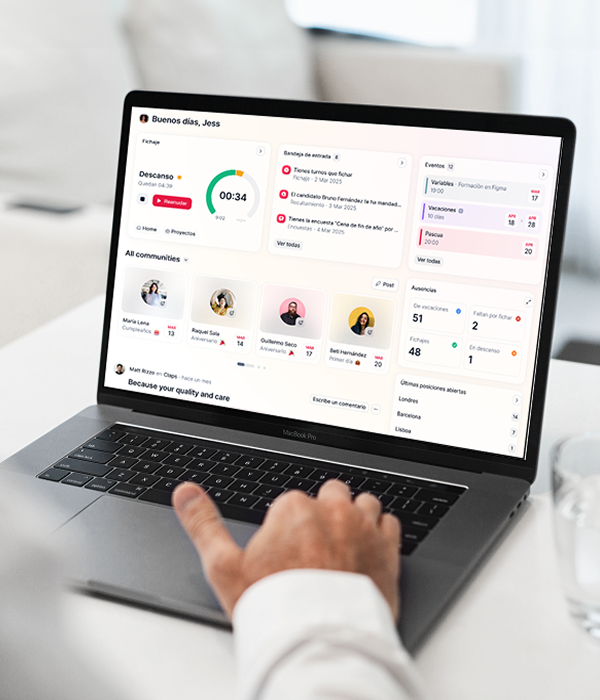
Reward Gateway is a cloud-based employee rewards programme that also includes an engagement platform, providing surveys, internal communication tools, and feedback support. The platform combines peer-to-peer and manager recognition with a flexible rewards marketplace, communication and analytics tools and employee benefits.
Best for:
- Encouraging a culture of recognition and engagement.
Key features
- Branded recognition features.
- Reward marketplace, including charitable options.
- Dashboard and reporting tools for insights.
Price
- From £8 per month per employee.
- Free trial available.
Perkbox
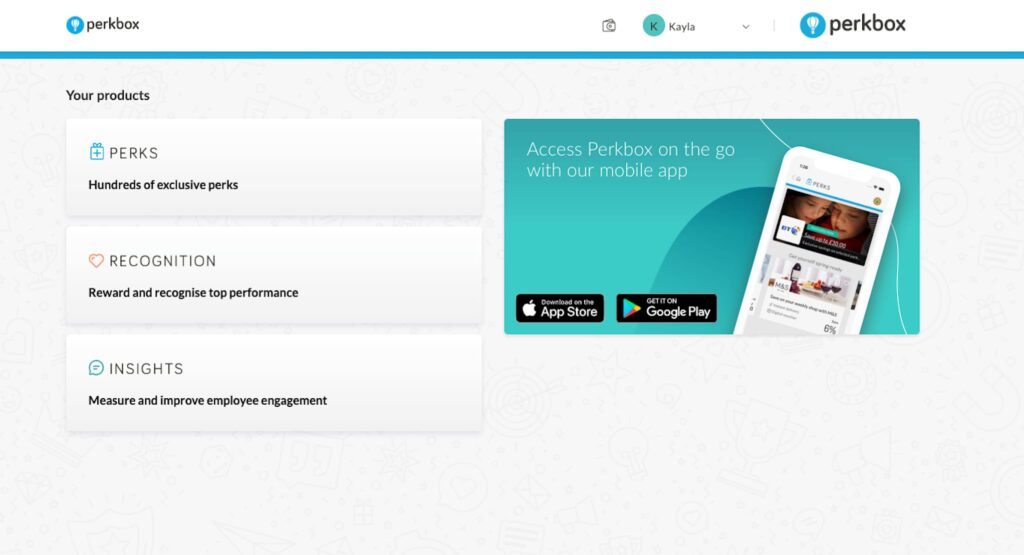
Perkbox is a global employee rewards programme providing perks, discounts, wellbeing resources, and communication tools, all accessible via mobile, desktop, and tablet. It is a scalable platform that supports businesses operating in a variety of locations and puts individual choice and agency at the centre of rewards.
Best for
- Mobile-friendly experience.
Key features
- Catalogue of perks and discounts.
- The wellness hub includes guided meditations, workouts, and other tools for physical and mental health.
- Support for HR teams managing the systems behind the scenes.
Price
- Available via quote on request.
Nectar HR
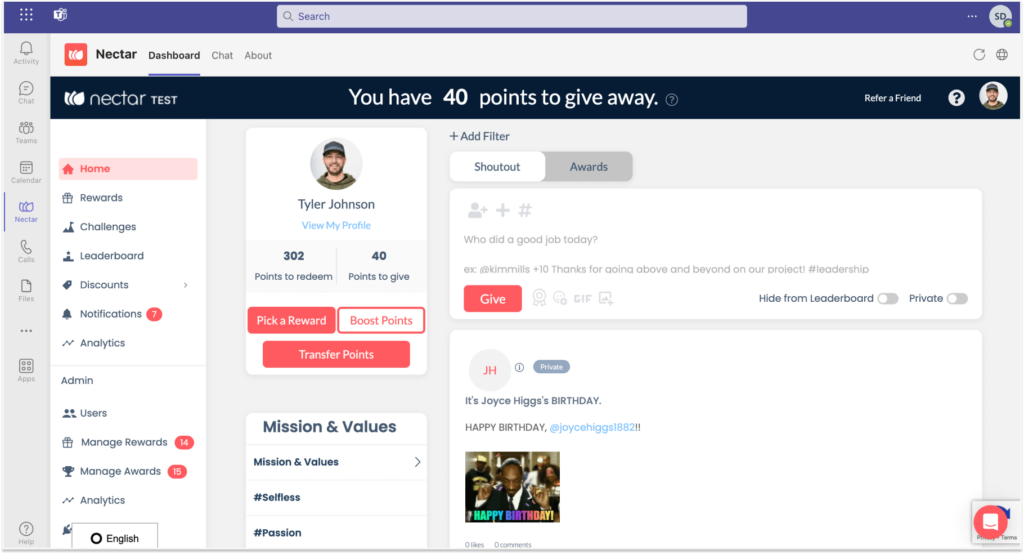
Not to be confused with the UK customer loyalty programme linked to Sainsbury’s, Nectar HR is a corporate employee rewards and recognition platform. The platform focuses on encouraging regular employee recognition through meaningful rewards that can be personalised for each individual. It also uses data from recognition systems to monitor engagement and ensure the programme is working as intended.
Best for
- Improving morale through social recognition.
Key features
- Customised rewards.
- Tools for social and peer recognition.
- Automated celebrations for major milestones and birthdays.
Price
- Prices supplied with demo.
Bonusly
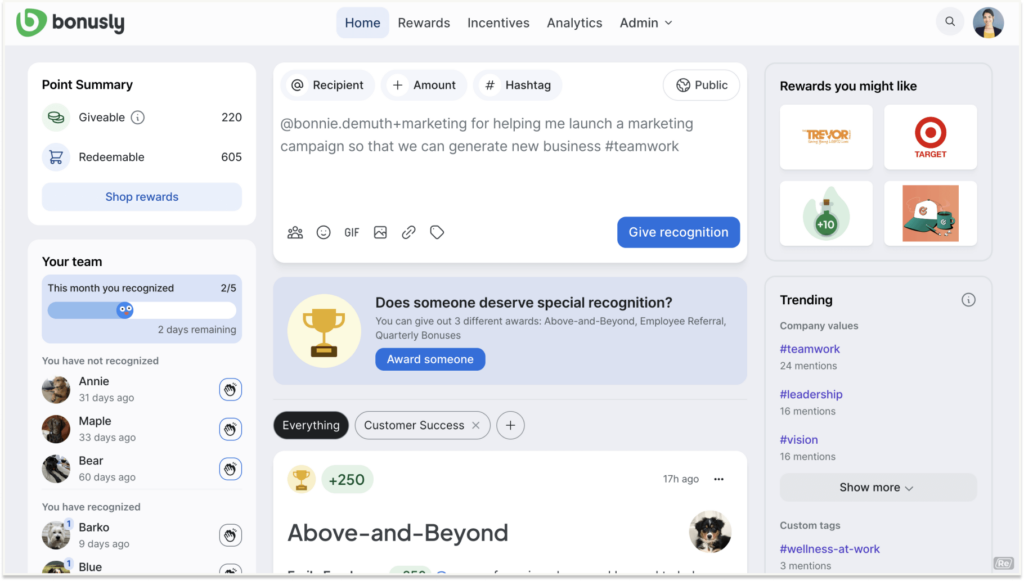
Bonusly is a cloud-based rewards platform that helps organisations build a positive company culture by providing tools that enable frequent recognition, appreciation, and visible reinforcement of company values. The platform has tools to encourage colleagues to notice small and big accomplishments, and offers analytics to help leadership teams understand patterns and engagement trends.
Best for
- Frequent peer recognition.
Key features
- Tools for employees to give and receive “micro bonuses” in real time.
- An extensive global rewards catalogue allows rewards to be redeemed for gift cards, cash or company-specific perks.
- Supports hybrid working and teams in different locations.
Price
- Prices supplied with demo.
Employee Rewards Programme Comparison Chart
| Platform | Best for | Strength |
| Factorial | Comprehensive HR platform with reward features | Intuitive, easy-to-use interface |
| Reward Getaway | Encouraging a culture of recognition and engagement | Branded recognition features |
| Perkbox | Mobile-friendly experience | Accessible tools |
| Nectar | Improving morale through social recognition | Tools for regular social and peer recognition |
| Bonusly | Frequent peer recognition | Tools to create a supportive culture |
Choosing the Right Employee Rewards Programme
Choosing the right employee rewards programme involves considering your company’s goals and culture, your team size and budget, and the technology available. The right system will be easy for employees and managers to use while delivering long-term engagement and a deeper understanding of performance.
- Clarify your goals: why do you want a rewards solution? Your priority may be to support remote teams, boost engagement, improve retention or reinforce company values. Different platforms may focus on different elements, so knowing what you want to achieve is essential.
- Growth: does your company plan to grow in the next few years? A platform such as Factorial, which can scale to support a larger organisation, may have a higher initial cost and require advanced controls, reporting, permissions, and consistency. Smaller companies may prioritise ease of use and speed of setup.
- Budget: does your budget include any costs associated with the rewards themselves? Platforms may offer different cost structures, including per-employee pricing or a module approach.
- Existing tech: does the platform fit with how your company is already working? A rewards platform that integrates with tools that people already use will be adopted much more quickly.
- Employee experience: will employees like, value and use the rewards system? The platform needs to be easy to use, offer a meaningful selection of rewards, and allow employees to recognise one another in an authentic and supportive way.
- Customisation: can you customise the rewards, budget and rules? A rewards platform needs to speak to your company’s ethos and work with your performance management system, so the tools you have available should be flexible enough for you to adapt them.
- Measure impact: does the platform include analytics so that you can report on participation, trends and any gaps?
Final Thoughts on Employee Reward Solutions
A dedicated platform that supports consistent, meaningful recognition of a workforce’s work, achievements, and values is essential to creating a positive environment that drives engagement. Celebrating both small and big wins in the workday motivates the whole team, and the right platform makes all the difference between a rewards system that has a significant impact on the company and one that does not.
That’s why Factorial’s platform with built-in rewards features, performance management tools and more is the right solution for UK companies. Its all-in-one approach allows companies to centralise their business processes in one unified platform. Granting both managers and employees visibility into employee and peer recognition, which then could turn into a robust reward programme. This incentivises employees and keeps employee satisfaction high, ensuring a positive and warm work environment. Contact one of our experts today to book a demo and see for yourself how Factorial can save you time and money.