Writing performance reviews is rarely anyone’s favourite task. Managers spend hours trying to find the right wording and employees agonise over self‑assessments. Meanwhile, HR teams chase deadlines and try to encourage consistency in reviews across the business. In some cases, when used well, AI tools for performance reviews can speed up this process and make it easier to deliver good performance assessments. An AI performance review writer can speed the drafting process and suggest clearer wording, and it can help you structure feedback more fairly and in a way that is easier to understand and implement.
Remember that AI will not and should not replace your judgement as a manager or HR professional, but it can take care of first drafts, wording and structure so you can focus on areas that require more of a human touch: the actual conversation around performance.
In this guide, we’ll look at how to write a performance review using AI, share AI performance review prompts and examples for managers and employees, and highlight the risks to watch out for when using AI in performance reviews. AI also works best when it has access to the actual data it needs regarding performance and goals, so this is also something we will discuss.
What AI can actually do in performance reviews
Before you jump in and ask “can AI write my performance review?”, it helps to be clear about what these tools actually do. As the use of AI in the workplace rises steadily, more and more tools enter the market. Some tools are better than others, so it also helps to be clear on what kind of AI tools are used for performance reviews and how they can support your performance management strategy.
Most performance review AI tools are useful to:
- Turn bullet points into a fully written a review
- Rewrite feedback to be clearer, more neutral or more empathetic
- Suggest a personal development plan based on strengths and weaknesses
- Compare past performance appraisal notes with new ones
- Create a simple AI performance review template you can reuse
Used in this way, an AI performance review generator is best seen as a drafting and research assistant. It can give you a clean first version of your review, or refine your wording, but you still need to check everything yourself.
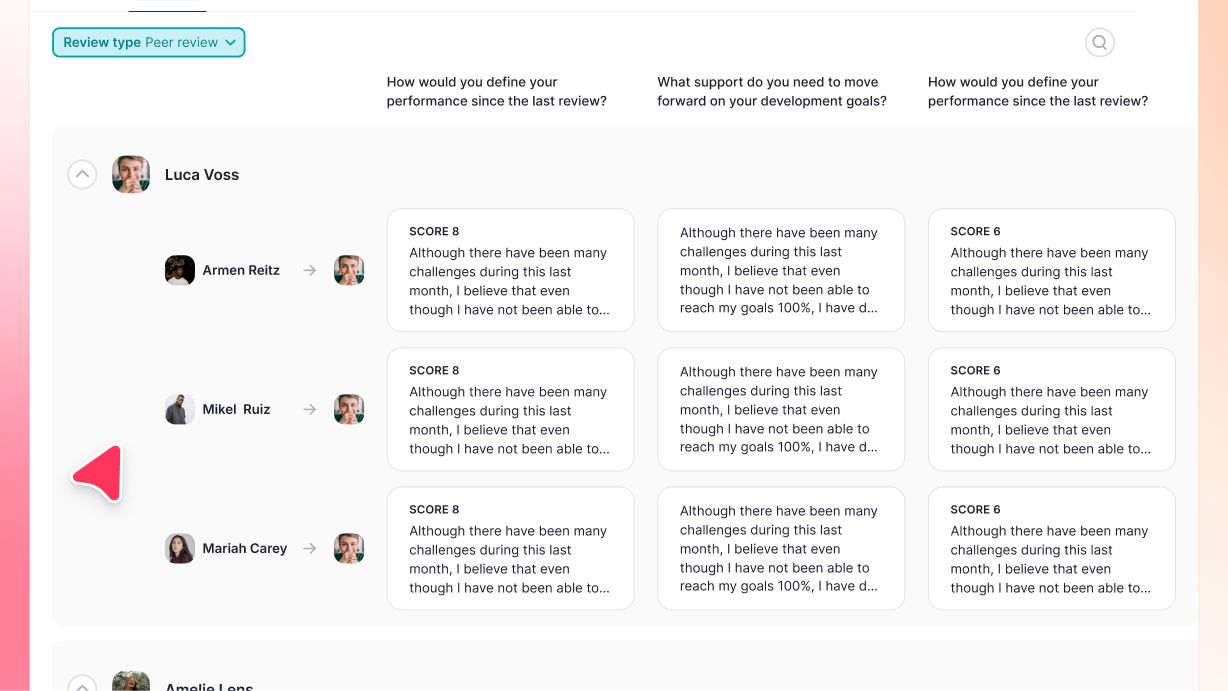
There’s a difference between generic chatbots and AI that is embedded in your HR system. An AI HR platform like Factorial can combine AI agents with your existing HR data in performance management software, including past performance reviews, goals, and job descriptions, so the questions and summaries the AI generates are much more tailored to your organisation. That means suggested questions for reviews and one‑to‑ones can better reflect your roles, competency framework and previous feedback, instead of relying on generic examples.
You might also see AI‑generated performance review writing features embedded in HR platforms. Instead of copying text into a chatbot, these tools pull data from your performance management system with goals, competencies, feedback, and notes from one-to-one calls. Based on this data, the HR platform then generates an AI draft of a performance review directly inside your usual workflow.
Benefits of using AI to write performance reviews
When used with the right safeguards, AI can make performance review cycles smoother for HR, managers and employees.
Key benefits include:
- Save time for managers: An AI performance review writer can turn your rough notes into a structured review in minutes, freeing time for actual conversations.
- Consistent wording and structure: A shared AI performance review template helps managers follow the same framework across teams.
- Better self‑assessments: An AI self-appraisal review generator can help employees put their achievements into words, especially if they’re not confident writers.
- Clearer development plans: By analysing strengths and skills gaps, an AI performance review writer can suggest tailored goals or training areas.
When AI is connected to your HR data, these benefits can go even further. Instead of “hallucinating” generic strengths and weaknesses, a platform like Factorial can:
- Show previous goals and results so the review focuses on real progress
- Suggest follow‑up questions for one‑to‑ones based on past themes
- Summarise several review cycles so you can quickly see patterns over time
Hallucination is a common issue with AI when the LLM does not have access to certain data or has extended its context window. When the LLM is connected directly to your data, it can fetch information directly from there in a secure way. This allows it to provide answers grounded in reality. This means AI is not just helping you write nicer sentences, it’s helping you anchor performance appraisals in actual performance history.
Guidelines for using AI performance review writers
AI can support performance reviews, but it cannot replace human judgment, context, or empathy. Employees expect fairness, accuracy, and a level of personal understanding that automated systems cannot fully provide.
You should never rely on AI to:
- Invent or fill in missing performance data or metrics
- Make decisions about ratings, compensation, or promotions
- Replace 1:1 conversations, coaching, or ongoing feedback
- Handle sensitive or high-stakes decisions without human review
- Interpret nuanced employee behavior, intent, or interpersonal dynamics
- Deliver feedback that requires emotional intelligence or personal context
AI-generated reviews also come with a few risks. The output of an LLM may come off as perfect but still contain a few factual errors or lack proper depth necessary for explaining decisions surrounding performance. These issues may include:
- Incorrect dates or timelines
- Misinterpretation of roles or responsibilities
- Overly generic template-like language
- Overemphasis on incomplete or recent data
Even when connected to internal systems, AI may mis-prioritize information or miss important context. For this reason, AI-generated performance reviews should always be treated as a draft and not as a final evaluation.
Organizations should set clear guidelines for using AI and ensure managers carefully review, edit, and personalize every output before sharing it with employees. Human oversight is not optional when it comes to performance reviews. It is essential to maintaining trust and fairness in the workplace.
How managers can use AI to write performance reviews
For managers, the most practical use of AI is to speed up the process of turning notes into a well‑structured, balanced review.
Here’s a simple workflow to write performance review with AI:
- Collect data: Gather goals, key projects, feedback from colleagues, and any notes from 1:1 meetings.
- Outline strengths and areas to improve: Write bullet points rather than full sentences.
- Paste bullet points into your AI performance review writer or AI agent.
- Use AI prompts for performance review (see examples below).
- Review the draft carefully for accuracy, tone and fairness.
- Edit to include specific examples and language specific to your company.
You can also use an AI performance review template to keep reviews consistent across the organisation. For example, you might use a template to ensure that you always cover:
- How results compare against objectives
- Behaviour and values
- Collaboration and communication
- Strengths to build on
- Areas for development
- Agreed goals for the next period
If you choose HR software that offers a simple annual performance review AI agent, you can use it to structure these reviews automatically and generate drafts inside each review form. In Factorial, for example, AI features are a part of a broader system of HR workflows. The AI agent uses your organisation’s data when creating the drafts and it can use the information from hiring, onboarding, and more to create a review that is personalised for the employee, taking the full employee life cycle into account.
Factorial also offers tools and templates for other performance management tools like 9-box matrixes.
Employees using AI for self‑assessments
Employees often struggle to talk about their own achievements. That’s where an AI self performance review generator can be really helpful.
A safe way to use AI tools for generating performance review self-evaluations is:
- Start with your own notes: List achievements, challenges and examples.
- Ask the AI to turn those notes into a self‑assessment that is professional but still in your voice.
- Use the AI text as a guide, then rewrite sections to make sure they feel honest and accurate.
This approach can be particularly useful for employees who are not native English speakers, or who work remotely and want to ensure their contribution to the organisation is clearly recorded and recognised.
If your organisation uses an HR platform with AI built in, self‑reviews become even easier. Instead of pasting text into an external tool, employees can:
- See past reviews and goals directly in the form
- Ask AI to summarise progress since the last cycle
- Draft their self‑assessment with suggested wording and questions tailored to their role
The best tool in this context is one that already understands your roles and review structure because it sits on top of your HR data, rather than as a standalone chatbot that gives generic answers, but that doesn’t understand your company.
AI performance review examples for managers
Here are a few simplified AI performance review examples for managers that show the kind of output a tool can create from your bullet points.
AI performance review example 1: Strong performance
“Over the past review period, Alex has consistently met and often exceeded their objectives. They delivered key projects on time, maintained strong relationships with stakeholders, and proactively identified process improvements. Going forward, we’ll focus on broadening Alex’s influence across cross‑functional projects and supporting their development as a mentor to newer team members.”
AI performance review example 2: Mixed performance
“During this cycle, Harry delivered solid results on core tasks but struggled to meet some deadlines on larger cross‑team projects. Communication with stakeholders has improved, but there is still room to provide earlier updates when timelines change. In the next period, we will prioritise time management skills and clearer planning, while continuing to build on Harry’s strengths in managing customer relationships.”
These kinds of paragraphs are exactly what an AI performance review writer can generate from notes and data you input, but you still need to add a few concrete examples and individual context and agree on next steps.
When the AI has access to your previous reviews and goals, as in a platform like Factorial, it can go a step further and:
- Reference specific goals from last year and note whether they were achieved
- Highlight recurring strengths or challenges across cycles
- Suggest follow‑up questions for the manager to discuss in the one‑to‑one
AI performance review examples for employees
Here are AI performance review examples for employees in the context of self‑assessments.
AI performance review example 1: Self‑assessment
“This year, I successfully managed multiple client projects, meeting agreed deadlines and maintaining a high level of customer satisfaction. I took ownership of onboarding two new colleagues and shared best practices with the wider team. I would like to continue developing my skills in data analysis so I can provide deeper insights to support decision‑making.”
AI performance review example 2: Self‑reflection with growth focus
“Over the past six months, I have improved my communication with peers and stakeholders, particularly by providing more regular updates. However, I recognise that I need to be more proactive in flagging risks earlier. In the next period, I plan to focus on improving my planning and prioritisation to ensure I can manage competing deadlines more effectively.”
An AI performance review generator can help employees shape this kind of language from rough notes or bullet points. But they should always read the output critically to ensure it reflects what they actually did and how they feel about their progress.
If the AI can see previous self‑reviews and manager feedback in your HR system, it can provide more consistent wording and ensure you’re tracking progress on the same themes over time.
Practical AI performance review prompts
The quality of your AI output depends heavily on your prompt. Here are some AI performance review prompts and AI prompts for performance review that work well for managers and HR.
Prompts for managers:
- “You are an HR expert in a UK company. Turn the following bullet points into a balanced performance review for an employee. Include strengths, areas for improvement, and 3 development goals. Use clear, neutral language.”
- “Using the notes below, write a one‑page performance review summary. The tone should be professional, specific and respectful. Highlight concrete achievements and avoid generic phrases.”
Prompts for employee self‑review:
- “Act as a career coach. Turn my notes into a self‑assessment for my performance review. Use ‘I’ statements and keep the tone honest and constructive.”
- “Rewrite this self‑assessment to be more concise and professional, while keeping all the key points.”
If you use an AI performance review writer built into your HR platform, these prompts can often be added directly inside the system’s review form. AI connected to your HR data can also recommend useful prompts for one‑to‑ones based on the themes that have appeared in earlier reviews, goals or onboarding journeys.
Using Factorial for AI performance reviews
In short, AI can make performance reviews easier, faster, and more consistent, especially when it uses your company’s real data in one place. It can suggest questions, highlight past feedback, and help managers and employees get started.
But AI is only a helper. It cannot replace human judgment, context, or honest conversations. The best approach is to use AI for drafts and insights, then rely on managers to review, personalise, and deliver feedback.
If you want a more reliable and structured way to use AI in performance reviews, tools like Factorial bring everything into one place so you can save time without losing the human touch. Request a demo of Factorial today to see how it can take your performance management to the next level!

FAQs
AI can be very helpful when writing performance reviews both for employees writing self-assessments and for managers writing performance appraisals for their direct reports. However, it is important to align with your team on whether you agree on using AI for performance reviews and even when you agree, you must keep the evaluation as personal as possible.
ChatGPT can be useful for writing performance reviews if you collect your own notes and data on your employee and paste it to ChatGPT for help with drafting the review. Use it either as a way to draft the review or as a way to edit a review you wrote.
You should avoid writing biased opinions in your performance review without including data to back up your claim.
Managers write performance reviews for their direct reports and employees write self-assessment reviews and reviews for their own managers. During 360 performance appraisals, employee may even write a review of their peers as well.
Include examples, personal notes, and consider the actual contributions of the employee to the organisation. Don't accept everything AI says without scrutiny. Use AI mostly as a writing assistant and a way to collect data from your company database, not as a replacement.