A bad onboarding experience costs more than most managers realise. When remote new hires do not get the right setup, support, or information from day one, it takes longer for them to become productive, and some leave before they ever get there. The right software for remote employee onboarding fixes many of the most common issues that new hires face when joining a company in a remote role.
Without the right tools, remote employee onboarding can quickly become a mess of missed tasks, unsigned documents and confused new starters who feel disconnected before they have even had a chance to settle in. That is why choosing the right onboarding software for remote employees is important.
In this article, we compare the top eight platforms available to UK businesses, covering features, pricing, and what users have to say about each one.
What Is Remote Employee Onboarding Software?
Remote employee onboarding software is a digital platform that helps HR teams manage the entire onboarding process of welcoming and integrating new hires who work from home or in a hybrid setup, which is very different from traditional onboarding. Instead of relying on email chains and handing them printed checklists, these tools centralise everything in one place from collecting data in an employee directory to keeping documents secure.
That includes sending agreements and collecting signatures, assigning tasks in an onboarding workflow to new starters and their managers, giving new hires access to company documents and policies for compliance, and tracking progress so nothing gets missed. The best platforms go further than basic admin and help new employees feel connected to the company from day one, even when they are working from home.

Features to Look for in Onboarding Software for Remote Employees
Not all onboarding tools are built the same. When you are evaluating options for your team, here are the key features you should prioritise:
- Automated workflows: HR automation lets you trigger tasks like sending documents and welcome packs, which reduces manual work and makes sure every new hire receives the same instructions (and attention) automatically.
- Document management and e-signatures: New starters should be able to review, sign, and return contracts entirely online, with no printing required.
- Self-service portal: A dedicated employee portal gives your people a clear view of what they need to do and when, reducing the amount questions landing in your inbox.
- Task assignment across teams: Good software lets you assign tasks to IT for device management so devices are set up on time.
- Integration with other tools: The platform should connect with the tools you already use, from payroll and accounting software to Microsoft Teams.
- Compliance support: For UK businesses, this means handling employment contracts, right-to-work checks, and GDPR-compliant document storage correctly.
- Progress tracking and reporting: HR should be able to see at a glance which tasks are overdue, which documents are unsigned, and how each new hire is progressing in the onboarding process.
Top Remote Employee Onboarding Software
Here is a breakdown of the eight best platforms for onboarding remote employees, with a focus on what each one does well and where it falls short.
1. Factorial
Best for: SMEs and growing businesses that want an AI-powered business management platform that unifies HR, Finance, and IT in one place.
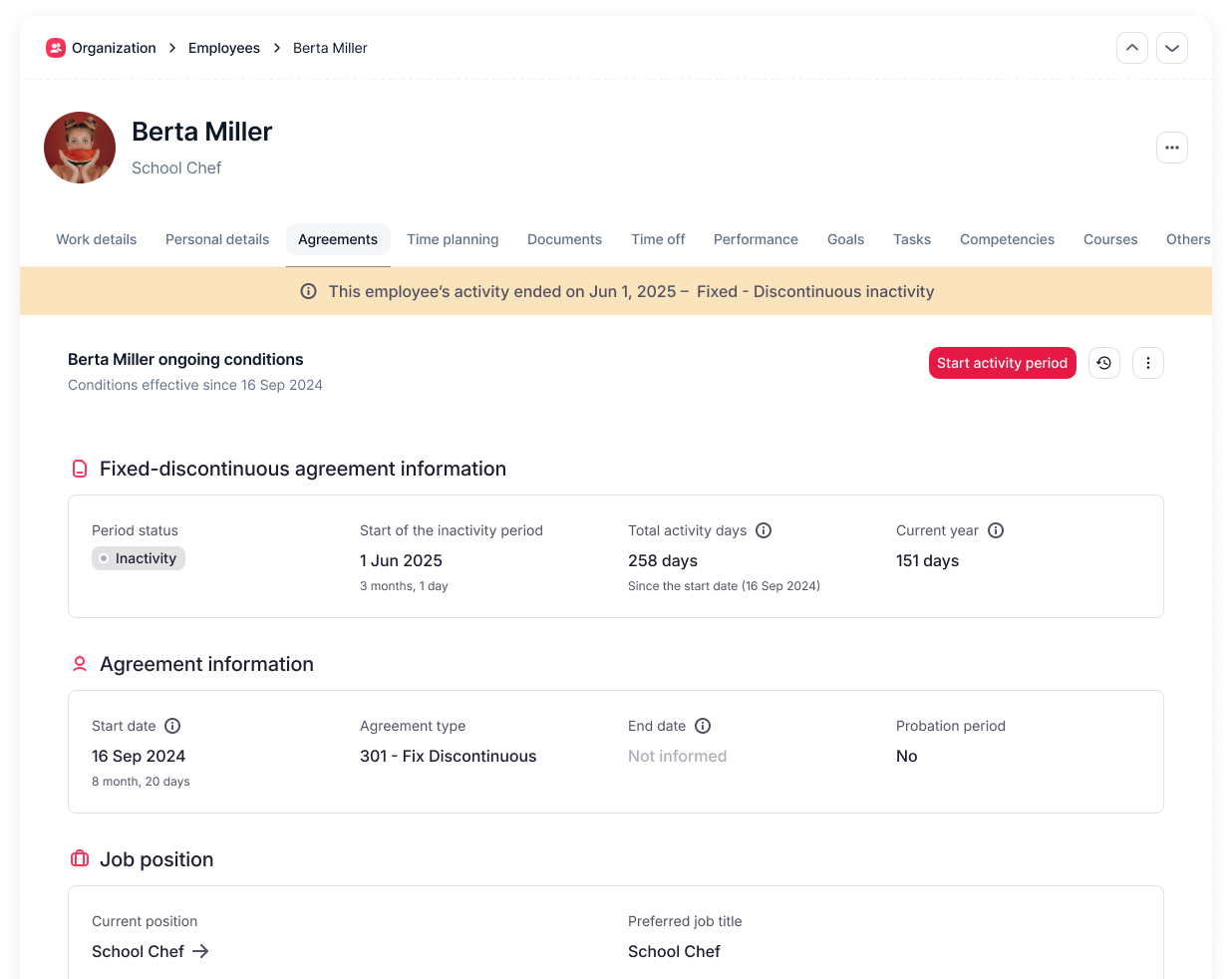
Factorial is an all-in-one HR platform built to support the entire employee life cycle, from the moment a candidate applies right through to offboarding. It is particularly useful to businesses that are growing quickly and need a system that can keep up without adding more admin to HR’s plate.
Where Factorial stands out is how it uses AI across the whole platform. Its AI agent, called One, learns from your company’s data and helps HR teams automate repetitive tasks, generate documents, and highlight insights about the performance of your workforce. New starters can ask One questions and receive answers specific to your organisation immediately without HR having to step in.
For remote onboarding specifically, Factorial lets you build reusable workflows that automatically assign tasks to the right people, whether that is IT setting up system access, a manager scheduling a welcome call, or HR sending the employment contract. Once a candidate is hired in Factorial’s ATS, their onboarding process begins automatically, so there is no gap between an employee accepting the offer and preparing for the first-day.
Pros:
- Clean, intuitive interface with a short learning curve
- AI features work across HR, Finance, and IT in one place
- Smooth transition from hiring to onboarding
- Automated workflows reduce manual HR tasks
- Secure document management with e-signatures
Cons:
- May offer more features than small businesses need
- Reporting and analytics could be more advanced for larger teams
Price: Starting from just £5.40 per employee per month. Request a personal demo for a quote tailored to the needs of your organisation.

2. BambooHR
Best for: Small to mid-sized businesses looking for a straightforward, reliable HR and onboarding system
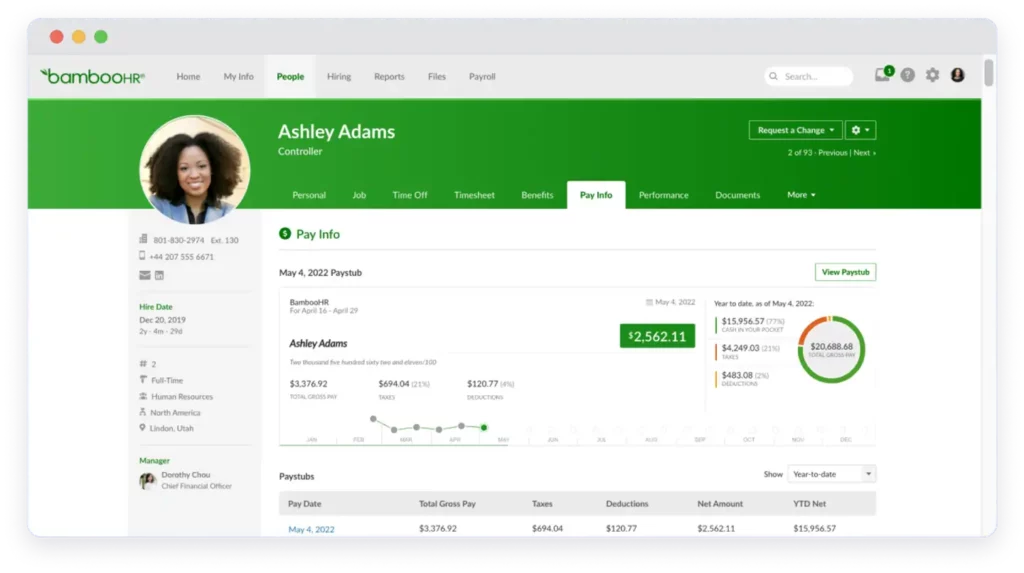
BambooHR is one of the most established HR platforms on the market, and its onboarding features are among the most intuitive available. The platform lets HR teams build automated onboarding sequences that collect documents, assign training, and introduce new hires to the team, all before day one.
For remote employees, this matters a lot. You cannot hand someone a stack of forms when they are working from home, and BambooHR makes it easy to deliver the entire process digitally. New hires fill everything out online, and managers get a clear checklist to follow without needing to coordinate by email.
Pros:
- Very easy to use for both HR and employees
- Strong onboarding workflows with task automation and reminders
- Good document management and digital signatures
- Centralises HR data in one clean interface
Cons:
- Reporting and analytics are more limited in lower-tier plans
- Mobile app lacks certain features for management
Price: Plans start at £8.10 per month per employee.
3. Rippling
Best for: Growing businesses that want HR and IT managed together
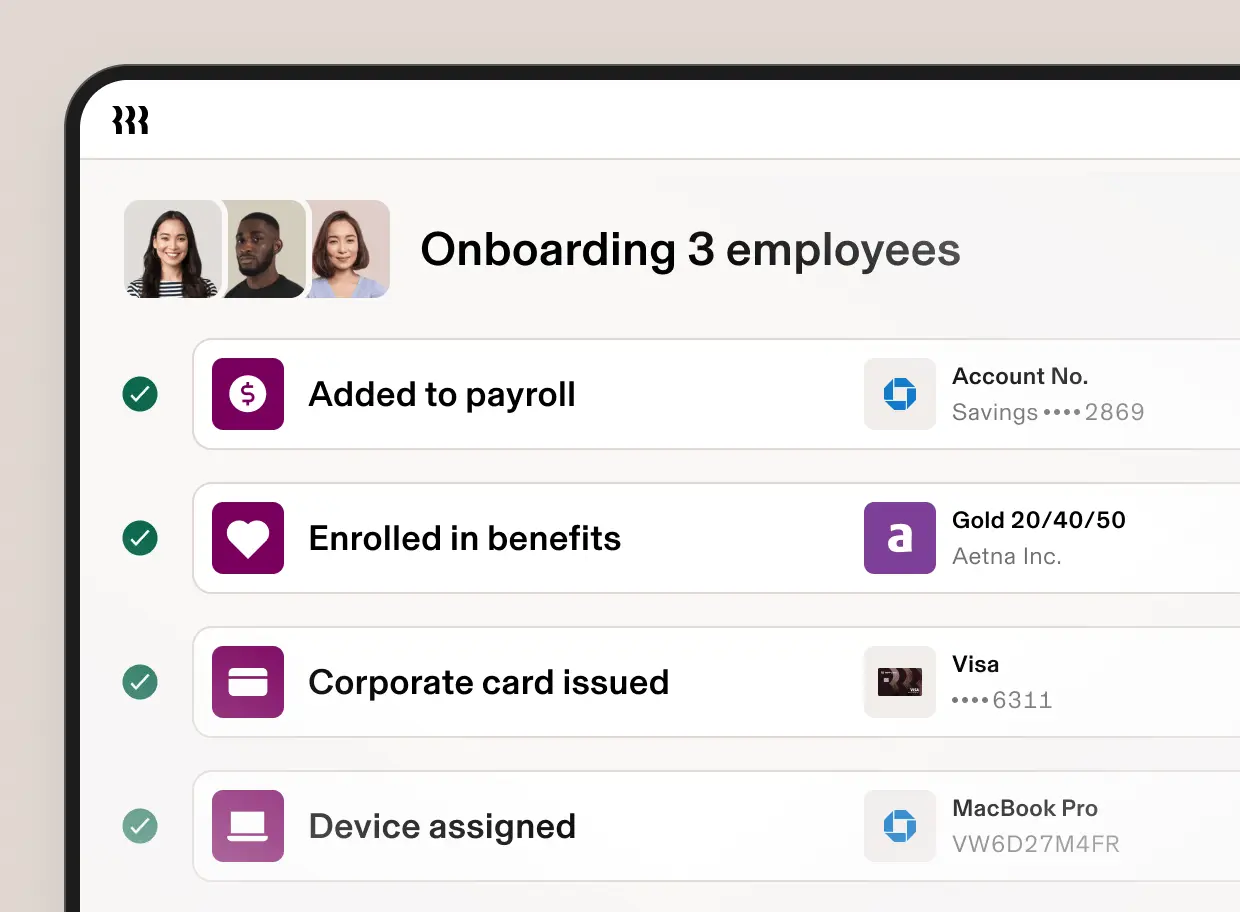
Rippling takes a different approach to onboarding by combining HR and IT in one platform. When a new hire is added to the system, Rippling can automatically provision their software accounts, set up their devices, and grant system access based on their role, without IT having to do it manually. For remote teams where a new starter might never set foot in an office, this is a significant advantage.
The onboarding workflows are highly configurable, and the platform covers everything from document collection to compliance training. It also supports international hiring, making it a choice to consider for businesses with employees across multiple countries.
Pros:
- Combined HR and IT management features in one system
- Automated device and software provisioning for remote workers
- Strong automation reduces manual onboarding work
- Good for international and distributed teams
Cons:
- Customer support has mixed reviews, especially for complex issues
- Can feel overly complex for smaller teams
Price: Pricing only available after requesting a quote.
4. HiBob
Best for: Mid-sized businesses that want a modern, people-focused HR platform
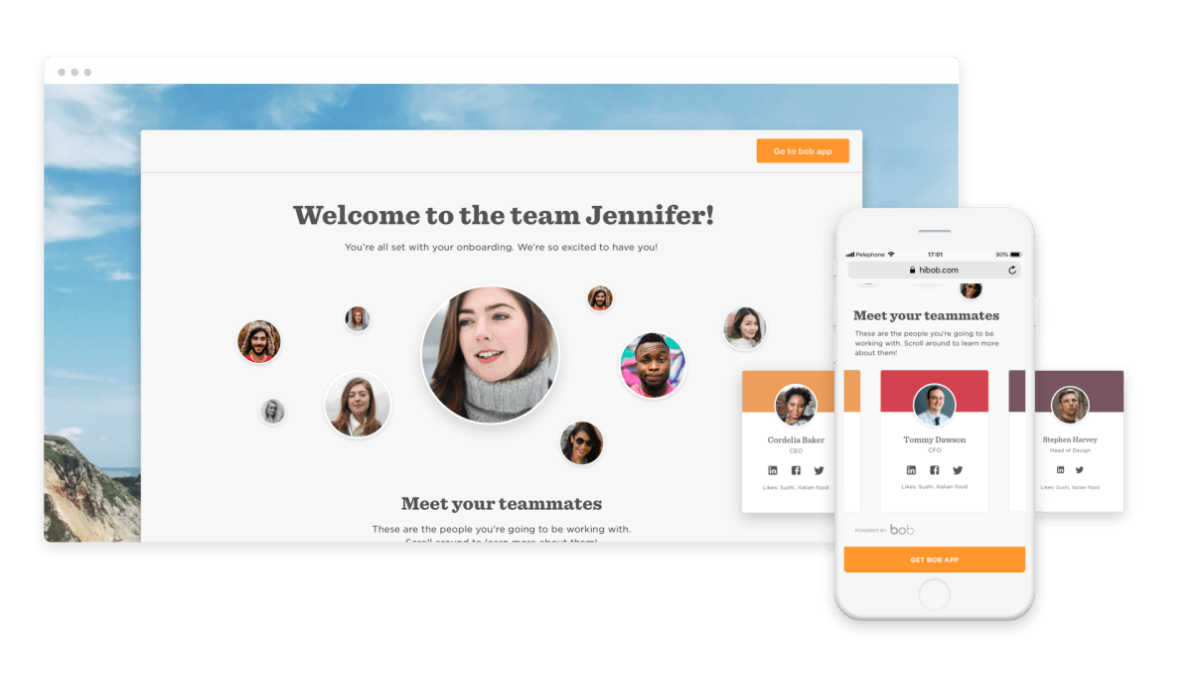
HiBob is an HRIS designed with remote and hybrid teams in mind. Its onboarding features are flexible and easy to configure, allowing HR teams to create personalised workflows for different roles or departments. The platform has a strong focus on company culture, with features that help new starters feel part of the team even when they are working remotely.
Users praise the clean interface and ease of navigating key HR tasks. It is a strong option for companies that want onboarding to feel engaging rather than purely administrative.
Pros:
- Engaging interface that employees actually like using
- Good support for remote and hybrid work environments
- Configurable onboarding flows for different teams and roles
- Real-time dashboards and notifications
Cons:
- Implementation can take some time, especially with customisation
- Fewer reporting options than some competitors
Price: Price only available after requesting a quote.
5. Deel
Best for: Businesses hiring internationally or managing remote contractors globally
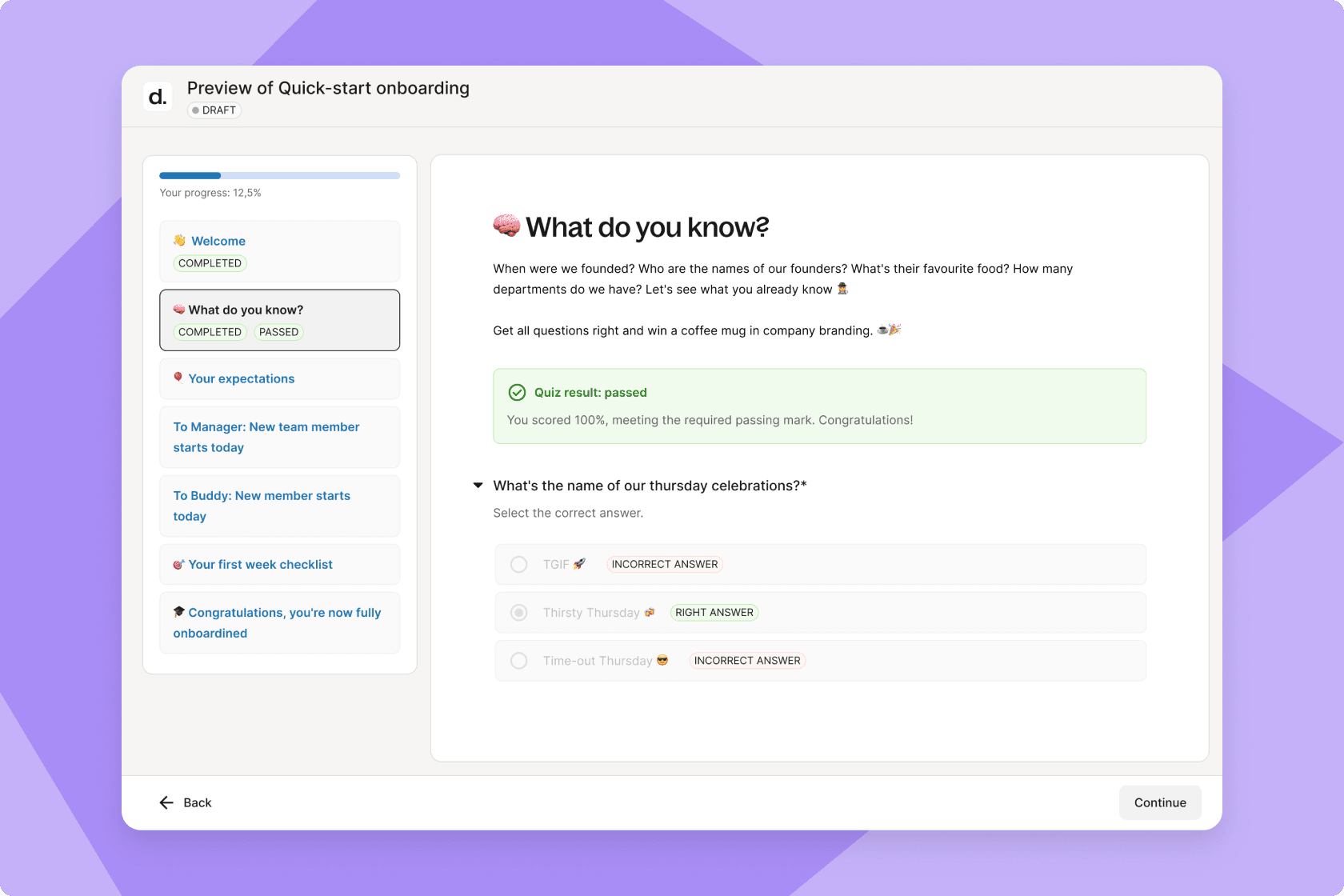
Deel is built specifically for global hiring, and it is one of the best tools available for onboarding remote employees across different countries. It handles employment contracts, compliance, and payroll for workers in over 150 countries, making it a strong choice for UK businesses with international remote teams or contractors.
The onboarding process is quick and straightforward. New hires can complete contracts, provide their details, and get set up for payment entirely through the Deel platform.
Where Deel is weaker is on the broader HR side. It is primarily a global employment and payments platform, so if you need a full HRIS with performance management and time off tracking, you will likely need to integrate it with another tool.
Pros:
- Good for international hiring and cross-border compliance
- Fast, straightforward onboarding for contractors and employees
- Supports payments in multiple currencies
Cons:
- Limited broader people management features
- Some users report payment delays and customer support issues
- Employer-of-record pricing can be high
Price: Deel has many different packages to choose from. The plan that includes automated onboarding costs $125
per US PEO employee per month and $599 per EOR employee per month.
6. Workday HCM
Best for: Large enterprises that need a powerful HR system they can configure
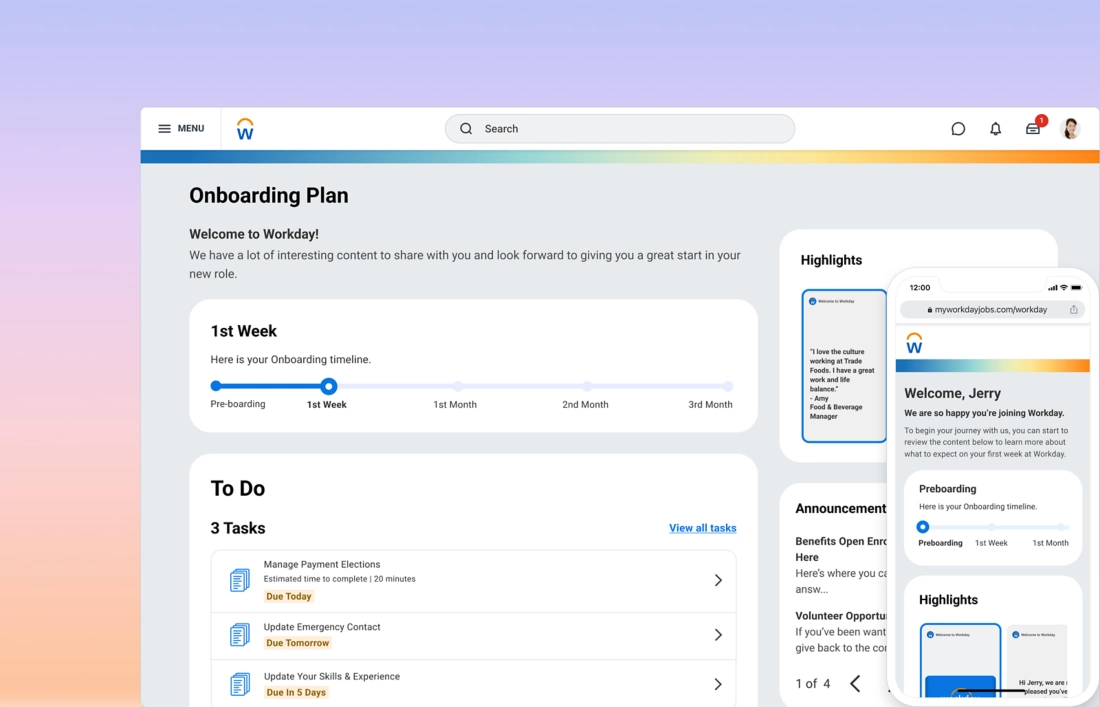
Workday is one of the most comprehensive HR platforms on the market, and its onboarding capabilities are no exception. It supports complex, multi-step onboarding workflows at scale, with advanced analytics and reporting tools that give HR teams a detailed view of processes across the organisation.
For large UK businesses with complex compliance requirements and a higher headcount, Workday is a good choice. It is highly configurable and can be tailored to very specific organisational structures and policies.
The trade-off is mostly cost and also complexity. Workday can be expensive, and implementation often requires dedicated consultants. It is not practical for small or mid-sized businesses.
Pros:
- Enterprise-grade onboarding with advanced configuration options
- Strong analytics and workforce planning tools
- Unified platform covering HR, finance, and planning
Cons:
- Not practical or affordable for smaller businesses
- Complex implementation that often requires external consultants
Price: Price only available after contacting sales.
7. CharlieHR
Best for: UK startups and small businesses looking for a simple, affordable HR tool
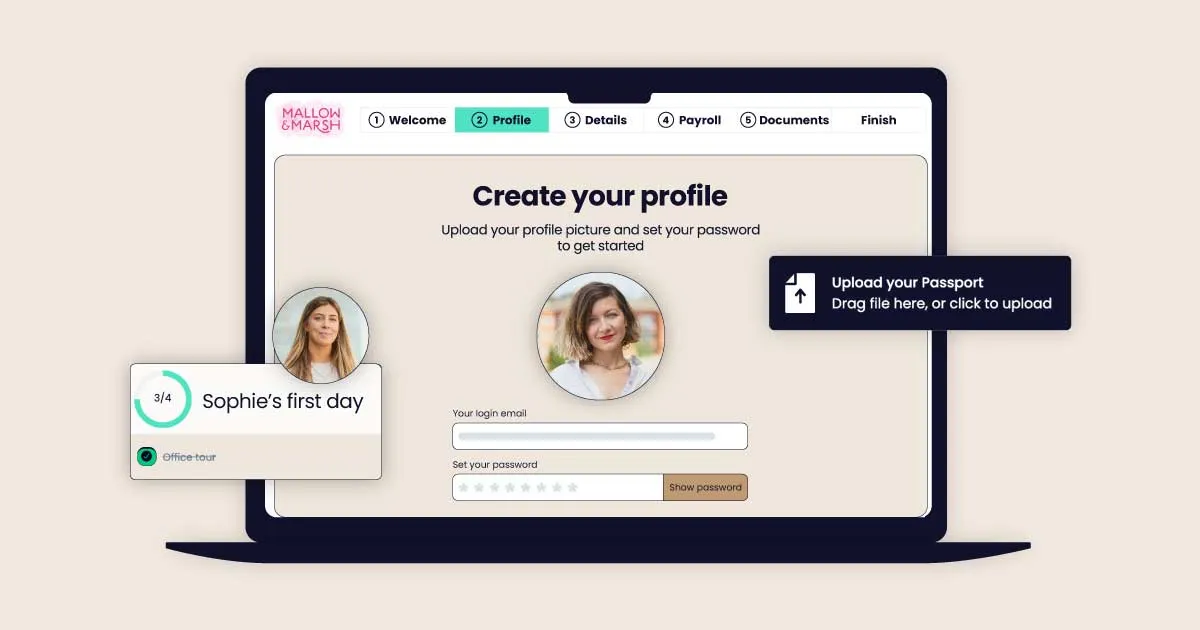
CharlieHR is designed specifically for the UK market. The templates and policies align with Acas codes of practice, the pricing is transparent, and the platform is built to be simple enough that small businesses do not need a dedicated HR person to run it.
Onboarding in CharlieHR is straightforward. You can create onboarding checklists, manage documents, and track tasks for new starters without a steep learning curve. The Premium plan also gives you access to live CIPD-qualified HR advisers, which is a can be helpful for small businesses without in-house HR personnel.
The platform is not built for scale. Companies with more than 200 employees often find they outgrow CharlieHR and need to move to another, more advanced platform.
Pros:
- Built for the UK market
- Premium plan includes live HR advice
- Fast to set up, typically under a week
Cons:
- Limited HR analytics compared to larger platforms
- Payroll through third-party integrations
- Not suitable for bigger businesses
Price: Plans start from £5 per employee per month with add-ons priced separately.
8. Gusto
Best for: Small businesses that want payroll and onboarding in one simple tool
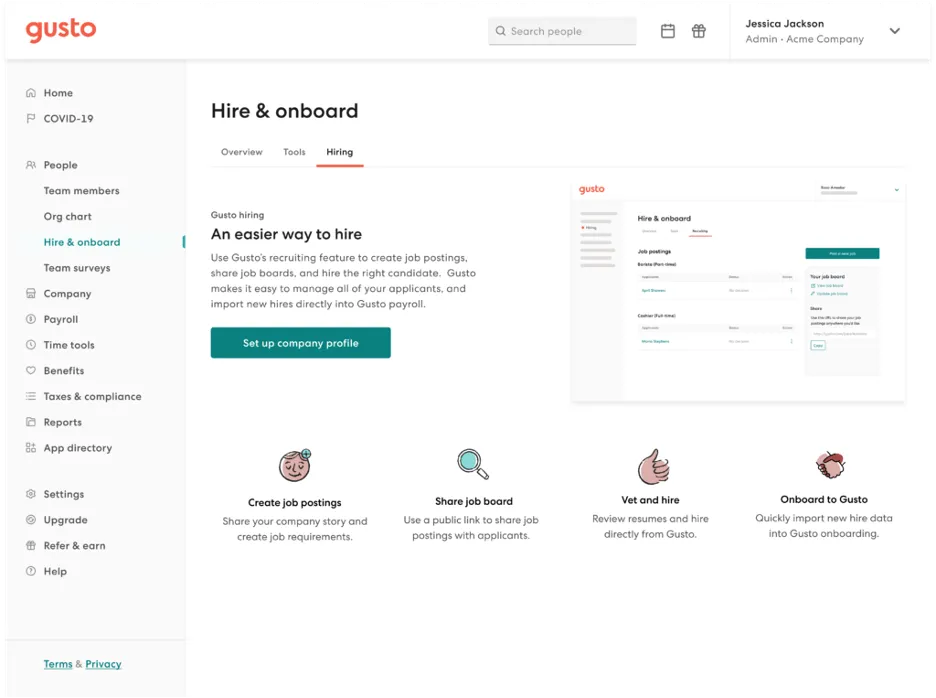
Gusto is primarily a payroll platform, but it includes a solid set of onboarding tools that make it a useful option for small businesses that want to manage payroll and set up new hires in one place. New hires can complete their forms, review company policies, and get set up for payment entirely through Gusto before day one.
Pros:
- Simple onboarding that is easy for new hires to use
- Payroll and onboarding combined in one platform
- Clear interface with a short setup time
- Good for small teams with straightforward HR needs
Cons:
- Not built for complex HR workflows or enterprise needs
- Costs can rise quickly as the team grows
Price: Gusto’s plans start at a flat rate of $49 per month plus $6 per month per person.
How to Choose Employee Onboarding Software for Remote Teams
With so many options available, the key is matching the platform to how your team actually works, not just how HR wants it to work in theory. Here are the questions to ask before making a decision:
How big is your team?
Platforms like CharlieHR and Gusto are built for small businesses, while Workday is designed for large enterprises. Factorial and HiBob sit comfortably in the middle, scaling well for growing businesses.
Do you hire internationally?
If you regularly onboard employees or contractors across multiple countries, Deel or Rippling are the strongest options. Most other platforms are built primarily for single-country setups.
How complex are your HR needs?
If you need deep customisation, advanced analytics, and complex workflows, Workday or Rippling will serve you better. If you need something clean and simple, Factorial, BambooHR, or CharlieHR will get the job done.
What is your budget?
Most platforms require you to request a quote, which can make it harder to compare costs upfront, but a demo can also help you understand the capabilities and limitations of each platform, which help you make a decision ultimately.
Do you need IT management as well?
Rippling and Factorial are two platforms on this list that combine HR and IT provisioning in a really useful way, which can actually make your onboarding even smoother. If automating device and software access for remote workers is a priority, these are standout options.
Onboard Remote Employees Seamlessly with Factorial
Bringing someone new into a remote team takes more than a welcome email and a list of passwords. You need a system that connects HR, IT, and finance so new hires have everything they need before they even start.
Onboarding software helps companies build that system without burying HR in admin. With an AI platform like Factorial that brings HR, Finance, and IT together in one place, your team gets time back to focus on the work that actually moves the business forward.
Factorial moves new hires seamlessly from the hiring process straight into onboarding and beyond. Workflows trigger automatically, documents get signed on time, and AI handles the routine questions so your HR team does not have to. Whether you are onboarding one remote employee or fifty, the experience is consistent every time.
Disclaimer: The information presented on this page is based on publicly available sources. Comparisons between Factorial and other vendors are intended solely to illustrate the features, pricing, and characteristics of each software. All information related to features, pricing, and integrations is subject to change without notice. Factorial assumes no responsibility for the accuracy, completeness, or timeliness of the information presented. We recommend contacting the relevant vendors directly to obtain the most accurate and up-to-date information. All applicable fair advertising and competition law standards are observed; for any questions, please feel free to contact us. The comparisons presented do not constitute a definitive evaluation or a recommendation of any vendor; they are intended solely as a source of information.
FAQs
Remote onboarding is the process of welcoming and setting up a new employee who works off-site, using digital tools like an HR software with automated onboarding workflows instead of in-person meetings. It covers everything from IT access and contracts to team introductions and explaining role expectations.
A remote employee works for a company from outside its physical office, usually from home. They may be based locally or internationally, and rely entirely on digital tools to do their job and collaborate with the team. This type of employment setup has its own advantages and disadvantages and poses unique challenges that HR software can help HR teams tackle.
It typically runs from pre-boarding (IT setup, contracts, system access) through to a structured first day, role-specific training, and regular check-ins at the 30, 60, and 90-day marks. The goal is to get new hires up to speed and feeling connected to the organisation as quickly as possible.
Use a platform that centralises tasks, documents, and communication in one place. Assign clear responsibilities to HR, IT, and line managers, and make sure the new hire always knows what to do next.
Onboarding a remote employee starts before day one and involves sending equipment, granting access to platforms and tools, and sharing a welcome pack. On day one, you should host a video welcome call and walk through processes and expectations, then follow up with a training framework and a clear 30-60-90 day plan.